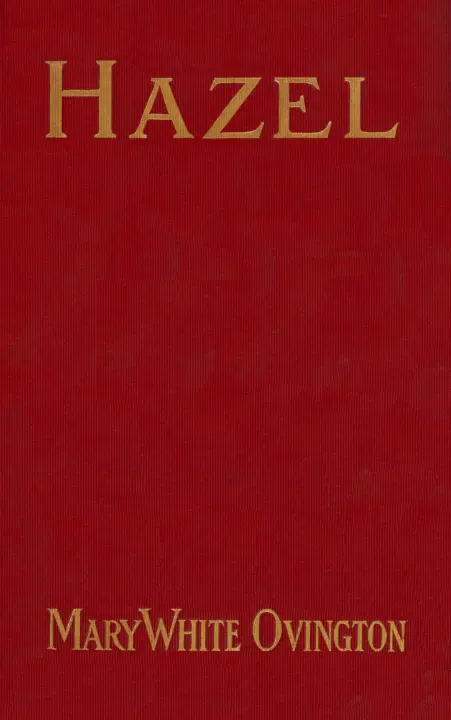
Hazel
Mary White Ovington
THE CLASSIC COLLECTION · 1920
"The Shadow" by Mary White Ovington is a novel written in the early 20th century. The story revolves around complex emotional and societal issues within the southern United States, featuring characters like Judge George Ogilvie and his wife, whose lives are transformed by a sudden crisis involving a child. The narrative delves into themes of shame, identity, and the consequences of past actions intertwined with the struggles of race and societal status. The opening of the novel sets a heavy and contemplative tone, as it depicts Judge Ogilvie grappling with the death of a man who brought disgrace to his family, prompting a moral dilemma about justice and revenge. In a parallel emotional track, the narrative introduces his daughter Lillias, who is recovering from a traumatic experience herself. As Judge Ogilvie navigates his conflicting feelings towards the deceased man and his daughter, we also meet the characters from Merryvale, a place filled with history and a changing dynamic between black and white communities. The turmoil created by societal norms and individual burdens lays the groundwork for a deep exploration of the challenges faced by the characters as they confront personal and communal identities.
Introduction adapted from the source catalogue; source summaries may be automatically generated.
Free to read · English · 104,209 words · No account needed
MAKE TIME FOR A GOOD BOOK
On by default. Untick to stop anonymous reading totals. Each page counts after 10 seconds in view. How this works.
Anonymous counting is on unless you have switched it off.
"Ellen," she cried, "I shall have to go away before long, I know that, but don't push me out upon the Merryvales because I don't want to go."
"I'll do what I can," Ellen answered.
"Honey," her mammy exclaimed, "it don't seem like we could eber let you leab us. Dis home been you's mo'n our own. But you is white, now, baby, an' you can't be wid colored folks no mo'."
"Why can't I if I choose to?" Hertha asked, her mouth quivering. "I want to stay here until I leave. I have to visit that lawyer soon and get my money, and then, I suppose, I'll go somewhere up North. But while I'm in Merryvale I want to be with you."
"Baby, I's feared it ain't de right way."
"Have you had anything to eat, Sister?" Ellen inquired. "This must have been a terribly exciting day for you. I'll hurry and get supper."
Hertha rose to help but her black mother pushed her back into her chair. "You jes' stay hyar while Ellen an' me gits de t'ings."
"But I want to work," the white girl insisted. "I don't want you two to
do everything."
"It ain't much we kin do," the old woman went on as though apologizing for the house, "not much fer an Ogilvie. Miss Hertha Ogilvie, dat's what dey'll call yer. Miss Hertha Ogilvie! Oh, my Lawd!"
Hertha rose from the seat into which she had been pushed and began to set the table. But while handling the knives and forks and smoothing the tablecloth into place, she found herself repeating, "Miss Hertha Ogilvie, Miss Hertha Ogilvie, Miss"!
How the white people had steadily refused to give her that title! No matter how refined she was, how well educated, since she had colored blood she must always hear her first name. But Lee Merryvale had said, "Miss Hertha," and Miss Witherspoon had said, "Miss Ogilvie."
"Sister," she said, turning to Ellen with attempted gaiety, "can't we have sugared sweet potatoes to-night to celebrate? You cook them so well. Just think, I'm going to have two thousand dollars. Isn't that rich?"
"It depends on how you use it," replied the always practical Ellen. "If you want you can get rid of it quickly enough; but I do hope, Hertha, you'll use some of it for your education."
"What do you want me to study?"
"You know what I told you the other day, but now you'll have a better
chance of success."
"You mean dressmaking. I think myself I'll try stenography."
It was a wild statement, an exciting jump into an unknown business
world.
Your reading position is saved on this browser. Take it to another device with a library code. Reading pages adapt to text, rather than matching a printed edition.
Mary White Ovington
Mary White Ovington
Mary White Ovington
BEHIND THE BOOK
This eBook is for the use of anyone anywhere in the United States and most other parts of the world at no cost and with almost no restrictions whatsoever. You may copy it, give it away or re-use it under the terms of the Project Gutenberg License included with this eBook or online at www.gutenberg.org. If you are not located in the United States, you will have to check the laws of the country where you are located before using this eBook. Read the source licence.
The original source file, including credits and licence, is retained by this library. Request an original-format copy at no charge. Please include the book title and Project Gutenberg identifier #33101.
KEEP YOUR CURIOSITY GOING
Coulson Kernahan

Maurice Baring
Frances Wright
Cécile Tormay

Frederic Jesup Stimson

W. H. P. (William Henry Pope) Jarvis