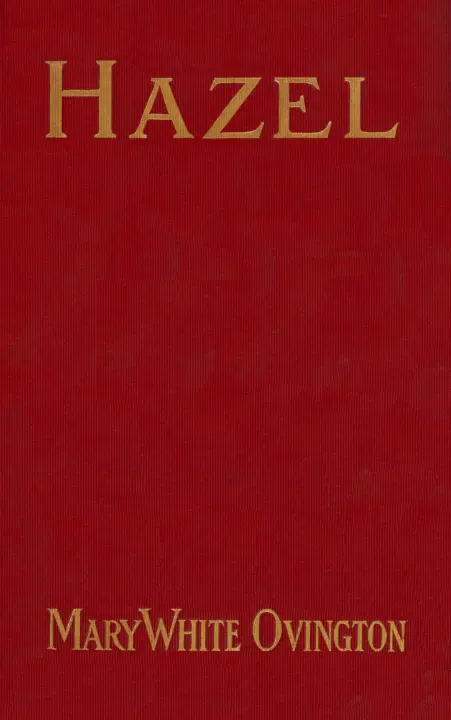
Hazel
Mary White Ovington
THE CLASSIC COLLECTION · 1920
"The Shadow" by Mary White Ovington is a novel written in the early 20th century. The story revolves around complex emotional and societal issues within the southern United States, featuring characters like Judge George Ogilvie and his wife, whose lives are transformed by a sudden crisis involving a child. The narrative delves into themes of shame, identity, and the consequences of past actions intertwined with the struggles of race and societal status. The opening of the novel sets a heavy and contemplative tone, as it depicts Judge Ogilvie grappling with the death of a man who brought disgrace to his family, prompting a moral dilemma about justice and revenge. In a parallel emotional track, the narrative introduces his daughter Lillias, who is recovering from a traumatic experience herself. As Judge Ogilvie navigates his conflicting feelings towards the deceased man and his daughter, we also meet the characters from Merryvale, a place filled with history and a changing dynamic between black and white communities. The turmoil created by societal norms and individual burdens lays the groundwork for a deep exploration of the challenges faced by the characters as they confront personal and communal identities.
Introduction adapted from the source catalogue; source summaries may be automatically generated.
Free to read · English · 104,209 words · No account needed
MAKE TIME FOR A GOOD BOOK
On by default. Untick to stop anonymous reading totals. Each page counts after 10 seconds in view. How this works.
Anonymous counting is on unless you have switched it off.
On this Sunday afternoon, while Hertha sat with her mother on the steps, John Merryvale was walking with his son in the orange grove. They had been examining the trees when two colored lads, dressed in their Sunday best, bowed in crossing their path. Lee nodded carelessly to the young men, but his father raised his hat. The son noticed it, and spoke, half jestingly, of this act of courtesy.
"There isn't another man in the state would do that, Father. A nigger's a nigger to the folk I know about here."
"I remember," his father answered, "the retort Jefferson Davis gave when questioned for returning the bow of a black man. 'I can't afford,' he said, 'to be less of a gentleman than he.'"
Young Merryvale was silent, wondering whether the day had passed of both the old-time white and colored gentleman.
"This is a beautiful tree," his father said, stopping to look with pride at a plant filled with fast ripening fruit. "It's bearing well this season."
"Yes."
"I cannot tell you, Son, how happy I am that you are redeeming these old
acres."
"So you're converted," Lee said, with a bright smile.
"Yes, entirely. And the best of it is the realization that you are busy in your old home and do not stay in it merely for Patty and me."
"Oh, I couldn't keep away! This place grips me. It's well enough to go to New York for a month to study the market, but this is the land of my choice, darkies and all. I wish they could do a good day's work; but, then, I don't pay them for a day's work, white man's reckoning."
A few steps further brought them to the tree where he and Hertha had
first played together.
The older man stopped again. "Why, here's a blossom at the end of a
bough," he said.
"Yes, but don't pick it!" Lee seized his father's arm. "I've a fancy to keep it there--for good luck," he added, somewhat lamely.
Over the blossom, the previous morning, Hertha had bent like a happy child, blowing upon the petals and calling on them to open.
"Lee!" The young man started at his father's voice; there was in it a note of admonition, almost of severity. But there was nothing of severity in the words that followed:
"I wish I could express to you my happiness that this old home that my father and my father's father loved and strove to make beautiful will now be guarded by you. And you will do better with it than we did."
"Oh, I don't know about that," Lee said.
Your reading position is saved on this browser. Take it to another device with a library code. Reading pages adapt to text, rather than matching a printed edition.
Mary White Ovington
Mary White Ovington
Mary White Ovington
BEHIND THE BOOK
This eBook is for the use of anyone anywhere in the United States and most other parts of the world at no cost and with almost no restrictions whatsoever. You may copy it, give it away or re-use it under the terms of the Project Gutenberg License included with this eBook or online at www.gutenberg.org. If you are not located in the United States, you will have to check the laws of the country where you are located before using this eBook. Read the source licence.
The original source file, including credits and licence, is retained by this library. Request an original-format copy at no charge. Please include the book title and Project Gutenberg identifier #33101.
KEEP YOUR CURIOSITY GOING
Coulson Kernahan

Maurice Baring
Frances Wright
Cécile Tormay

Frederic Jesup Stimson

W. H. P. (William Henry Pope) Jarvis