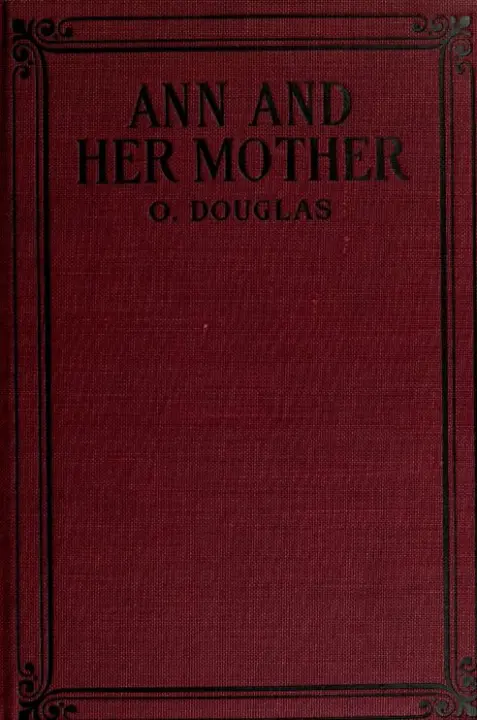
Ann and Her Mother
O. Douglas
THE CLASSIC COLLECTION · 1900
"The Setons" by O. Douglas is a novel written in the early 20th century. Set in Glasgow, the story unfolds the everyday lives of the Thomson family, particularly focusing on their evening party and various interactions with friends and neighbors. The narrative follows characters such as Mr. and Mrs. Thomson, their children Jessie and Alick, along with guests like the endearing yet comical Mr. Taylor. The book captures themes of social class, familial bonds, and the importance of community. At the start of the novel, we are introduced to the Thomson family as they prepare for an evening party, revealing their dynamics and personalities. Mr. Thomson arrives home with a pineapple for the occasion, sparking lively conversations among family members about food, social status, and the guests who are invited. As the guests arrive, a mix of excitement and anxiety unfolds, particularly for Jessie, who is conscious of the way her family's social standing is perceived by others. The atmosphere is filled with a blend of warmth, humor, and underlying tensions characteristic of a gathering where people from varying backgrounds come together. The opening chapters paint a vivid picture of family life and societal expectations at the time, setting the stage for further developments in the social interactions and character arcs throughout the novel.
Introduction adapted from the source catalogue; source summaries may be automatically generated.
Free to read · English · 76,223 words · No account needed
MAKE TIME FOR A GOOD BOOK
On by default. Untick to stop anonymous reading totals. Each page counts after 10 seconds in view. How this works.
Anonymous counting is on unless you have switched it off.
"Thank you, Miss Seton; that'll be all right, then;" and Mr. Taylor took his empty cup to his hostess, while Elizabeth, seeing the two Miss Hendrys unoccupied for the moment, deposited with them the meringue and trifle.
She complimented Miss Hendry on her elegant appearance and admired Miss Flora's hand-made collar, and left them both beaming. She brought a pink meringue to Mrs. Taylor and soothed her fears of the consequences, while that lady hung her head coyly on one side and said, "Ye're temptin' me; ye're temptin' me!"
Supper had reached the fruit and chocolate stage when Jessie Thomson brought Stewart Stevenson and introduced him to Elizabeth Seton.
"I wanted to tell you how much I liked your song," he began.
"How kind of you!" said Elizabeth. "I think myself it's a nice song."
"I don't know anything about music," continued Mr. Stevenson.
"Was that why you said you liked my song instead of my singing?"
"Yes," he said; and they both laughed.
They were deep in the subject of Scots ballads when Mr. Inverarity came along with dates on a majolica dish in one hand, his other hand behind his back.
"A little historical matter," he said, offering the dates. "No? Then," he produced a silver dish with the air of a conjurer, "a chocolate?"
Elizabeth chose deliberately.
"I'm looking for the biggest," she said. "You see I'm greedy."
"Not at all," said Mr. Inverarity. "Sweets to the sweet;" and he passed
on his jokesome way.
"Sweets to the sweet," repeated Elizabeth. "Isn't it funny? Words that were dropped with violets over the drowned Ophelia now furnish witticisms for suburban young men."
"Miss Seton," said Mrs. Thomson, bustling up, "you're here. We're going back to the drawing-room now to have a little more music." She dropped her voice to a hoarse whisper. "Papa's asked Mr. Taylor to sing. Jessie'll be awful ill-pleased, but he's an old friend."
"Does he want to sing?" asked Elizabeth.
"Dyin' to," said Mrs. Thomson.
Back to the drawing-room flocked the company, and Mr. Taylor, to use his own words, "took the floor." Jessie was standing beside the Simpsons and saw him do it.
"What a funny little man that is!" said Miss Simpson languidly. "What's
he going to do now?"
"The dear knows," said Jessie bitterly.
They were not left long in doubt.
Mr. Taylor struck an attitude.
"Ladies and gentlemen," he began, "I have been asked to favour you with a song, but with your kind permission I'll give you first a readin'." He fumbled in his pocket and brought out a newspaper cutting. "It's a little bit I read in the papers," he explained, "very comical."
Your reading position is saved on this browser. Take it to another device with a library code. Reading pages adapt to text, rather than matching a printed edition.
BEHIND THE BOOK
This eBook is for the use of anyone anywhere in the United States and most other parts of the world at no cost and with almost no restrictions whatsoever. You may copy it, give it away or re-use it under the terms of the Project Gutenberg License included with this eBook or online at www.gutenberg.org. If you are not located in the United States, you will have to check the laws of the country where you are located before using this eBook. Read the source licence.
The original source file, including credits and licence, is retained by this library. Request an original-format copy at no charge. Please include the book title and Project Gutenberg identifier #35218.
KEEP YOUR CURIOSITY GOING
Coulson Kernahan

Maurice Baring
Frances Wright
Cécile Tormay

Frederic Jesup Stimson

W. H. P. (William Henry Pope) Jarvis