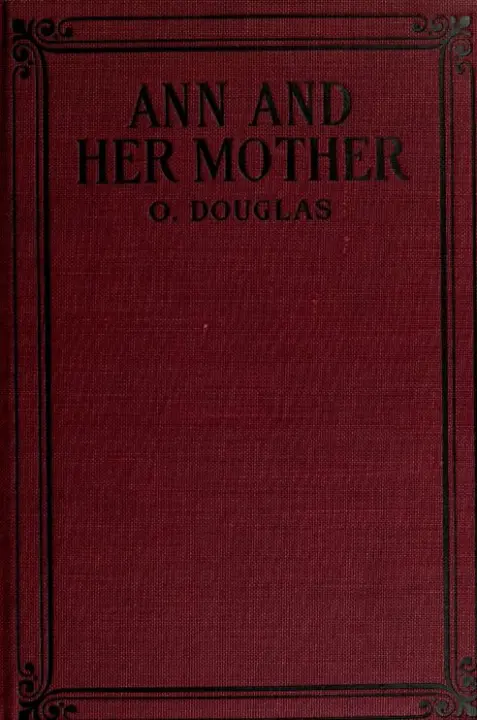
Ann and Her Mother
O. Douglas
THE CLASSIC COLLECTION · 1900
"The Setons" by O. Douglas is a novel written in the early 20th century. Set in Glasgow, the story unfolds the everyday lives of the Thomson family, particularly focusing on their evening party and various interactions with friends and neighbors. The narrative follows characters such as Mr. and Mrs. Thomson, their children Jessie and Alick, along with guests like the endearing yet comical Mr. Taylor. The book captures themes of social class, familial bonds, and the importance of community. At the start of the novel, we are introduced to the Thomson family as they prepare for an evening party, revealing their dynamics and personalities. Mr. Thomson arrives home with a pineapple for the occasion, sparking lively conversations among family members about food, social status, and the guests who are invited. As the guests arrive, a mix of excitement and anxiety unfolds, particularly for Jessie, who is conscious of the way her family's social standing is perceived by others. The atmosphere is filled with a blend of warmth, humor, and underlying tensions characteristic of a gathering where people from varying backgrounds come together. The opening chapters paint a vivid picture of family life and societal expectations at the time, setting the stage for further developments in the social interactions and character arcs throughout the novel.
Introduction adapted from the source catalogue; source summaries may be automatically generated.
Free to read · English · 76,223 words · No account needed
MAKE TIME FOR A GOOD BOOK
On by default. Untick to stop anonymous reading totals. Each page counts after 10 seconds in view. How this works.
Anonymous counting is on unless you have switched it off.
It was spread on a small table, the tablecloth was a kitchen towel, and there was only one tumbler and the barest allowance of knives and forks; but Buff was charmed with his feast, and hospitably eager that his guests should enjoy it.
"Come on," he said again.
But Thomas, gripping Billy's hand, hung back, and it was seen that he
carried a parcel.
"I've brought Buff a present," he announced.
"Oh, Thomas!" said Elizabeth, "not another! After that lovely box of
tools."
"Yes," said Thomas firmly. "It's a book--a wee religious book." He handed it to Elizabeth. "It's about angels."
Elizabeth did not look at her young brother, but undid the paper,
opened the book and read:
"It came upon the midnight clear,
That glorious song of old,
From angels bending near the earth
To touch their harps of gold:
'Peace on the earth, good-will to men,
From heaven's all-gracious King!'
The world in solemn stillness lay
To hear the angels sing."
"How nice! and the pictures are beautiful, Thomas. It's a lovely
present. Look at it, Buff!"
Buff looked at it and then he looked at Thomas. "What made you think I wanted a book about angels?" he demanded.
"Nothing in your behaviour, old man," his sister hastened to assure him. "D'you know you've never said Thank you!"
Buff said it, but there was a marked lack of enthusiasm in his tone.
"I didn't buy it," Thomas said, feeling the present needed some explanation. "Aunt Jeanie sent it at Christmas to Papa, and Papa wasn't caring much about angels, and Mamma said I could give it to Buff; she said it might improve him."
"I knew he didn't buy it!" shouted Buff, passing over the aspersion on his character. "I knew it all the time. Nobody would buy a book like that: it's the kind that get given you."
"Aunt Jeanie sent me the Prodigal Son," broke in Billy in his gentle little voice (he often acted as oil to the troubled waters of Buff and Thomas). "I like the picture of the Prodigal eating the swine's husks. There's a big swine looking at him as if it would bite him."
"Should think so," Thomas said. "If you were a swine you wouldn't like prodigals coming eating your husks."
"I don't think, Billy," said Elizabeth, looking meditatively at him, "that you will ever be a prodigal, but I can quite see Thomas as the elder brother----Ah! here comes Ellen with the sausages!"
It was a very successful party, noisy and appreciative, and after they had eaten everything there was to eat, including the toffee, and licked their sticky fingers, they had a concert.
Your reading position is saved on this browser. Take it to another device with a library code. Reading pages adapt to text, rather than matching a printed edition.
BEHIND THE BOOK
This eBook is for the use of anyone anywhere in the United States and most other parts of the world at no cost and with almost no restrictions whatsoever. You may copy it, give it away or re-use it under the terms of the Project Gutenberg License included with this eBook or online at www.gutenberg.org. If you are not located in the United States, you will have to check the laws of the country where you are located before using this eBook. Read the source licence.
The original source file, including credits and licence, is retained by this library. Request an original-format copy at no charge. Please include the book title and Project Gutenberg identifier #35218.
KEEP YOUR CURIOSITY GOING
Coulson Kernahan

Maurice Baring
Frances Wright
Cécile Tormay

Frederic Jesup Stimson

W. H. P. (William Henry Pope) Jarvis