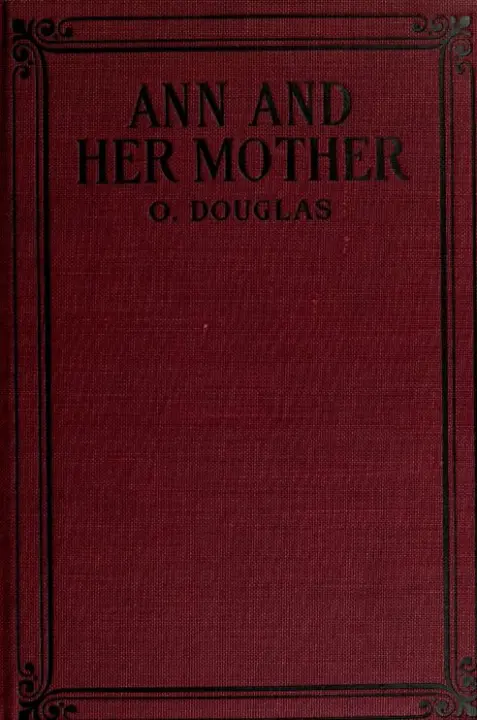
Ann and Her Mother
O. Douglas
THE CLASSIC COLLECTION · 1900
"The Setons" by O. Douglas is a novel written in the early 20th century. Set in Glasgow, the story unfolds the everyday lives of the Thomson family, particularly focusing on their evening party and various interactions with friends and neighbors. The narrative follows characters such as Mr. and Mrs. Thomson, their children Jessie and Alick, along with guests like the endearing yet comical Mr. Taylor. The book captures themes of social class, familial bonds, and the importance of community. At the start of the novel, we are introduced to the Thomson family as they prepare for an evening party, revealing their dynamics and personalities. Mr. Thomson arrives home with a pineapple for the occasion, sparking lively conversations among family members about food, social status, and the guests who are invited. As the guests arrive, a mix of excitement and anxiety unfolds, particularly for Jessie, who is conscious of the way her family's social standing is perceived by others. The atmosphere is filled with a blend of warmth, humor, and underlying tensions characteristic of a gathering where people from varying backgrounds come together. The opening chapters paint a vivid picture of family life and societal expectations at the time, setting the stage for further developments in the social interactions and character arcs throughout the novel.
Introduction adapted from the source catalogue; source summaries may be automatically generated.
Free to read · English · 76,223 words · No account needed
MAKE TIME FOR A GOOD BOOK
On by default. Untick to stop anonymous reading totals. Each page counts after 10 seconds in view. How this works.
Anonymous counting is on unless you have switched it off.
"We go when there's anything good on," she said.
"Such as----?"
"Oh! I don't know----" She looked vaguely round the room. "Something amusing, you know, but quite nice too."
"I see. D'you care for the Repertory?"
"Oh, well," said Miss Muriel, "they're not bad, but they do such dull things. You remember, Gertrude," leaning across to her sister, "yon awful silly thing we saw? What was it called? Yes, Prunella. And that same night some friends asked us to go to Baby Mine--everyone says it's killing,--but Papa had taken the seats and he made us use them. It was too bad. We felt awfully 'had.'"
"I think," said Miss Gertrude, "that the Repertory people are very
amateurish."
Mr. Stewart Stevenson was stung.
"My dear young lady," he said severely, "one or two of the Repertory people are as good as anyone on the London stage and a long sight better than most."
"Fency," said Miss Gertrude coldly.
Stewart Stevenson looked about for a way of escape, but he was hemmed round by living walls and without doing violence he could not leave his seat. Mrs. Thomson sat before him in a creaking cane chair listening to praise of her drawing-room from Jessie's dowdy friend, Miss Hendry.
"My! Mrs. Thomson, it's lovely! Whit a carpet--pile near up to your
knees!"
"D'ye like the colouring, Miss Hendry?" asked Mrs. Thomson.
Miss Hendry looked round at the yellow walls and bright gilt picture frames shining in the strong incandescent light.
"Mrs. Thomson," she said solemnly, "it's chaste!"
Mrs. Thomson sighed as if the burden of her magnificence irked her, then: "How d'ye think the evening's goin'?" she whispered.
"Very pleasant," Miss Hendry whispered back, "What about a game?"
"I don't know," said poor Mrs. Thomson. "I would say it would be the very thing, but mebbe Jessie wouldn't think it genteel."
A girl stood up beside the piano with her violin, and somebody said "Hush!" loudly, so Mrs. Thomson at once subsided, in so far as a very stout person can subside in an inadequate cane chair, and composed herself to listen to Scots airs very well played. The familiar tunes cheered the company wonderfully; in fact, they so raised Mr. Taylor's spirits that, to Jessie's great disgust, and in spite of the raised eyebrows of the Simpsons, he pranced in the limited space left in the middle of the room and invited anyone who liked to take a turn with him.
"Jolly thing a fiddle," said Stewart Stevenson cheerily to Miss Muriel
Simpson.
"The violin is always nice," primly replied Miss Muriel, "but I don't care for Scotch airs--they're so common. We like high-class music."
Your reading position is saved on this browser. Take it to another device with a library code. Reading pages adapt to text, rather than matching a printed edition.
BEHIND THE BOOK
This eBook is for the use of anyone anywhere in the United States and most other parts of the world at no cost and with almost no restrictions whatsoever. You may copy it, give it away or re-use it under the terms of the Project Gutenberg License included with this eBook or online at www.gutenberg.org. If you are not located in the United States, you will have to check the laws of the country where you are located before using this eBook. Read the source licence.
The original source file, including credits and licence, is retained by this library. Request an original-format copy at no charge. Please include the book title and Project Gutenberg identifier #35218.
KEEP YOUR CURIOSITY GOING
Coulson Kernahan

Maurice Baring
Frances Wright
Cécile Tormay

Frederic Jesup Stimson

W. H. P. (William Henry Pope) Jarvis