THE CLASSIC COLLECTION✦The Dark Road: further adventures of Chéri-BibiCLASSIC FREE BOOKS
The Dark Road: further adventures of Chéri-Bibi
Gaston Leroux
THE CLASSIC COLLECTION · 1914
"The Secret of the Night" by Gaston Leroux is a novel written during the late 19th century. The story appears to unveil a tale of mystery and intrigue that revolves around General Trebassof, a figure embroiled in the tensions of revolutionary Russia, and the imminent threats against his life. The narrative introduces key characters such as Matrena Petrovna, the general's protective wife, and Joseph Rouletabille, a young reporter sent to investigate the dark circumstances surrounding the general’s fate. At the start of the novel, we meet Matrena Petrovna, who is deeply concerned for her husband’s safety following previous assassination attempts. The atmosphere is charged with tension as she prepares to receive a young stranger, Rouletabille, who has come to aid in the investigation. The opening reveals a family struggling with secrets, danger, and the burdens of loyalty, while the ominous presence of the police highlights the perilous environment in which they exist. As Matrena explains the series of attacks on her husband, the reader is immediately pulled into a web of suspense that tests the bonds of family and the desperation of survival amid political chaos.
Introduction adapted from the source catalogue; source summaries may be automatically generated.
Free to read · English · 97,616 words · No account needed
MAKE TIME FOR A GOOD BOOK
On by default. Untick to stop anonymous reading totals. Each page counts after 10 seconds in view. How this works.
Anonymous counting is on unless you have switched it off.
“No one can find them anywhere,” declared Matrena, who, no less than Rouletabille, watched every change in the countenances of the two officers. “How did it happen that you went away yesterday evening without saying good-bye, without seeing us, without troubling yourselves whether or not the general might need you?”
“Madame,” said Michael, coldly, in military fashion, as though he replied to his superior officer himself, “we have ample excuse to offer you and the general. It is necessary that we make an admission, and the general will pardon us, I am sure. Boris and I, during the promenade, happened to quarrel. That quarrel was in full swing when we reached here and we were discussing the way to end it most promptly when monsieur le marechal entered the garden. We must make that our excuse for giving divided attention to what he had to say. As soon as he was gone we had only one thought, to get away from here to settle our difference with arms in our hands.”
“Without speaking to me about it!” interrupted Trehassof. “I never will
pardon that.”
“You fight at such a time, when the general is threatened! It is as though you fought between yourselves in the face of the enemy. It is treason!” added Matrena.
“Madame,” said Boris, “we did not fight. Someone pointed out our fault, and I offered my excuses to Michael Nikolaievitch, who generously accepted them. Is that not so, Michael Nikolaievitch?”
“And who is this that pointed out your fault?” demanded the marshal.
“Natacha.”
“Bravo, Natacha. Come, embrace me, my daughter.”
The general pressed his daughter effusively to his broad chest.
“And I hope you will not have further disputing,” he cried, looking over Natacha’s shoulder.
“We promise you that, General,” declared Boris. “Our lives belong to
you.”
“You did well, my love. Let us all do as well. I have passed an excellent night, messieurs. Real sleep! I have had just one long sleep.”
“That is so,” said Matrena slowly. “The general had no need of narcotic. He slept like a child and did not touch his potion.”
“And my leg is almost well.”
“All the same, it is singular that those grapes should have disappeared,” insisted the marshal, following his fixed idea.
“Ermolai,” called Matrena.
The old servant appeared.
“Yesterday evening, after these gentlemen had left the house, did you notice a small white box on the garden table?”
“No, Barinia.”
“And the servants? Have any of them been sick? The dvornicks? The schwitzar? In the kitchens? No one sick? No? Go and see; then come and tell me.”
He returned, saying, “No one sick.”
Your reading position is saved on this browser. Take it to another device with a library code. Reading pages adapt to text, rather than matching a printed edition.
Gaston Leroux
Gaston Leroux
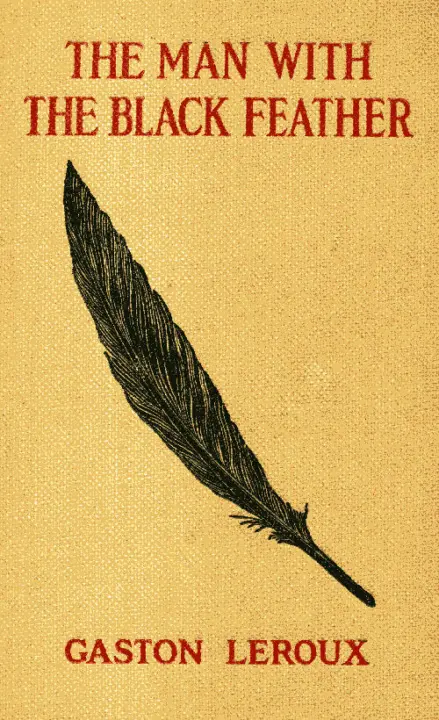
Gaston Leroux
BEHIND THE BOOK
This eBook is for the use of anyone anywhere in the United States and most other parts of the world at no cost and with almost no restrictions whatsoever. You may copy it, give it away or re-use it under the terms of the Project Gutenberg License included with this eBook or online at www.gutenberg.org. If you are not located in the United States, you will have to check the laws of the country where you are located before using this eBook. Read the source licence.
The original source file, including credits and licence, is retained by this library. Request an original-format copy at no charge. Please include the book title and Project Gutenberg identifier #1686.
KEEP YOUR CURIOSITY GOING
Coulson Kernahan

Maurice Baring
Frances Wright
Cécile Tormay

Frederic Jesup Stimson

W. H. P. (William Henry Pope) Jarvis