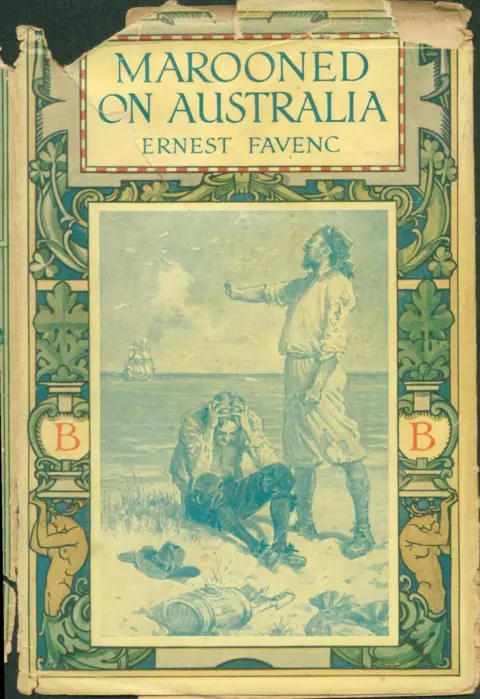
Marooned on Australia
Ernest Favenc
THE CLASSIC COLLECTION · 1895
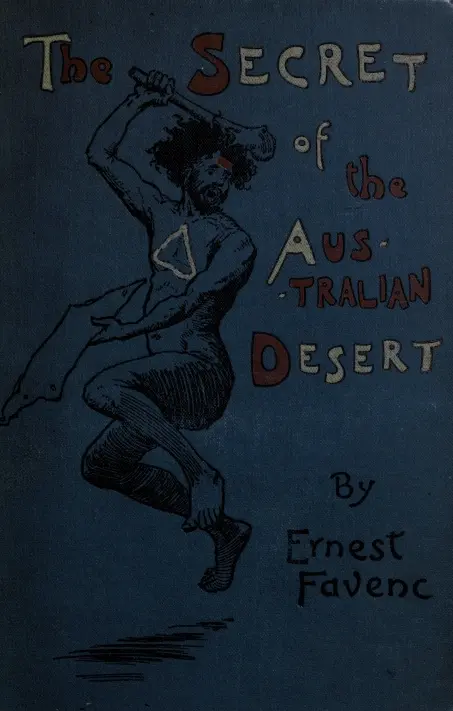
"The Secret of the Australian Desert" by Ernest Favenc is a historical fiction narrative set during the late 19th century. The story revolves around the mysterious disappearance of the explorer Ludwig Leichhardt and his party while attempting to traverse the uncharted heart of Australia in the mid-1800s. Favenc weaves an adventure tale that brings together a group of contemporary explorers as they embark on a quest to uncover the fate of Leichhardt, driven by a mix of curiosity and the allure of the unknown. At the start of the narrative, we are introduced to a scorching November evening in central Australia, where three men—Morton, his young cousin Charlie, and their friend Brown—sit on the porch of a cattle station. They discuss the legend of a "burning mountain" rumored to exist nearby, inspiring them to embark on an expedition to explore its truth and possibly uncover the remains of Leichhardt's lost expedition. The opening sets the stage for their adventure as they prepare for their journey into the harsh, unforgiving landscape filled with scrubs and sandy ridges, expressing their hopes, fears, and the camaraderie that will guide them through the challenges ahead. Throughout this early portion, hints of mystical and ominous elements foreshadow challenges beyond just the treacherous terrain they must navigate.
Introduction adapted from the source catalogue; source summaries may be automatically generated.
Free to read · English · 49,662 words · No account needed
MAKE TIME FOR A GOOD BOOK
On by default. Untick to stop anonymous reading totals. Each page counts after 10 seconds in view. How this works.
Anonymous counting is on unless you have switched it off.
"I was puzzling my brains how she lived, for she seemed too feeble to move and was too blind to see anything distinctly; for all that there were plenty of feathers around the camp, although she could never have caught the birds. Presently the old dame, still growling to herself, crawled out on her hands and knees to the fire, to which she seemingly guided herself by the sense of smell. Here she squatted down, and I hung my horse up and went to look at her lair in the tree. There was an iron tomahawk shipped on to a black's handle, a single-barrelled percussion shot-gun, and all sorts of little odds and ends. Evidently this survivor must have found a lot of things abandoned at the old camp at Hentig's grave. Just then my horse shook himself, making the saddle rattle and jingle. On hearing this the old gin set up the most awful screaming you ever heard. When she quietened down someone called out to her from a short distance away, and looking in the direction, I saw a light-coloured nigger limping towards us. He stopped and had a good look at me before approaching; I held up both my hands as a sign of amity, and he came on pretty fearlessly. I then saw that he was a half-caste and a cripple. One leg had been broken in childhood and he had grown up with it shorter than the other, and much distorted. That he was a descendent of the missing white man I had no doubt, but the old gin appeared too old to be his mother. He came up to me, and when I spoke to him seemed greatly pleased, and pointing to himself said "Lee-lee" two or three times, indicating that that was his name. I gave him my name in return, which he soon picked up. He then led me to the tree, and taking the gun out put it to his shoulder and cried out in imitation of a report, showing that he had often seen it used. I pointed to the feathers, and he showed me two or three light boomerangs and a fishing-net. I tried to find out if he knew anything of the lake, but he seemed quite ignorant of its existence. I imitated death to find out what had become of his father, and he led me to a place where he indicated he was buried, but I could see no sign of a grave. He knew two or three words of English,--water, gun, tree, and bird; and I think he must at one time have known much more, but had probably lost them since his father's death, who, I think, must have been a man of the same intellectual calibre as Murphy, and quite uneducated. He explained by signs that his leg had been broken by a branch breaking when he was climbing a tree as a little fellow. Suddenly it struck me that there might be more in the family, and after some trouble he led me to believe that there were, but they had gone away with the tribe to the north. He limped heavily to show me that he had been left behind because he could not travel fast enough, and I concluded that the old gin who had been left was no relation of his, but had stayed behind from infirmity. Lee-lee seemed very active and clever, considering the disadvantage he laboured under, and I made up my mind to bring him in to the lake. He, however, did not seem anxious to go at first, but I showed him the empty gun, of which he was very proud, and made him understand that if he came with me I would make it alive again, which he seemed to approve of highly. Fortunately there were some boxes of caps amongst his belongings, as ours are all breech-loaders. He knew the hole where I was camped, and intimated that he would come down in the morning. All this took some time, and it was late at night when I got back to camp, where I found Billy blubbering under the impression that I was not coming back again. Lee-lee duly turned up the next morning, and Billy tried to talk to him, but did not make much of a fist at it. He said that he thought some of the words were the same as those used by the lake natives. Lee-lee knew nothing of the Warlattas; and, if you remember, the defunct Columbus told us that there were no natives to the north. I gave him sugar, which he highly appreciated, then we saddled up and went up to his lagoon, which I reckoned to be nearly fifteen miles away, so that he must have started pretty early in the night to come to us. I fixed him up on one of the pack saddles, and he got on very well considering.
Your reading position is saved on this browser. Take it to another device with a library code. Reading pages adapt to text, rather than matching a printed edition.
Ernest Favenc
Ernest Favenc
Ernest Favenc
BEHIND THE BOOK
This eBook is for the use of anyone anywhere in the United States and most other parts of the world at no cost and with almost no restrictions whatsoever. You may copy it, give it away or re-use it under the terms of the Project Gutenberg License included with this eBook or online at www.gutenberg.org. If you are not located in the United States, you will have to check the laws of the country where you are located before using this eBook. Read the source licence.
The original source file, including credits and licence, is retained by this library. Request an original-format copy at no charge. Please include the book title and Project Gutenberg identifier #72319.
KEEP YOUR CURIOSITY GOING
Cécile Tormay

Moritz Busch
Coulson Kernahan
John L. Ransom

Maurice Baring
Frances Wright