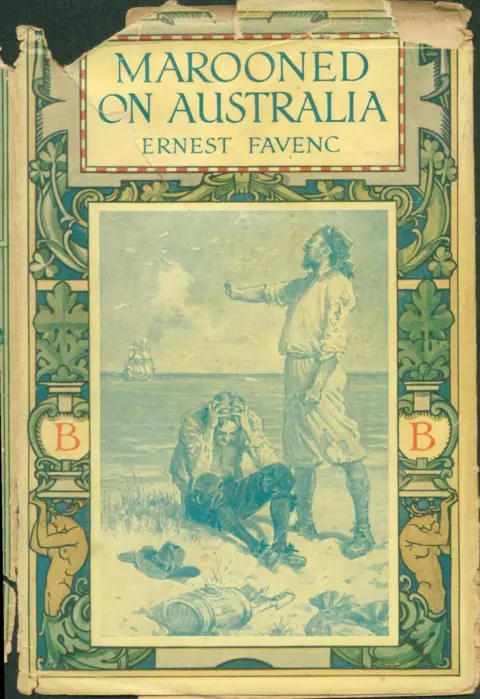
Marooned on Australia
Ernest Favenc
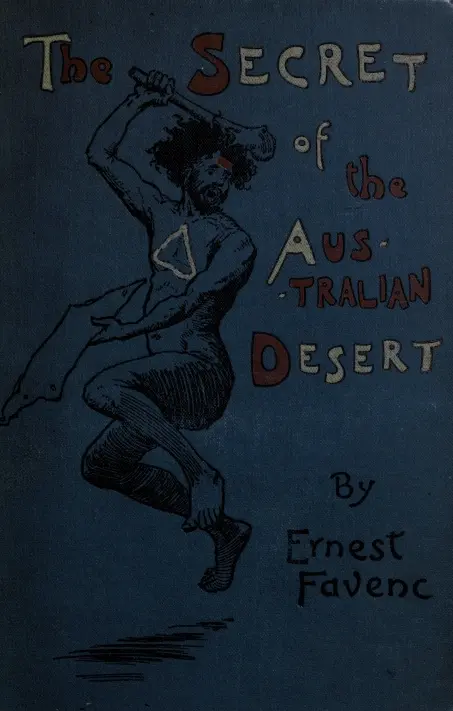
THE CLASSIC COLLECTION · 1895
"The Secret of the Australian Desert" by Ernest Favenc is a historical fiction narrative set during the late 19th century. The story revolves around the mysterious disappearance of the explorer Ludwig Leichhardt and his party while attempting to traverse the uncharted heart of Australia in the mid-1800s. Favenc weaves an adventure tale that brings together a group of contemporary explorers as they embark on a quest to uncover the fate of Leichhardt, driven by a mix of curiosity and the allure of the unknown. At the start of the narrative, we are introduced to a scorching November evening in central Australia, where three men—Morton, his young cousin Charlie, and their friend Brown—sit on the porch of a cattle station. They discuss the legend of a "burning mountain" rumored to exist nearby, inspiring them to embark on an expedition to explore its truth and possibly uncover the remains of Leichhardt's lost expedition. The opening sets the stage for their adventure as they prepare for their journey into the harsh, unforgiving landscape filled with scrubs and sandy ridges, expressing their hopes, fears, and the camaraderie that will guide them through the challenges ahead. Throughout this early portion, hints of mystical and ominous elements foreshadow challenges beyond just the treacherous terrain they must navigate.
Introduction adapted from the source catalogue; source summaries may be automatically generated.
Free to read · English · 49,662 words · No account needed
MAKE TIME FOR A GOOD BOOK
On by default. Untick to stop anonymous reading totals. Each page counts after 10 seconds in view. How this works.
Anonymous counting is on unless you have switched it off.
"December 16.--Klausen died last night; we buried him this morning. We now leave the Doctor's old Port-Essington track and follow this river up, south and west.
"December 20.--Getting into dry country again, and the scrub is
becoming very bad. We are scarcely able to force a way through on
foot--"
(Here, for many pages, the journal was so mutilated and discoloured by water that only an occasional line was intelligible. These seemed to point to the party being constantly baffled by scrub and dry country; and also that some of them were attacked by scurvy.)
"You've been in Queensland, Brown?" said Morton when they arrived at
this stage in their transcription. "How do you follow out this
journal?"
"As plain as print. Stuart's journal--at least the part we have--commences on what is now known as the Diamantina River, I think. The great dry plains he speaks of are to the westward of that river, and in a dry season would be impassable to anyone not knowing the country. By following the river up they would easily cross the watershed on to the Gulf of Carpentaria waters, and so get on to Leichhardt's old track."
Brown got a map out of the pack and illustrated thereon what he had
just said.
The next coherent portion of the journal would seem to have been
written after a disaster.
"April 24th, 1849.--There are now only five of us left; two--Hentig and the Doctor--are both sick. The other two must have died on the dry stage, as they have not come in here and the blacks would not let them go back. I have not been able to write my journal for some days, and as the Doctor cannot write now, no record at all has been kept. We were just packing up to leave the rocky water-hole in the scrub where we had been camped for some days, when the blacks attacked us on all sides. There were so many of them, and they had such good cover in the scrub, that we fairly had to get away as best we could without water, or all of our packs. While we were trying to keep them off a gun burst and nearly shattered the Doctor's hand. This forced us to hasten our retreat to get him safely away, leaving some of our horses and mules behind. Immediately on getting out of the scrub we found ourselves in open stunted forest, covered with prickly grass. We kept to the south-west until evening and then camped for a while, for the Doctor and Hentig could go no further. We had travelled very slowly, and when we camped Kelly asked me how far I thought we had come. I told him about ten miles. He then proposed that we should take the freshest horses and go back and try and get some water, as even if the blacks were camped at the hole they would be asleep at the time we got there. I agreed with him, for it seemed hopeless to go on through this dry forest without water. I suggested, however, that we should take all the animals and Murphy, and if possible give the blacks a fright. Leaving the two others to look after the sick men and keep a fire going, we started, and were singularly fortunate. We got back soon after midnight and found the blacks camped by the water-hole. They were asleep, having been feasting on the horses we were forced to abandon. Some awoke, however, and we immediately rushed into the camp, shouting and firing. They fled indiscriminately, leaving most of their weapons behind, and these we heaped on the fires. We were lucky enough to find two big kegs we had abandoned, and filling these and all the canteens we had brought, we started back as soon as possible before the natives recovered from their scare. We reached camp soon after sunrise, and but for the success of our raid none of us would be alive now, for that dry forest continued without change or break, day after day. We hoarded up some of the water for the sick men and managed to keep them on their horses, but I remember nothing of the last day, nor how the other two parted from us. Murphy says they went after what they insisted was a smoke, but he says it was only a whirlwind passing over burnt country. Kelly found this water-hole through seeing two white parrots coming from this direction early in the morning. It is on the edge of the forest, and to the west lies a great plain, still covered with the same prickly grass. There is a little coarse grass for the few beasts we have now left, but the water in the hole is thick and muddy and fast drying up.
Your reading position is saved on this browser. Take it to another device with a library code. Reading pages adapt to text, rather than matching a printed edition.
Ernest Favenc
Ernest Favenc
Ernest Favenc
BEHIND THE BOOK
This eBook is for the use of anyone anywhere in the United States and most other parts of the world at no cost and with almost no restrictions whatsoever. You may copy it, give it away or re-use it under the terms of the Project Gutenberg License included with this eBook or online at www.gutenberg.org. If you are not located in the United States, you will have to check the laws of the country where you are located before using this eBook. Read the source licence.
The original source file, including credits and licence, is retained by this library. Request an original-format copy at no charge. Please include the book title and Project Gutenberg identifier #72319.
KEEP YOUR CURIOSITY GOING
Cécile Tormay

Moritz Busch
Coulson Kernahan
John L. Ransom

Maurice Baring
Frances Wright