THE CLASSIC COLLECTION✦My diaries, being a personal narrative of events 1888-1914, Part 2 (1900-1914)CLASSIC FREE BOOKS
My diaries, being a personal narrative of events 1888-1914, Part 2 (1900-1914)
Wilfrid Scawen Blunt
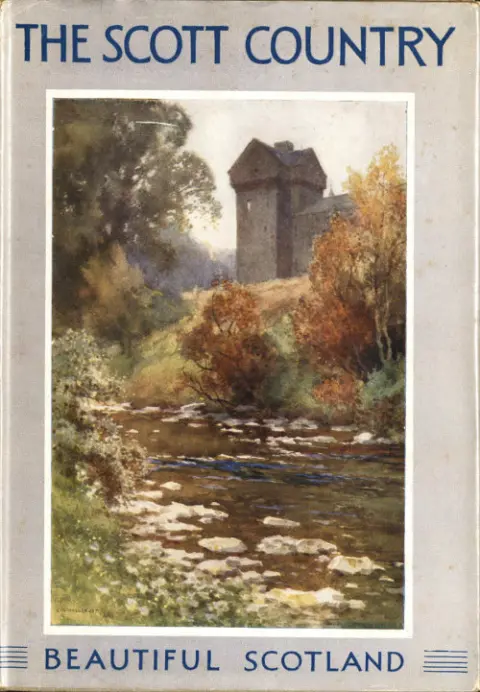
THE CLASSIC COLLECTION · 1922
"The Scott Country" by John Geddie is a descriptive account written in the early 20th century. The book serves as a guide to the landscapes, historical sites, and cultural heritage associated with the renowned Scottish author Sir Walter Scott. Geddie intricately weaves together the geography and history of this celebrated region, which is deeply tied to Scott's literary legacy. In "The Scott Country," Geddie takes readers on a journey through the landscapes that inspired Walter Scott's stories and poetry. The narrative highlights various locations such as Abbotsford, Melrose Abbey, Kelso, and Dryburgh, illustrating their significance to both Scott's life and the broader historical context of Scotland. Geddie captures the enchantment of the Borderland, discussing its rich tapestry of legends, battles, and natural beauty. Through vivid descriptions and historical anecdotes, he paints a portrait of a region where fiction and reality intertwine, inviting readers to explore the deeply rooted connections between Scott's works and the land itself.
Introduction adapted from the source catalogue; source summaries may be automatically generated.
Free to read · English · 15,264 words · No account needed
MAKE TIME FOR A GOOD BOOK
On by default. Untick to stop anonymous reading totals. Each page counts after 10 seconds in view. How this works.
Anonymous counting is on unless you have switched it off.
These are, for the most part, merely excursions of a spirit whose abiding home or favourite haunt was the Valley of the Tweed and its encircling hills. Edinburgh itself, where there are so many rival memories, does not recall the author of Waverley so instantly and intimately to our thoughts and affections as Abbotsford; and the triple Eildon, rather than Arthur’s Seat, is the “high place” of the Scott cult. If he brought a new glory to the Border Country, it was the Border Country that “made him”, as a man still more than as a writer; and he is the most typical, as he is the most honoured, of its many famous sons.
The greatest as well as
“The last of all the Bards was he
Who sung of Border chivalry”.
The pull of the blood has in this instance proved more potent than that of birth and early environment; although Walter Scott was from his childhood, at Sandyknowe and Kelso, familiar with Border scenes, as well as steeped in Border lore. At a later stage in his growth, lame as he was, with Shortreed and other congenial companions he tramped the glens and climbed the hills and hill-passes of Tweedside, gathering and storing as he went its history and romance for the delight of future generations,
“Giving each rock its storied tale,
Pouring a lay for every dale,
Knitting, as with a moral band,
His native legends with his land,
To lend each scene the interest high
Which Genius beams from Beauty’s eye.”
But while he knew by heart the whole Borderland, and had explored its
chief river from where
“Tweed, Annan, and Clyde
A’ rise in ae hill-side”,
to where it enters the sea, under the time- and war-battered walls of the ancient town of Berwick, there were parts of the Tweed and its tributaries that he knew better than others. There is, in the eyes of Scott devotees, an Inner Circle, a “Holy of Holies”, of the Scott Country, and, fortunately for the pilgrim to these shrines, its centre lies where the main lines of road and rail, like those of river-drainage, converge around the meeting-place of Ettrick, Gala, and Leader with Tweed—under the shadow of the Eildon Hills and beside those two “miraculous” products of the hand and brain of man—Melrose Abbey and Abbotsford House. The creative art, in prose and verse, of the Great Magician was not often exercised on the chief stream higher up than Neidpath and Manor, or, at farthest, “Merlin’s Grave”, beside Drummelzier and under Tinnis. Nor did his genius much frequent the lower courses of Tweed, below Kelso Bridge and Wark Castle, and the inflow of the “sullen Till”, although here also are many scenes of beauty and pages of story that might well have set his imagination afire. It seems more at home, also, in the valleys of the Teviot, the Ettrick, and the Yarrow than on the Leader, the Gala, and other northern affluents of the Tweed. Accident and propinquity may have helped to determine his choice of scene and theme; but old associations and affinities may have done still more. The nearer the Border line of the Cheviots, the thicker are footprints of the clan and national frays of old—of battles and skirmishes in which Scott’s own ancestry took more than their share; and the deeper and richer the soil of tradition in which he delighted to delve. To the Teviot, the Borthwick, and the Ettrick—to Branxholm and Harden, Rankleburn and Newark—he was drawn by the call of the blood of his father’s race; an equal tie bound him to the Jed, the old home of his mother’s kin, the “hot and hardy Rutherfords”; while Yarrow, the heart of his Forest Sheriffdom, is also the core of its ballad poetry. It has to be remembered, also, that the period of Scott’s greatest literary output was also the period of failing physical powers, and that journeys through his beloved Borderland had to be more and more circumscribed to beaten paths of easy access.
Your reading position is saved on this browser. Take it to another device with a library code. Reading pages adapt to text, rather than matching a printed edition.
BEHIND THE BOOK
This eBook is for the use of anyone anywhere in the United States and most other parts of the world at no cost and with almost no restrictions whatsoever. You may copy it, give it away or re-use it under the terms of the Project Gutenberg License included with this eBook or online at www.gutenberg.org. If you are not located in the United States, you will have to check the laws of the country where you are located before using this eBook. Read the source licence.
The original source file, including credits and licence, is retained by this library. Request an original-format copy at no charge. Please include the book title and Project Gutenberg identifier #52345.
KEEP YOUR CURIOSITY GOING
Wilfrid Scawen Blunt
Wilfrid Scawen Blunt

E. W. (Edgar Watson) Howe
Cécile Tormay

Moritz Busch
John L. Ransom