
The William Henry Letters
Abby Morton Diaz
THE CLASSIC COLLECTION · 1875
"The Schoolmaster's Trunk, Containing Papers on Home-Life in Tweenit" by Mrs. A. M. Diaz is a social commentary written in the late 19th century. This work explores the everyday life and struggles of women in a rural village context, particularly focusing on their roles and the cultural expectations surrounding domestic work. The writing presents a protagonist, a schoolmaster, who observes the lives of the village women, prompting reflections on their labor and societal norms. The opening of the narrative introduces the schoolmaster's critical viewpoint on the obsession with culinary duties, particularly the making of pies, which he sees as detrimental to the well-being and freedom of women like Mrs. Fennel. Through his observations and interactions, he highlights the exhausting cycle of household chores that consume the lives of these women, limiting their time for personal growth and intellectual pursuits. As he grapples with the societal expectations placed on women, the schoolmaster contemplates writing an "Appeal to Women," intending to spark a conversation about the necessity and change of these entrenched norms. This sets the stage for a deeper exploration of gender roles, domesticity, and the quest for liberation within the quaint yet restrictive village of Tweenit.
Introduction adapted from the source catalogue; source summaries may be automatically generated.
Free to read · English · 21,769 words · No account needed
MAKE TIME FOR A GOOD BOOK
On by default. Untick to stop anonymous reading totals. Each page counts after 10 seconds in view. How this works.
Anonymous counting is on unless you have switched it off.
We often hear people remark, “Oh! we don’t want to be thinking of what does harm, and what does good. The best way is to eat what’s on the table.” I know a mother who gives her only child, a little girl three years old, hot biscuits, mince-pie, rich cake, and the like, believing, she says, that “a child’s stomach should get used to every thing.” For her part, she believes in living the natural way, not in picking and choosing. Why not, on the same principle, let the child get used to all kinds of reading, and all kinds of companions?
It is curious, the way people assume, that, because the present system of cooking and serving meals is customary, it is, therefore, natural; as if the courses of a dinner, each with its central dish, and that with its revolving lesser dishes, were, equally with the solar system, an established order of nature. Meal-providers have sought out many inventions, and call these the “natural way.” They give us, at one sitting, fish, pork, flour, butter, salt, milk, eggs, raisins, spices, corn, potatoes, squash, coffee, sugar, saleratus, pickles, onions, lard, pepper, cooked fruits, tomatoes, essences, all variously combined, and say, “Here, eat, eat in the natural way.” Why natural? The men and women it helps to produce are, to some extent, its natural consequences; but are they natural men and women? Hear them. “Oh, my head!” “Oh, my back!” “Oh, my side!” “Oh, my liver!” “Oh, my stomach!” “Oh, my nerves!” On every side resounds the mournful chorus. Seldom do we hear break in even one jubilant voice, chanting in response, “I am in perfect health. I feel no ache, no pain.” Is this, then, the natural way? But the system speaks for itself, or, rather, the innumerable host of invalids speak for it. So does the grand army of doctors. So do proprietors of patent medicines, rolling in wealth. Why, people take ill health for granted. “No use telling your aches: everybody has ’em,” is a remark often heard.
Occasionally an individual rebels, and insists on eating really simple and natural food. Such individual is straightway called odd. He is jeered at, ridiculed, accused of thinking about his stomach, and about what merely goes to sustain the body, as if such thinking were not worth while.
Your reading position is saved on this browser. Take it to another device with a library code. Reading pages adapt to text, rather than matching a printed edition.
Abby Morton Diaz
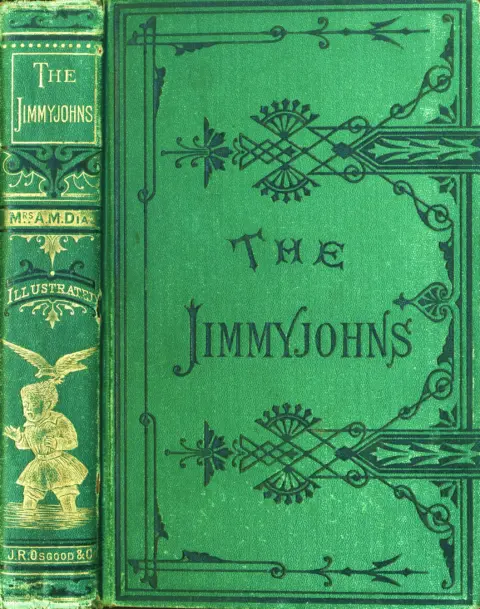
Abby Morton Diaz
Abby Morton Diaz
Abby Morton Diaz
BEHIND THE BOOK
This eBook is for the use of anyone anywhere in the United States and most other parts of the world at no cost and with almost no restrictions whatsoever. You may copy it, give it away or re-use it under the terms of the Project Gutenberg License included with this eBook or online at www.gutenberg.org. If you are not located in the United States, you will have to check the laws of the country where you are located before using this eBook. Read the source licence.
The original source file, including credits and licence, is retained by this library. Request an original-format copy at no charge. Please include the book title and Project Gutenberg identifier #68812.
KEEP YOUR CURIOSITY GOING
Coulson Kernahan

Maurice Baring
Frances Wright
Cécile Tormay

Frederic Jesup Stimson

W. H. P. (William Henry Pope) Jarvis