Making the Nine
Albertus T. (Albertus True) Dudley
THE CLASSIC COLLECTION · 1909
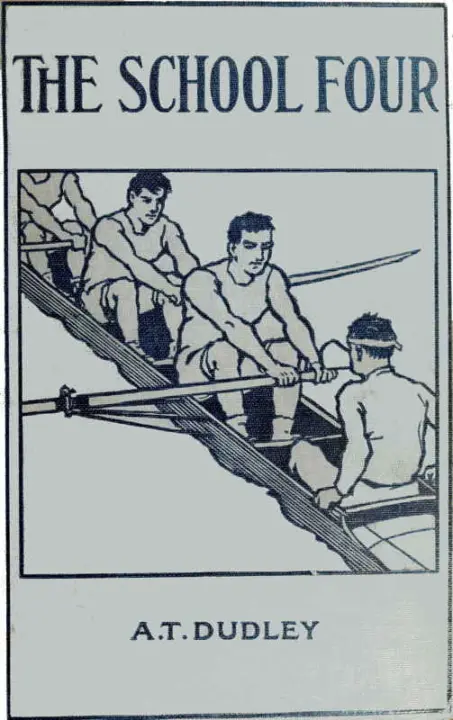
"The School Four" by Albertus T. Dudley is a novel written in the early 20th century. The story revolves around the experiences of boys at a private school engaging in athletics, primarily football and rowing, as they navigate their school life and rivalry among peers. The main character, John Smith, is a key figure who proposes the formation of a new athletic league, which sets the stage for the unfolding drama of competition and personal development. The beginning of the novel introduces John Smith, a clever and ambitious student from the Newbury Latin School, who successfully initiates the formation of the Triangular League, aiming to enhance rivalries among the three participating schools. The opening chapters delve into the discussions and debates among the schoolboys regarding their perspectives on athletics, particularly regarding their chances and the character of their peers. The interactions between characters such as Sumner, Talbot, and the newly arrived Roger Hardie hint at deeper themes of friendship, competition, and self-discovery as they face challenges in their athletic endeavors and personal relationships.
Introduction adapted from the source catalogue; source summaries may be automatically generated.
Free to read · English · 59,227 words · No account needed
MAKE TIME FOR A GOOD BOOK
On by default. Untick to stop anonymous reading totals. Each page counts after 10 seconds in view. How this works.
Anonymous counting is on unless you have switched it off.
“Not that exactly, but you’re always thinking about yourself. You don’t take much interest in anybody else.”
“It isn’t easy to do it if they won’t let you,” said Dunn, with a gloomy smile. “What else?”
“Your ideas are different from theirs. You think things are funny that they don’t. They don’t like your way of looking at things.”
“In other words I’m all wrong,” growled Dunn, in disgust, as he rose to go. “I couldn’t please ’em, anyway, and I shan’t try it, but I’m going to stop talking and cut out smoking and get right down to work.”
“For how long?” asked Roger, with a grin of incredulity.
“Right through the year,” returned Dunn, hotly. “You don’t believe me, but you wait and see!”
With this bold assertion on his lips, Dunn made for his room. The door was just closing behind him when Roger called out, “Oh, Jason!”
Dunn returned, closed the door and backed against it.
“Aren’t you going to play ball at all?”
“No; what’s the use? If I can’t play on the team, I might as well cut the whole thing out and study.”
“You can’t study all the time. You might come out just the same and play on the second and pitch for batting practice. It would show the right spirit, and the fellows would appreciate it. You know how they all felt about Sumner.”
“I won’t do it,” answered Dunn, stubbornly. “I’ve been cut off from the team, and now it’ll have to get along without me. Sumner always had a chance to get on the team again; I’m out of it for good.”
The time had come for the crews to take to the river. The Boston schools row under the patronage of the Boston Athletic Association, which provides boats and coaches, arranges for the races, and furnishes prizes. Each school enters two fours, a first and second, which compete in separate races. As Westcott’s possessed a pair-oar of her own, there were places in the boats for ten men exclusive of the coxswains. Talbot narrowed down his squad to eleven, allowing an extra man for accidents and illness, and getting rid of the rest by the easy method of not inviting them to report on the river. Hardie, to his delight, received orders to bring his rowing clothes to the boat-house. He did so fully conscious that his destination was neither the first nor the second. Talbot had said nothing to this effect,—indeed, Talbot, now that the rowing season was actually to begin, abated something of his intimacy,—but there was a general agreement as to the provisional formation of the crews which was almost authoritative. Of the new men who had come out, three had shown promise of skill as oarsmen. One of them was Bursley, a quiet fellow who came in every day from a suburb a dozen miles out, tall, muscular, and teachable. Louis Tracy was another, and finally McDowell, who, though he had grown during the year, was still undersized. On the first crew were to be tried—so the report ran—Talbot, Bursley, Eaton, and Pitkin; on the second, Weld, Sumner, L. Tracy, and McDowell; Wilmot, Hardie, and Redfield would thus be left over for the pair-oar.
Your reading position is saved on this browser. Take it to another device with a library code. Reading pages adapt to text, rather than matching a printed edition.
Albertus T. (Albertus True) Dudley
Albertus T. (Albertus True) Dudley
Albertus T. (Albertus True) Dudley
Albertus T. (Albertus True) Dudley
BEHIND THE BOOK
This eBook is for the use of anyone anywhere in the United States and most other parts of the world at no cost and with almost no restrictions whatsoever. You may copy it, give it away or re-use it under the terms of the Project Gutenberg License included with this eBook or online at www.gutenberg.org. If you are not located in the United States, you will have to check the laws of the country where you are located before using this eBook. Read the source licence.
The original source file, including credits and licence, is retained by this library. Request an original-format copy at no charge. Please include the book title and Project Gutenberg identifier #56215.
KEEP YOUR CURIOSITY GOING
Coulson Kernahan

Maurice Baring
Frances Wright
Cécile Tormay

Frederic Jesup Stimson

W. H. P. (William Henry Pope) Jarvis