THE CLASSIC COLLECTION✦Love Letters of Nathaniel Hawthorne, Volume 2 (of 2)CLASSIC FREE BOOKS
Love Letters of Nathaniel Hawthorne, Volume 2 (of 2)
Nathaniel Hawthorne
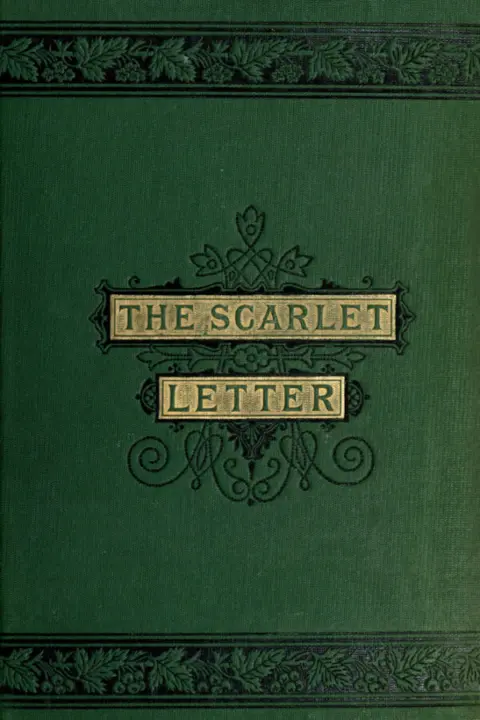
THE CLASSIC COLLECTION · 1850
"The Scarlet Letter" by Nathaniel Hawthorne is a historical novel published in 1850. Set in Puritan Massachusetts during the 1640s, it follows Hester Prynne, who bears a child outside marriage and must wear a scarlet "A" as punishment for adultery. While Hester refuses to name the father, her long-lost husband arrives in disguise, vowing revenge. The story explores sin, guilt, and redemption as secrets threaten to destroy lives in this unforgiving community.
Introduction adapted from the source catalogue; source summaries may be automatically generated.
Free to read · English · 84,333 words · No account needed
MAKE TIME FOR A GOOD BOOK
On by default. Untick to stop anonymous reading totals. Each page counts after 10 seconds in view. How this works.
Anonymous counting is on unless you have switched it off.
One of these seafaring men the shipmaster, indeed, who had spoken to Hester Prynne was so smitten with Pearl’s aspect, that he attempted to lay hands upon her, with purpose to snatch a kiss. Finding it as impossible to touch her as to catch a humming-bird in the air, he took from his hat the gold chain that was twisted about it, and threw it to the child. Pearl immediately twined it around her neck and waist with such happy skill, that, once seen there, it became a part of her, and it was difficult to imagine her without it.
“Thy mother is yonder woman with the scarlet letter,” said the seaman, “Wilt thou carry her a message from me?”
“If the message pleases me, I will,” answered Pearl.
“Then tell her,” rejoined he, “that I spake again with the black-a-visaged, hump shouldered old doctor, and he engages to bring his friend, the gentleman she wots of, aboard with him. So let thy mother take no thought, save for herself and thee. Wilt thou tell her this, thou witch-baby?”
“Mistress Hibbins says my father is the Prince of the Air!” cried Pearl, with a naughty smile. “If thou callest me that ill-name, I shall tell him of thee, and he will chase thy ship with a tempest!”
Pursuing a zigzag course across the market-place, the child returned to her mother, and communicated what the mariner had said. Hester’s strong, calm steadfastly-enduring spirit almost sank, at last, on beholding this dark and grim countenance of an inevitable doom, which at the moment when a passage seemed to open for the minister and herself out of their labyrinth of misery—showed itself with an unrelenting smile, right in the midst of their path.
With her mind harassed by the terrible perplexity in which the shipmaster’s intelligence involved her, she was also subjected to another trial. There were many people present from the country round about, who had often heard of the scarlet letter, and to whom it had been made terrific by a hundred false or exaggerated rumours, but who had never beheld it with their own bodily eyes. These, after exhausting other modes of amusement, now thronged about Hester Prynne with rude and boorish intrusiveness. Unscrupulous as it was, however, it could not bring them nearer than a circuit of several yards. At that distance they accordingly stood, fixed there by the centrifugal force of the repugnance which the mystic symbol inspired. The whole gang of sailors, likewise, observing the press of spectators, and learning the purport of the scarlet letter, came and thrust their sunburnt and desperado-looking faces into the ring. Even the Indians were affected by a sort of cold shadow of the white man’s curiosity and, gliding through the crowd, fastened their snake-like black eyes on Hester’s bosom, conceiving, perhaps, that the wearer of this brilliantly embroidered badge must needs be a personage of high dignity among her people. Lastly, the inhabitants of the town (their own interest in this worn-out subject languidly reviving itself, by sympathy with what they saw others feel) lounged idly to the same quarter, and tormented Hester Prynne, perhaps more than all the rest, with their cool, well-acquainted gaze at her familiar shame. Hester saw and recognized the selfsame faces of that group of matrons, who had awaited her forthcoming from the prison-door seven years ago; all save one, the youngest and only compassionate among them, whose burial-robe she had since made. At the final hour, when she was so soon to fling aside the burning letter, it had strangely become the centre of more remark and excitement, and was thus made to sear her breast more painfully, than at any time since the first day she put it on.
Your reading position is saved on this browser. Take it to another device with a library code. Reading pages adapt to text, rather than matching a printed edition.
Nathaniel Hawthorne
Nathaniel Hawthorne
Nathaniel Hawthorne

Rebecca Harding Davis & Thomas De Quincey & Charles Dickens & Nathaniel Hawthorne & Edward Bulwer Lytton, Baron Lytton & Edgar Allan Poe & Harriet Elizabeth Prescott Spofford
BEHIND THE BOOK
This eBook is for the use of anyone anywhere in the United States and most other parts of the world at no cost and with almost no restrictions whatsoever. You may copy it, give it away or re-use it under the terms of the Project Gutenberg License included with this eBook or online at www.gutenberg.org. If you are not located in the United States, you will have to check the laws of the country where you are located before using this eBook. Read the source licence.
The original source file, including credits and licence, is retained by this library. Request an original-format copy at no charge. Please include the book title and Project Gutenberg identifier #33.
KEEP YOUR CURIOSITY GOING
Cécile Tormay

Moritz Busch
Coulson Kernahan
John L. Ransom

Maurice Baring
Frances Wright