THE CLASSIC COLLECTION✦A dead man’s diaryCLASSIC FREE BOOKS
A dead man’s diary
Coulson Kernahan
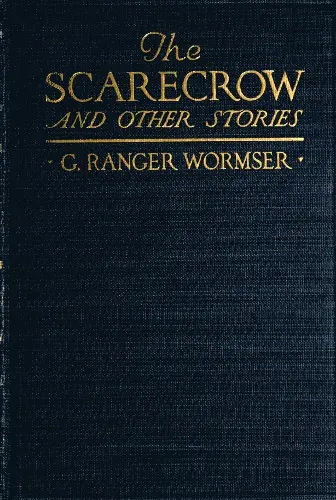
THE CLASSIC COLLECTION · 1918
"The Scarecrow and Other Stories" by G. Ranger Wormser is a collection of short stories written in the early 20th century. This anthology presents a diverse range of narratives that delve into the human experience, exploring themes of fear, yearning, and the uncanny. The opening story, "The Scarecrow," introduces us to Benny, a young boy living with his mother on a quiet farm, where a seemingly innocuous scarecrow becomes a focal point of both intrigue and dread. At the start of the collection, we are introduced to the anxious relationship between a boy named Benny and his mother. As they engage in conversation amidst the backdrop of their rustic farm, Benny expresses an unsettling fascination with the scarecrow dressed in his grandfather's military uniform standing in the cornfield. The dialogue between them reveals Benny's growing fear of the scarecrow, believing that it may beckon to him. His mother, while trying to reassure him, becomes enveloped in her own fears. The tension builds as the scarecrow takes on a life of its own under the moonlight, culminating in the ominous suggestion that Benny feels an inexplicable connection to it. This eerie opening sets the tone for the collection, suggesting that ordinary life can harbor extraordinary fears and desires.
Introduction adapted from the source catalogue; source summaries may be automatically generated.
Free to read · English · 46,575 words · No account needed
MAKE TIME FOR A GOOD BOOK
On by default. Untick to stop anonymous reading totals. Each page counts after 10 seconds in view. How this works.
Anonymous counting is on unless you have switched it off.
She pointed a trembling forefinger at that yellow mass tied to the
dog-house.
"Him," she whispered. "He don't make no racket, James."
The man peered over her shoulder.
"The chow?"
"Yes;" her voice was still. "China-Ching. He don't make no racket,
James."
"I'd like to hear him," the man blustered. "I'd just like to hear one peep out of him;--that's all."
She saw his coarse, hairy hand go to his hip pocket. She smiled bitterly. She knew the confidence he felt when he touched the mother-of-pearl handle of his pistol.
"You don't need that on him," she said. "He just sits there and don't never move. He don't hardly eat when you feeds him. He don't seem to have no heart left for nothing. He ain't like the terrier what had the distemper;--he ain't like the greyhound what had the hydrophobia,--so awful bad."
"What d'you mean?" The man muttered angrily. "Ain't they had the hydrophobia;--ain't they had the distemper;--ain't they?"
"You says they did, James."
"Ain't I the one to know? If I ain't been born with dog-sense, would folks be giving me their muts to care for?"
"You shot them pups, James."
"And what if I did?" He stormed. "They was dangerous--they was a menace to the community,--so they was. And see, here,--you take it from me, there ain't nothing more dangerous as a dog when he gets took that there way. Why, I've heard tell of dogs what have torn men limb from limb." And then he added in afterthought: "Men that've been kind to 'em, too."
Her laughter rang out shrilly, piercingly.
"Aw, James," she giggled hysterically. "Aw, now, James--
"What's that?" His hand was on her hand. "See here, you, ain't I kind to
'em?"
His touch sobered her quite suddenly.
"Kind to 'em--?"
She repeated his words vaguely as though not fully conscious of their
actual meaning.
The grip of his fingers tightened cruelly about her arm.
"Ain't I--kind--to--'em?"
"Oh, my Gawd," she whimpered. "Oh, my Gawd,--yes."
He went back to the center of the room and lighted the lamp on the bare-boarded, pine-wood table. Its light flickered in a sickly, yellow glow over the straight-backed chairs, across the unpapered walls, and dribbled feebly upwards to where the heavy rafters of the ceiling were obliterated in a smothering thickness of shadows.
"What're you standing there for? Pull down that blind! Come here, I
say!"
The faint, motionless form there beside the dog-house. The wooden, stiffened attitude of it. The great mass of the chow's rigid body that was gradually becoming absorbed into the gray shadow; that was slowly losing its faint outline in the saturating, blurring darkness.
Your reading position is saved on this browser. Take it to another device with a library code. Reading pages adapt to text, rather than matching a printed edition.
BEHIND THE BOOK
This eBook is for the use of anyone anywhere in the United States and most other parts of the world at no cost and with almost no restrictions whatsoever. You may copy it, give it away or re-use it under the terms of the Project Gutenberg License included with this eBook or online at www.gutenberg.org. If you are not located in the United States, you will have to check the laws of the country where you are located before using this eBook. Read the source licence.
The original source file, including credits and licence, is retained by this library. Request an original-format copy at no charge. Please include the book title and Project Gutenberg identifier #40027.
KEEP YOUR CURIOSITY GOING
Coulson Kernahan

Maurice Baring
Frances Wright
Cécile Tormay

Frederic Jesup Stimson

W. H. P. (William Henry Pope) Jarvis