THE CLASSIC COLLECTION✦A dead man’s diaryCLASSIC FREE BOOKS
A dead man’s diary
Coulson Kernahan
THE CLASSIC COLLECTION · 1918
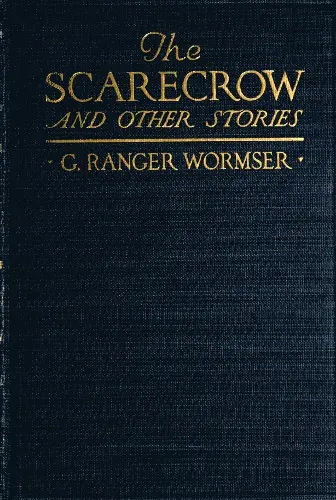
"The Scarecrow and Other Stories" by G. Ranger Wormser is a collection of short stories written in the early 20th century. This anthology presents a diverse range of narratives that delve into the human experience, exploring themes of fear, yearning, and the uncanny. The opening story, "The Scarecrow," introduces us to Benny, a young boy living with his mother on a quiet farm, where a seemingly innocuous scarecrow becomes a focal point of both intrigue and dread. At the start of the collection, we are introduced to the anxious relationship between a boy named Benny and his mother. As they engage in conversation amidst the backdrop of their rustic farm, Benny expresses an unsettling fascination with the scarecrow dressed in his grandfather's military uniform standing in the cornfield. The dialogue between them reveals Benny's growing fear of the scarecrow, believing that it may beckon to him. His mother, while trying to reassure him, becomes enveloped in her own fears. The tension builds as the scarecrow takes on a life of its own under the moonlight, culminating in the ominous suggestion that Benny feels an inexplicable connection to it. This eerie opening sets the tone for the collection, suggesting that ordinary life can harbor extraordinary fears and desires.
Introduction adapted from the source catalogue; source summaries may be automatically generated.
Free to read · English · 46,575 words · No account needed
MAKE TIME FOR A GOOD BOOK
On by default. Untick to stop anonymous reading totals. Each page counts after 10 seconds in view. How this works.
Anonymous counting is on unless you have switched it off.
"It is not that, Angele. She was like the others. They come because they are curious. Something, perhaps, brings them here, but they do not know that. They are only curious. They do not believe. I tell them the truth. They are shocked for a little moment. They do not believe, Angele."
"Pauvre petite Maman, you are tired."
"Non, non, Angele."
"Will you have Jean see you tired, Maman?"
The woman stared up into the girl's small, white face that was dimmed with shifting shadows. The woman's heavily lidded eyes met the girl's wide, dark eyes.
"Jean--"
"He will be home to eat, Maman. Soon, now, he will be home."
The woman passed her hands again and again over her forehead and then she held them with the tips of her fingers pressed tight to her temples.
"He is such a child, Angele."
"Shall we have supper now?"
"Angele--"
"I will bring a light in here, Maman, and then when Jean is back we will
go in to supper."
"He--is--such--a--child,--Angele."
"And never on time, Maman!"
The woman caught the girl's fingers between her own.
"Answer me, Angele. Answer me!"
The girl looked down in surprise.
"But what, Maman?"
The woman's breath came quickly.
"He is a child. Say that he is a baby. He is all that I have. You and he are all--everything! Say, Angele, that he is a child! Only yesterday, you remember--the long curls? The velvet suit? Surely it was yesterday. Say, Angele, that he--is--still--a--little--one."
The girl threw back her head and laughed. The shadows lay like long, dark fingers on the white of her throat.
"Of course. He is young--too young even now when they take the young. You have no need to worry, Maman. Maman--what is it?"
She had seen the sudden, far-away look in the woman's eyes.
She had seen her head stretch forward, the chin pointing, the mouth a
little open.
"Maman--"
The woman's hand reached out in a gesture commanding silence.
"The voices," the woman whispered. "They have been after me the whole day. The voices. They--keep--coming--and--coming--to--me--I have not been able to think--for the voices--"
"Maman--"
"You say 'yes.' You are coming--nearer--nearer. No--I cannot see. But hear--Mais, it is good now! You speak distinctly. Of course I thank you for speaking so beautifully. You--say--you--want--want--"
"Petite Maman, you will make yourself ill with those old horoscopes and these voices. Petite Maman, have you not done enough for one day?"
The woman paid no attention to her. She did not seem to hear the girl. Her face was pale; there were faint, bluish smudges about her mouth and nostrils.
Your reading position is saved on this browser. Take it to another device with a library code. Reading pages adapt to text, rather than matching a printed edition.
BEHIND THE BOOK
This eBook is for the use of anyone anywhere in the United States and most other parts of the world at no cost and with almost no restrictions whatsoever. You may copy it, give it away or re-use it under the terms of the Project Gutenberg License included with this eBook or online at www.gutenberg.org. If you are not located in the United States, you will have to check the laws of the country where you are located before using this eBook. Read the source licence.
The original source file, including credits and licence, is retained by this library. Request an original-format copy at no charge. Please include the book title and Project Gutenberg identifier #40027.
KEEP YOUR CURIOSITY GOING
Coulson Kernahan

Maurice Baring
Frances Wright
Cécile Tormay

Frederic Jesup Stimson

W. H. P. (William Henry Pope) Jarvis