THE CLASSIC COLLECTION✦A dead man’s diaryCLASSIC FREE BOOKS
A dead man’s diary
Coulson Kernahan
THE CLASSIC COLLECTION · 1918
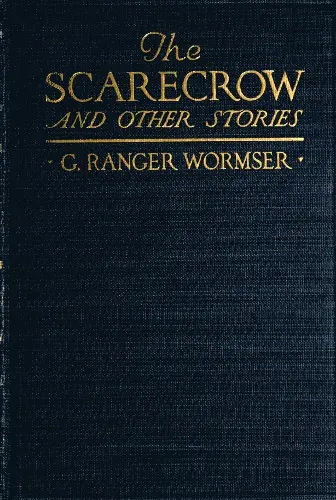
"The Scarecrow and Other Stories" by G. Ranger Wormser is a collection of short stories written in the early 20th century. This anthology presents a diverse range of narratives that delve into the human experience, exploring themes of fear, yearning, and the uncanny. The opening story, "The Scarecrow," introduces us to Benny, a young boy living with his mother on a quiet farm, where a seemingly innocuous scarecrow becomes a focal point of both intrigue and dread. At the start of the collection, we are introduced to the anxious relationship between a boy named Benny and his mother. As they engage in conversation amidst the backdrop of their rustic farm, Benny expresses an unsettling fascination with the scarecrow dressed in his grandfather's military uniform standing in the cornfield. The dialogue between them reveals Benny's growing fear of the scarecrow, believing that it may beckon to him. His mother, while trying to reassure him, becomes enveloped in her own fears. The tension builds as the scarecrow takes on a life of its own under the moonlight, culminating in the ominous suggestion that Benny feels an inexplicable connection to it. This eerie opening sets the tone for the collection, suggesting that ordinary life can harbor extraordinary fears and desires.
Introduction adapted from the source catalogue; source summaries may be automatically generated.
Free to read · English · 46,575 words · No account needed
MAKE TIME FOR A GOOD BOOK
On by default. Untick to stop anonymous reading totals. Each page counts after 10 seconds in view. How this works.
Anonymous counting is on unless you have switched it off.
He drew a deep breath of relief at the sudden change in her voice.
"What was it, Gina? Why wouldn't I have liked it?"
She fidgeted a bit.
"Why? Oh--because."
"Because what, Gina?"
"It was just one big estate, Billy. A girl owns it. She's an orphan. She's very beautiful. She lives there all by herself except for a couple of old servants. Claire Trent and I saw her once or twice when we rode through the place. Claire says she's sort of queer. She doesn't bother about people. She doesn't like them, Claire says. She spends all her time around the place."
"That sounds very strenuous, Gina."
"Oh, it isn't, Billy. It's lovely. The estate is."
"I've heard the places there are pretty."
"Pretty! But this one, Billy;" in her enthusiasm she leaned eagerly forward. "You couldn't imagine it! There are miles and miles. And the whole thing; Claire says the whole year round; it's just one big mass of flowers."
In spite of himself he pulled his arm away from the girl's waist.
"Oh, is it?"
"Billy, I know you don't like flowers. But this! You've never seen
anything like this!"
"There're probably lots and lots of places like it, little sister."
"Oh, no!" Her tone was vehement. "There couldn't be. Not such a garden! All rhododendrons and lilies of the valley--; is anything wrong, Billy?"
"Nothing. Those flowers grow in all gardens at this time of the year."
She stared into his blanched face and her brows drew together in a
puzzled frown.
"Not like this, Billy. Really. I've never seen such rhododendrons or such lilies. And the violets and roses!"
He got to his feet suddenly.
"What?" He asked hoarsely. "What flowers did you say?"
"Why, rhododendrons--and lilies,--and--lilies. What is it, Billy?"
"Go on, Gina. Go on!"
"Billy!"
"Lilies of the valley and violets, Gina--"
"And roses;" she finished mechanically.
"What kind of roses, Gina?"
The puzzled frown left her face.
"Glorious roses, Billy." She was enthusiastic again. "There've never been roses like these. Why, there's one kind of a rose. It's known all over now. It took her years and years to grow it."
"What sort of a rose, Gina? What sort did you say?"
"I didn't say, Billy. I don't even know the name of it. But it's a yellow rose; almost gold. And its center is pink and--and scarlet."
For a moment they were silent.
"Did you see this--this woman, Gina--often?"
"Oh, once or twice, Billy."
"When, Gina?"
"In the evenings; each time."
"Where was she, Gina?"
"Why, how strange you are, Billy."
"Where, Gina? Tell me, d'you hear--tell me--where?"
"In her garden, Billy. What's there to get so excited about?"
Your reading position is saved on this browser. Take it to another device with a library code. Reading pages adapt to text, rather than matching a printed edition.
BEHIND THE BOOK
This eBook is for the use of anyone anywhere in the United States and most other parts of the world at no cost and with almost no restrictions whatsoever. You may copy it, give it away or re-use it under the terms of the Project Gutenberg License included with this eBook or online at www.gutenberg.org. If you are not located in the United States, you will have to check the laws of the country where you are located before using this eBook. Read the source licence.
The original source file, including credits and licence, is retained by this library. Request an original-format copy at no charge. Please include the book title and Project Gutenberg identifier #40027.
KEEP YOUR CURIOSITY GOING
Coulson Kernahan

Maurice Baring
Frances Wright
Cécile Tormay

Frederic Jesup Stimson

W. H. P. (William Henry Pope) Jarvis