THE CLASSIC COLLECTION✦My diaries, being a personal narrative of events 1888-1914, Part 2 (1900-1914)CLASSIC FREE BOOKS
My diaries, being a personal narrative of events 1888-1914, Part 2 (1900-1914)
Wilfrid Scawen Blunt
THE CLASSIC COLLECTION · 1910
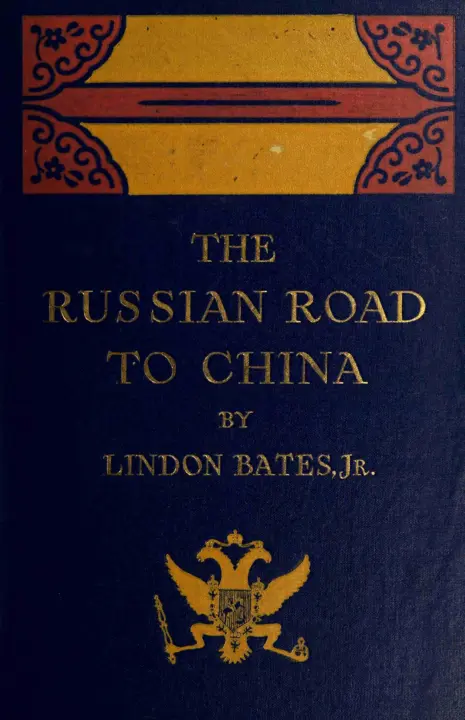
The Russian road to China by Jr. Lindon Bates is a historical travel narrative written in the early 20th century. It traces the overland corridor from European Russia across Siberia and Mongolia to the Chinese frontier, blending on-the-spot travel with a sweeping history of Cossack conquest, caravan trade, and the coming of the Trans-Siberian Railway. The focus is the route’s geography, peoples, and politics—from the Urals and Lake Baikal to Urga, the Great Wall, and Peking. The tone mixes history, reportage, and geopolitical reflection. The opening of this work first sketches the “path of the Cossack,” showing how the fur trade, the Stroganovs’ ventures, and Yermak’s campaigns opened Siberia and led to pledging the new realm to Ivan the Terrible, then follows the push east to Yakutsk and the Pacific, the treaties that closed and reopened trade, and the great tea caravans through Kiahta and Urga. It argues that railways and war shifted Russia’s access to China, with the Manchurian route crippled after conflict and the old Mongolian road holding future promise. Bates paints vivid scenes of Cossacks, settlers, Old Believers, Buriats, and Mongol lamas, and the stark contrasts of empire and steppe. The narrative then shifts aboard the Trans-Siberian: a wintry climb over the Urals, life in the dining car, a former political convict’s seven-year march, the vast monotony of the steppe, and stops that prompt tales of Omsk’s river web, Tomsk’s missed railway link, the great railway strike, exile to the Yakutsk, and the Crown’s “cabinetski” domains. It closes this beginning with the train nearing Irkutsk and Lake Baikal, promising a closer look at the city and the road ahead.
Introduction adapted from the source catalogue; source summaries may be automatically generated.
Free to read · English · 94,292 words · No account needed
MAKE TIME FOR A GOOD BOOK
On by default. Untick to stop anonymous reading totals. Each page counts after 10 seconds in view. How this works.
Anonymous counting is on unless you have switched it off.
Amour à la plus belle;
Honneur au plus vaillant.
There is no use of paltering and waiting to be announced, so we enter the room. The performer hears the steps on the polished floor and swings round on the stool. “Ah, voilà!” he says, and rises to introduce you to his wife.
“A moi le plaisir,” she says, smiling. “Mon frère, Ivan Semyonevich,” presenting you next to the young officer, who rises abruptly and clicks his heels as he takes your hand.
You are motioned to a replica of the little chair, and your host returns to his piano, this time to play with immense satisfaction in your honor a hazy memory of some bygone variety show: “There’ll be a hot time in the old town to-night.”
“A friend is very welcome,” says Madame Karetnikov, when he finishes. “We do not see many from the world here in Siberia.”
“The life, however, is interesting, is it not?”
“O monsieur, I, too, was interested at first, but there are so few people of the world here, and we see them all the time. C’est affreux! I give you a month to change that opinion.”
“You give a month, Irina; I give a week,” growls her brother.
“If it were not that we get away during the spring one would perish of ennui,” the hostess adds. “But Japan is not far. We go there or to Europe every year. Perhaps soon we shall get a transfer to another branch.”
“You bankers have hopes,” observes the brother, “but what of us poor officials of the Justice Department! We are chained to the bench like old galley-slaves, and all we get is three hundred roubles a month and a red button when we are seventy.”
As the macerated song floats anew from the piano, the hall-door opens and there is dimly visible in the anteroom a curious much-encumbered figure, with a gigantic sheepskin hat and short blue reefer coat. He divests himself of these, and of a long woolen inside muffler, and, brushing back his long hair, comes into the room. His blue tunic is resplendent with brass buttons and he wears jack-boots. A light down is growing upon his upper lip. He is nineteen or twenty.
“Good-day!” says our host, hailing him in English.
“Good-day, uncle!” he replies.
He presents himself before Madame Karetnikov, who holds out her hand,
which he formally kisses.
“Zdravstvouitie, Valerian!” says the official, shaking the young
man’s hand.
Then you are introduced with explanations.
“Valerian here is in his last year at the Irkutsk Realistic School, studying preparatory to engineering.”
Your reading position is saved on this browser. Take it to another device with a library code. Reading pages adapt to text, rather than matching a printed edition.
BEHIND THE BOOK
This eBook is for the use of anyone anywhere in the United States and most other parts of the world at no cost and with almost no restrictions whatsoever. You may copy it, give it away or re-use it under the terms of the Project Gutenberg License included with this eBook or online at www.gutenberg.org. If you are not located in the United States, you will have to check the laws of the country where you are located before using this eBook. Read the source licence.
The original source file, including credits and licence, is retained by this library. Request an original-format copy at no charge. Please include the book title and Project Gutenberg identifier #77082.
KEEP YOUR CURIOSITY GOING
Wilfrid Scawen Blunt
Wilfrid Scawen Blunt

E. W. (Edgar Watson) Howe
Cécile Tormay

Moritz Busch
John L. Ransom