THE CLASSIC COLLECTION✦My diaries, being a personal narrative of events 1888-1914, Part 2 (1900-1914)CLASSIC FREE BOOKS
My diaries, being a personal narrative of events 1888-1914, Part 2 (1900-1914)
Wilfrid Scawen Blunt
THE CLASSIC COLLECTION · 1910
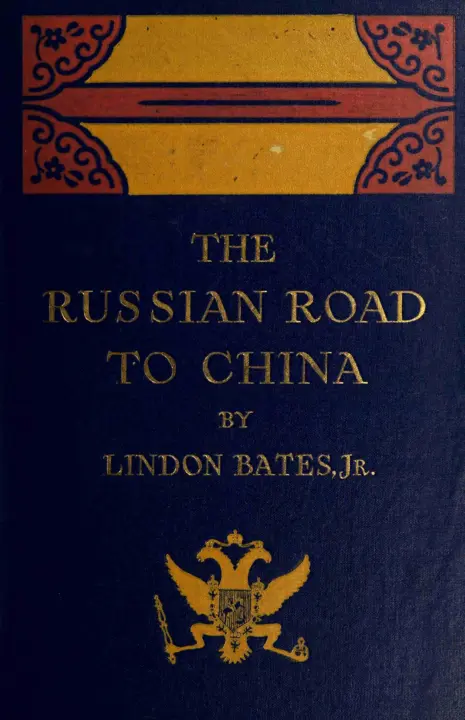
The Russian road to China by Jr. Lindon Bates is a historical travel narrative written in the early 20th century. It traces the overland corridor from European Russia across Siberia and Mongolia to the Chinese frontier, blending on-the-spot travel with a sweeping history of Cossack conquest, caravan trade, and the coming of the Trans-Siberian Railway. The focus is the route’s geography, peoples, and politics—from the Urals and Lake Baikal to Urga, the Great Wall, and Peking. The tone mixes history, reportage, and geopolitical reflection. The opening of this work first sketches the “path of the Cossack,” showing how the fur trade, the Stroganovs’ ventures, and Yermak’s campaigns opened Siberia and led to pledging the new realm to Ivan the Terrible, then follows the push east to Yakutsk and the Pacific, the treaties that closed and reopened trade, and the great tea caravans through Kiahta and Urga. It argues that railways and war shifted Russia’s access to China, with the Manchurian route crippled after conflict and the old Mongolian road holding future promise. Bates paints vivid scenes of Cossacks, settlers, Old Believers, Buriats, and Mongol lamas, and the stark contrasts of empire and steppe. The narrative then shifts aboard the Trans-Siberian: a wintry climb over the Urals, life in the dining car, a former political convict’s seven-year march, the vast monotony of the steppe, and stops that prompt tales of Omsk’s river web, Tomsk’s missed railway link, the great railway strike, exile to the Yakutsk, and the Crown’s “cabinetski” domains. It closes this beginning with the train nearing Irkutsk and Lake Baikal, promising a closer look at the city and the road ahead.
Introduction adapted from the source catalogue; source summaries may be automatically generated.
Free to read · English · 94,292 words · No account needed
MAKE TIME FOR A GOOD BOOK
On by default. Untick to stop anonymous reading totals. Each page counts after 10 seconds in view. How this works.
Anonymous counting is on unless you have switched it off.
We are shown ceremoniously to the door, shake hands, remark about the weather, give our compliments to the wife, and depart. When at the corner, we glance back. Vassili Michaeloff is still standing on the threshold; his three customers too are looking out leisurely at the people passing.
“We have thrown his business out of gear,” we remark to Alexsimevich.
He seems surprised.
“There is plenty of time. Why should they mind waiting? Nietchevo.”
Another host is overjoyed to see us, for an engineering problem of great perplexity is, he tells us in due course, harassing his mind. No one in Urga can help him out, but perhaps we will.
“The Chinese governor, the Zinzin, wants to make an automobile line from Kalgan,” the host announces. “I saw an iron bridge once, so I agreed to build him one over the Lara River. Have you ever seen an iron bridge? How shall I do it?”
You allow that you have seen an iron bridge,--that you have even gone across one. You suggest that much depends on the river. “How wide is it, for instance?”
“I have not picked out the place for the bridge yet,” answers the host; “but the river is somewhere between sixty and three hundred feet wide. Have some vodka?”
“And how deep is the water?” you ask.
“Well,”--after much thought,--“it is deep in the middle and shallow at the edges. Have a cigarette! Have some tea! If we build this bridge, the Zinzin will give us a decoration. How much will the bridge cost?”
“That depends upon what sort of bridge you build, and how long it is, and how much material you use!”
Alexsimevich comes in.
“You see, the more iron you use, the more the bridge costs,” he
observes.
“Navierno! navierno! you speak sagely, Alexsimevich. That is what I
told the Zinzin.”
“It must have piers and abutments,” you venture.
“But the Zinzin does not like piers, because the water was not made to put such things into. Yet I said with you, one must always have piers. Here is brandy. Take a few sardines!”
The problem certainly needs something special for its elucidation. You ponder, and Alexsimevich and the host breathlessly watch the hatching of your official pronunciamento.
At last you deliver yourself.
“Find out how wide and deep the river is. Then write to a steel-manufacturing company, to quote prices. They will send a blue-print of an automobile bridge of the specified length, together with the weight of the steel. You can buy pieces to build it at so many kopecks a pound, just like butter.”
Your reading position is saved on this browser. Take it to another device with a library code. Reading pages adapt to text, rather than matching a printed edition.
BEHIND THE BOOK
This eBook is for the use of anyone anywhere in the United States and most other parts of the world at no cost and with almost no restrictions whatsoever. You may copy it, give it away or re-use it under the terms of the Project Gutenberg License included with this eBook or online at www.gutenberg.org. If you are not located in the United States, you will have to check the laws of the country where you are located before using this eBook. Read the source licence.
The original source file, including credits and licence, is retained by this library. Request an original-format copy at no charge. Please include the book title and Project Gutenberg identifier #77082.
KEEP YOUR CURIOSITY GOING
Wilfrid Scawen Blunt
Wilfrid Scawen Blunt

E. W. (Edgar Watson) Howe
Cécile Tormay

Moritz Busch
John L. Ransom