THE CLASSIC COLLECTION✦My diaries, being a personal narrative of events 1888-1914, Part 2 (1900-1914)CLASSIC FREE BOOKS
My diaries, being a personal narrative of events 1888-1914, Part 2 (1900-1914)
Wilfrid Scawen Blunt
THE CLASSIC COLLECTION · 1895
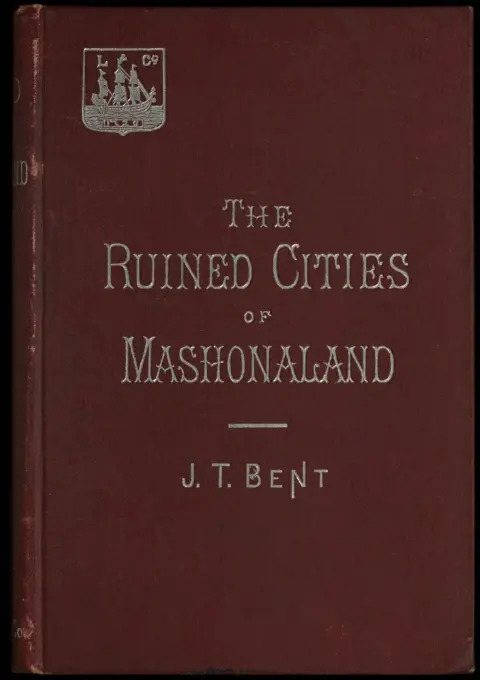
"The Ruined Cities of Mashonaland: Being a Record of Excavation and Exploration" by J. Theodore Bent is an archaeological account written in the late 19th century. The book centers around Bent's expedition to South Africa, primarily focusing on the exploration and excavation of ancient ruins in Mashonaland, particularly the Great Zimbabwe ruins. It seeks to unveil the history and culture of the civilizations that built these enigmatic structures, drawing parallels with other ancient cultures. The opening of the work sets a scholarly tone as it introduces the author’s background and objectives during the journey in 1891. Bent discusses the difficult journey undertaken with his wife and cartographer R. W. M. Swan, emphasizing their meticulous study of the local tribes, customs, and landscapes while seeking out the famed ruins. The narrative hints at interesting interactions with the native inhabitants and suggests an intricate relationship between their past civilization and the archaeological findings, establishing a foundation for the examination of the ancient architecture and artifacts that will be explored in greater detail throughout the text.
Introduction adapted from the source catalogue; source summaries may be automatically generated.
Free to read · English · 87,861 words · No account needed
MAKE TIME FOR A GOOD BOOK
On by default. Untick to stop anonymous reading totals. Each page counts after 10 seconds in view. How this works.
Anonymous counting is on unless you have switched it off.
These forests around Zimbabwe are lovely to wander in, with feathery festoons of lichen, like a fairy scene at a pantomime; outside the forests are long stretches of coarse grass, towering above our heads in many cases, and horrible to have to push through, especially after a fall of rain. They were then in seed, and looked just like our harvest fields at home, giving a golden tinge to the whole country.
Fine trees perched on the summit of colossal ant-hills cast a pleasant shade around, and if by chance we were near a stream we had to be careful not to fall into game pits, deep narrow holes hidden by the long grass, which the natives dig in the ground and towards which they drive deer and antelope, so that they get their forelegs fixed in them and cannot get out.
All around Zimbabwe is far too well watered to be pleasant; long stretches of unhealthy swamps fill up the valleys; rivers and streams are plentiful, and the vegetation consequently rich. Owing to the surrounding swamps we had much fever in our camp during our two months’ stay; as we had our waggons with us we could not camp on very high ground, and suffered accordingly. This fever of the high veldt with plenty of food and plenty of quinine is by no means dangerous, only oft-recurring and very weakening. Of the fourteen cases we had under treatment none were really dangerously ill, and none seemed to suffer from bad effects afterwards when the fever had worn itself out. The real cause of so much mortality and misery amongst the pioneer force during their first wet season in the country was the want of nourishing food to give the fever patients and the want of proper medicine.
As for the natives themselves, I cannot help saying a few words in their favour, as it has been customary to abuse them and set their capabilities down as nought. During the time we were at Zimbabwe we were constantly surrounded by them, and employed from fifty to sixty of them for our work, and the only thing we lost was half a bottle of whisky, which we did not set down to the natives, who as yet are happily ignorant of the potency of fire-water. Doubtless on the traversed roads and large centres, where they are brought into contact with traders and would-be civilisers of the race, these people become thieves and vagabonds; but in their primitive state the Makalangas are naturally honest, exceedingly courteous in manner, and cowardice appears to be their only vice, arising doubtless from the fact that for generations they have had to flee to their fastnesses before the raids of more powerful races. The Makalanga is above the ordinary Kaffir in intelligence. Contrary to the prognostications of our advisers, we found that some of them rapidly learnt their work, and were very careful excavators, never passing over a thing of value, which is more than can be said of all the white men in our employ. Some of them are decidedly handsome, and not at all like negroes except in skin; many of them have a distinctly Arab cast of countenance, and with their peculiar rows of tufts on the top of their heads looked en profil like the figures one sees on Egyptian tombs. There is certainly a Semite drop of blood in their veins; whence it comes will probably never be known, but it is marked both on their countenances and in their customs. In religion they are monotheists—that is to say, they believe in a supreme being called Muali, between whom and them their ancestors, or mozimos, to whom they sacrifice, act as intercessors. They lay out food for their dead; they have a day of rest during the ploughing season, which they call Muali’s Day; they have dynastic names for their chiefs, like the Pharaohs of old; they sacrifice a goat to ward off pestilence and famine; circumcision is practised amongst some of them. We have also the pillows or head rests, the strigil, the iron sceptres of the chiefs, the iron industry, all with parallels from the north. Then, again, their musical instruments, their games, and their totems point distinctly to an Arabian influence, which has been handed down from generation to generation long after the Arabians have ceased to have any definite intercourse with the country. During the course of these pages numerous minor illustrations will from time to time appear which point in the same direction. It is a curious ethnological problem which it will be hard to unravel. All over the country sour milk is much drunk and called mast, as it is in the East, and in parts of this country beer is called dowra or doro, a term which has come from Abyssinia and Arabia, and the method of making it is the same. The corn is soaked in water and left till it sprouts a little; then it is spread in the sun to dry and mixed with unsprouted grain; then the women pound it in wooden mortars, and the malt obtained from this is boiled and left to stand in a pot for two days, and over night a little malt that has been kept for the purpose is thrown over the liquid to excite fermentation. It will not keep at all, and is sometimes strong and intoxicating. Women are the great brewers in Mashonaland, and a good wife is valued according to her skill in this department.
Your reading position is saved on this browser. Take it to another device with a library code. Reading pages adapt to text, rather than matching a printed edition.
BEHIND THE BOOK
This eBook is for the use of anyone anywhere in the United States and most other parts of the world at no cost and with almost no restrictions whatsoever. You may copy it, give it away or re-use it under the terms of the Project Gutenberg License included with this eBook or online at www.gutenberg.org. If you are not located in the United States, you will have to check the laws of the country where you are located before using this eBook. Read the source licence.
The original source file, including credits and licence, is retained by this library. Request an original-format copy at no charge. Please include the book title and Project Gutenberg identifier #69067.
KEEP YOUR CURIOSITY GOING
Wilfrid Scawen Blunt
Wilfrid Scawen Blunt

E. W. (Edgar Watson) Howe
Cécile Tormay

Moritz Busch
John L. Ransom