THE CLASSIC COLLECTION✦My diaries, being a personal narrative of events 1888-1914, Part 2 (1900-1914)CLASSIC FREE BOOKS
My diaries, being a personal narrative of events 1888-1914, Part 2 (1900-1914)
Wilfrid Scawen Blunt
THE CLASSIC COLLECTION · 1895
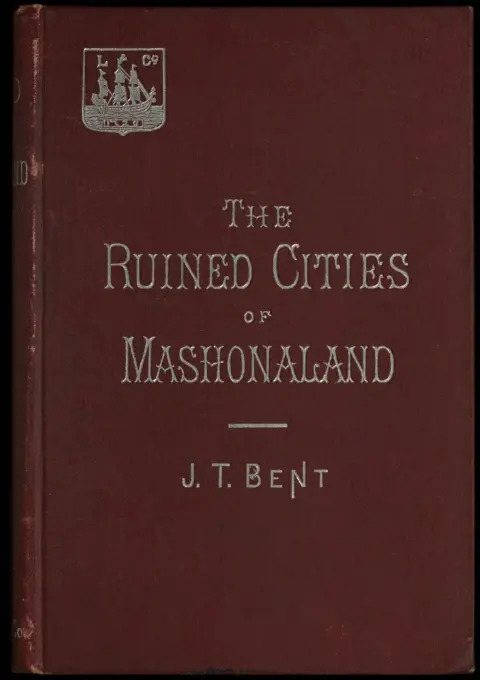
"The Ruined Cities of Mashonaland: Being a Record of Excavation and Exploration" by J. Theodore Bent is an archaeological account written in the late 19th century. The book centers around Bent's expedition to South Africa, primarily focusing on the exploration and excavation of ancient ruins in Mashonaland, particularly the Great Zimbabwe ruins. It seeks to unveil the history and culture of the civilizations that built these enigmatic structures, drawing parallels with other ancient cultures. The opening of the work sets a scholarly tone as it introduces the author’s background and objectives during the journey in 1891. Bent discusses the difficult journey undertaken with his wife and cartographer R. W. M. Swan, emphasizing their meticulous study of the local tribes, customs, and landscapes while seeking out the famed ruins. The narrative hints at interesting interactions with the native inhabitants and suggests an intricate relationship between their past civilization and the archaeological findings, establishing a foundation for the examination of the ancient architecture and artifacts that will be explored in greater detail throughout the text.
Introduction adapted from the source catalogue; source summaries may be automatically generated.
Free to read · English · 87,861 words · No account needed
MAKE TIME FOR A GOOD BOOK
On by default. Untick to stop anonymous reading totals. Each page counts after 10 seconds in view. How this works.
Anonymous counting is on unless you have switched it off.
In a cablegram recently received from the Company’s administrator on his return from a tour of inspection of the various mining districts he states that new finds were occurring everywhere daily, and that crushings were everywhere successful; that the reefs were improving with depth, and that wonderful development was proceeding in every district. As regards alluvial gold, that large deposits do exist, and that their discovery is only a question of time, is the opinion of all experienced miners. That this time has now arrived seems probable from a cable message recently received reporting that 50 oz. of alluvial gold had been brought into Salisbury, causing great excitement there. Should, however, alluvial fields, so valuable to a new country from their power of attracting a large mining population, never be discovered, it may not be too much to say—the progress that has been made in so short a time, and the enormous extent and richness of the auriferous reefs being taken into consideration—that the time cannot be far distant when Mashonaland will assume a leading position amongst the principal gold-producing countries of the world.
[1] M’, which looks so mysterious in all African books, is supposed to express that the first syllable may be pronounced either um or mu; there are four correct ways of pronouncing the name in question, Umtali or Mutare, Umtare or Mutali. The English have adopted the first and the Portuguese the second.
[2] Vide Chap. VII.
[3] Chap. VII.
[4] Vide illustration, ch. X.
[5] Chap. X.
[6] Chap. XI.
[7] Vide Chap. IX.
[8] Encyclop. Brit.
[9] 17·17 feet is equal to 10 cubits of 20·62 inches; and as all parts of the building which we have been able to measure accurately, and all small articles which would probably be made on any scale of measure, apparently have been made in terms of a cubit of this length, it seems probable that this cubit was one of the standards of measure in use.
[10] This is not very accurately shown in the small scale plan.
[11] There are many astronomical points in these buildings still to be considered, and the results of further investigation will be published later.
[12] Vide illustration, p. 181.
[13] Vide Illustration, p. 181.
[14] Lucian, De Syriâ Deâ, p. 477.
[15] Perrot and Chipiez’s Phœnicia, p. 281.
[16] Kremer, Akademie der Wissenschaft. Wien.
[17] Herod. Bk. III. § 8.
[18] Akademie der Wissenschaft. Wien 1890.
[19] Equal to two Egyptian spans of 9·58 inches.
[20] Vide illustration, p. 194.
[21] Vide illustration, p. 216.
[22] Ezek. xxvii. 21, 22.
[23] Vide Chap. III.
[24] Vide Chap. XI.
[25] Chap. II.
[26] De Barros, De Asiâ. Lisbon, 1552.
[27] According to Ptolemy, the Romans penetrated from the north through the heart of Africa to a nation called Agizymba, south of the equator.
[28] Chap. IX.
[29] Vide illustration, p. 262.
[30] For description of ruins, vide Chap. IV.
Your reading position is saved on this browser. Take it to another device with a library code. Reading pages adapt to text, rather than matching a printed edition.
BEHIND THE BOOK
This eBook is for the use of anyone anywhere in the United States and most other parts of the world at no cost and with almost no restrictions whatsoever. You may copy it, give it away or re-use it under the terms of the Project Gutenberg License included with this eBook or online at www.gutenberg.org. If you are not located in the United States, you will have to check the laws of the country where you are located before using this eBook. Read the source licence.
The original source file, including credits and licence, is retained by this library. Request an original-format copy at no charge. Please include the book title and Project Gutenberg identifier #69067.
KEEP YOUR CURIOSITY GOING
Wilfrid Scawen Blunt
Wilfrid Scawen Blunt

E. W. (Edgar Watson) Howe
Cécile Tormay

Moritz Busch
John L. Ransom