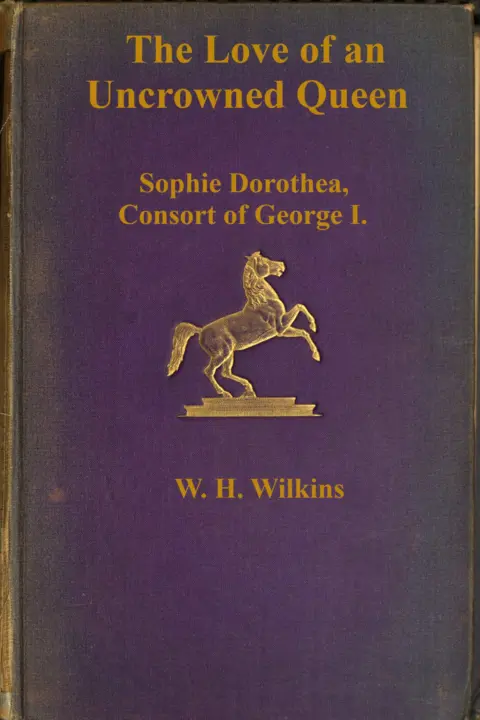
The love of an uncrowned queen
W. H. (William Henry) Wilkins
THE CLASSIC COLLECTION · 1897
"The Romance of Isabel Lady Burton: The Story of Her Life, Volume II" by W. H. Wilkins is a historical account written in the late 19th century. This volume continues the fascinating narrative of Isabel Burton, exploring her experiences in the Middle East during her time as the wife of the British Consul, Richard Burton. Isabel shares her personal insights into both daily life and the rich cultural context of the era, focusing on her adventures in Damascus, Palmyra, and the surrounding regions. The opening portion of this volume details Isabel's early days in Damascus, where she finds a suitable home and begins to adjust to her new life. She describes the beauty of their house in Salahíyyeh, surrounded by gardens and mountains, and details her passion for animals as she curates her own menagerie. Isabel's narrative is filled with observations about the city, its culture, and the customs of the people she encounters, including her experiences with the local bazars, mosque, and the unique social dynamics between different religious groups. Through her vibrant prose and keen observations, the reader is introduced to the challenges and charms of her life in the East, setting the stage for her further adventures and explorations.
Introduction adapted from the source catalogue; source summaries may be automatically generated.
Free to read · English · 110,103 words · No account needed
MAKE TIME FOR A GOOD BOOK
On by default. Untick to stop anonymous reading totals. Each page counts after 10 seconds in view. How this works.
Anonymous counting is on unless you have switched it off.
I must now mention three of my principal visitors, each of whom afterwards played a large part, though a very different part, in our life at Damascus.
First of all was the Wali, or Governor-General of Syria. I received him in state one day. He came in full uniform with a great many attendants. I seated him in proper form on a divan with pipes and coffee. He was very amiable and polite. He reminded me of an old tom-cat: he was dressed in furs; he was indolent and fat, and walked on his toes and purred. At first sight I thought him a kind-hearted old creature, not very intelligent and easily led. The last quality was true enough; for what disgusted me was that Syria was really governed by dragomans, and the Wali or any other great man was a puppet. For instance, if the Consul wanted to see the Wali, he had to send one of his dragomans to the Wali’s dragomans, and they arranged between them just what they liked. The two chief men met each other, attended by two dragomans, who reported every word of the conversation round Damascus. These men easily made people enemies; and the lies, mischief, and scandal they originated were beyond imagination. I have said that my first impression of the Wali was as of a well-fed cat; but I soon discovered that the cat had claws, for he quickly became jealous of Richard’s influence, and during our two years’ sojourn at Damascus he was one of our worst enemies.
Another, and the most interesting of all the personages who attended my receptions, was Lady Ellenborough, known at Damascus as the Honourable Jane Digby El Mezráb.[1] She was the most romantic and picturesque personality: one might say she was Lady Hester Stanhope’s successor. She was of the family of Lord Digby, and had married Lord Ellenborough, Governor-General of India, a man much older than herself, when she was quite a girl. The marriage was against her wish. She was very unhappy with him, and she ran away with Prince Schwartzenburg when she was only nineteen, and Lord Ellenborough divorced her. She lived with Prince Schwartzenburg for some years, and had two or three children by him, and then he basely deserted her. I am afraid after that she led a life for a year or two over which it is kinder to draw a veil. She then tired of Europe, and conceived the idea of visiting the East, and of imitating Lady Hester Stanhope and other European ladies, who became more Eastern than the Easterns. She arrived at Beyrout, and went to Damascus, where she arranged to go to Baghdad, across the desert. For this journey a Bedawin escort was necessary; and as the Mezráb tribe occupied the ground, the duty of commanding the escort devolved upon Shaykh Mijwal, a younger brother of the chief of this tribe. On the journey the young Shaykh fell in love with this beautiful woman, and she fell in love with him. The romantic picture of becoming a queen of the desert suited her wild and roving fancy. She married him, in spite of all opposition, according to the Mohammedan law. At the time I came to Damascus she was living half the year in a house just within the city gates; the other half of the year she passed in the desert in the tents of the Bedawin tribe, living absolutely as a Bedawin woman. When I first saw her she was a most beautiful woman, though sixty-one years of age. She wore one blue garment, and her beautiful hair was in two long plaits down to the ground. When she was in the desert, she used to milk the camels, serve her husband, prepare his food, wash his hands, face, and feet, and stood and waited on him while he ate, like any Arab woman, and gloried in so doing. But at Damascus she led a semi-European life. She blackened her eyes with kohl, and lived in a curiously untidy manner. But otherwise she was not in the least extraordinary at Damascus. But what was incomprehensible to me was how she could have given up all she had in England to live with that dirty little black--or nearly so--husband. I went to see her one day, and when he opened the door to me I thought at first he was a native servant. I could understand her leaving a coarse, cruel husband, much older than herself, whom she never loved (every woman has not the strength of mind and the pride to stand by what she has done); I could understand her running away with Schwartzenburg; but the contact with that black skin I could not understand. Her Shaykh was very dark--darker than a Persian, and much darker than an Arab generally is. All the same, he was a very intelligent and charming man in any light but as a husband. That made me shudder. It was curious how she had retained the charming manner, the soft voice, and all the graces of her youth. You would have known her at once to be an English lady, well born and bred, and she was delighted to greet in me one of her own order. We became great friends, and she dictated to me the whole of her biography, and most romantic and interesting it is. I took a great interest in the poor thing. She was devoted to her Shaykh, whereat I marvelled greatly. Gossip said that he had other wives, but she assured me that he had not, and that both her brother Lord Digby and the British Consul required a legal and official statement to that effect before they were married. She appeared to be quite foolishly in love with him (and I fully comprehend any amount of sacrifice for the man one loves--the greater the better), though the object of her devotion astonished me. Her eyes often used to fill with tears when talking of England, her people, and old times; and when we became more intimate, she spoke to me of every detail of her erring but romantic career. It was easy to see that Schwartzenburg had been the love of her life, for her eyes would light up with a glory when she mentioned him, and she whispered his name with bated breath. It was his desertion which wrecked her life. Poor thing! she was far more sinned against than sinning.
Your reading position is saved on this browser. Take it to another device with a library code. Reading pages adapt to text, rather than matching a printed edition.
W. H. (William Henry) Wilkins
BEHIND THE BOOK
This eBook is for the use of anyone anywhere in the United States and most other parts of the world at no cost and with almost no restrictions whatsoever. You may copy it, give it away or re-use it under the terms of the Project Gutenberg License included with this eBook or online at www.gutenberg.org. If you are not located in the United States, you will have to check the laws of the country where you are located before using this eBook. Read the source licence.
The original source file, including credits and licence, is retained by this library. Request an original-format copy at no charge. Please include the book title and Project Gutenberg identifier #6402.
KEEP YOUR CURIOSITY GOING
Wilfrid Scawen Blunt
Wilfrid Scawen Blunt

E. W. (Edgar Watson) Howe
Cécile Tormay

Moritz Busch
John L. Ransom