THE CLASSIC COLLECTION✦Rocky ForkCLASSIC FREE BOOKS
Rocky Fork
Mary Hartwell Catherwood
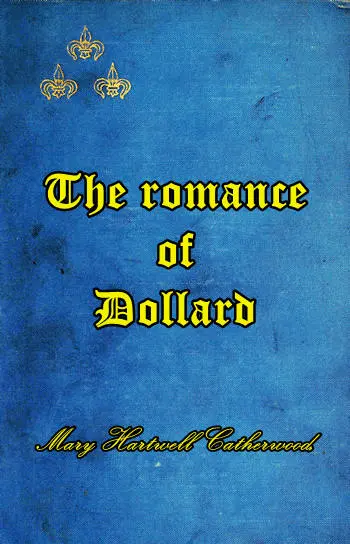
THE CLASSIC COLLECTION · 1888
"The Romance of Dollard" by Mary Hartwell Catherwood is a historical novel likely written in the late 19th century. The book explores the life and exploits of Adam Dollard, a French hero in colonial Canada, focusing on his adventures and the relationships he forms in a land fraught with danger and cultural contrasts. This tale weaves together elements of romance, adventure, and historical themes set against the backdrop of New France. The opening of the narrative introduces us to a vibrant scene in Quebec on a spring day in 1660 as two young men walk through the town following the arrival of a ship from France filled with new settlers, including women destined for marriage. One of the men, Dollard, is portrayed as a strong and enthusiastic leader with aspirations that seem to deal with not just settling but finding a partner to build a life with amid the challenges posed by the Iroquois and the wilderness. Interspersed with discussions about the newcomers and their fates are glimpses of Dollard's thoughts on duty, love, and the uncertain future that awaits both him and his companion Jacques as they navigate the turbulent realities of life in New France. The narrative hints at romance and adventure that promises to unfold as the characters confront their destinies.
Introduction adapted from the source catalogue; source summaries may be automatically generated.
Free to read · English · 42,488 words · No account needed
MAKE TIME FOR A GOOD BOOK
On by default. Untick to stop anonymous reading totals. Each page counts after 10 seconds in view. How this works.
Anonymous counting is on unless you have switched it off.
Jacques noted Louise’s trim apparel, her nicely kept hair and excellent red lips. But she asserted no claim to the first word, and after five leaden minutes he began to fear she did not want to talk to him at all. This would be a calamity, and, moreover, a waste of the commandant’s time. It seemed that Jacques must himself put forth the first word, and he suffered in the act of creating something to say. But out of this chaotic darkness a luminous thought streamed across his brain like the silent flash of the northern aurora.
“Mademoiselle, you like cabbage, is it not so?”
“Yes, monsieur,” responded Louise, without lifting her eyes.
“Cabbage is a very good vegetable.--My seignior is in somewhat of a hurry. We must be married and start back to Montreal directly. Do you wish to be married?”
“Yes, monsieur.”
“I, in fact, wish it myself. When you go as a soldier you don’t want a wife. But when you settle down en censive, then, mademoiselle, it is convenient to have a woman to work and help dig.”
“Have you a house and farm, monsieur?” murmured Louise.
Jacques spread his hands, the cap pendant from one of them.
“I have the island of St. Bernard under my seignior, mademoiselle. It is a vast estate, almost a league in extent. The house is a mansion of stone, mademoiselle, strong as a fort, and equal to some castles in Rouen. You come from Rouen, mademoiselle?”
“Yes, monsieur.”
“And there is Mademoiselle de Granville, my lord’s half-sister, but nobody else to wait upon. For Sieur des Ormeaux, when not at his fortress, may go on expeditions. We never yet took refuge at Montreal from the Indians, so strong is St. Bernard. The house is of rock cemented together and built against a rock. Do you ever drink brandy, mademoiselle?”
“I, monsieur! Never in my life!”
“That must be a good thing in a woman,” commented Jacques, with a nod
of satisfaction.
“Are you at all thriftless or lazy, monsieur?” the demure girl took her
turn to inquire.
“No, mademoiselle; I make my clothes do year after year. And had you seen the frozen fish and eels, the venison, the cabbage, beets, and onions I stored in our cellar for winter, you would not ask if I am lazy.”
Louise smiled her bashful approval upon him, and said in explanation:
“I should not like a thriftless, lazy husband.”
“Mademoiselle, we are cut out of the same caribou-skin, and match like a pair of moccasins. Shall we go to the notary?”
“If you wish, monsieur.”
“You accept me as your husband?”
“If you please, monsieur.”
Your reading position is saved on this browser. Take it to another device with a library code. Reading pages adapt to text, rather than matching a printed edition.
Mary Hartwell Catherwood
Mary Hartwell Catherwood
Mary Hartwell Catherwood
Mary Hartwell Catherwood
BEHIND THE BOOK
This eBook is for the use of anyone anywhere in the United States and most other parts of the world at no cost and with almost no restrictions whatsoever. You may copy it, give it away or re-use it under the terms of the Project Gutenberg License included with this eBook or online at www.gutenberg.org. If you are not located in the United States, you will have to check the laws of the country where you are located before using this eBook. Read the source licence.
The original source file, including credits and licence, is retained by this library. Request an original-format copy at no charge. Please include the book title and Project Gutenberg identifier #50418.
KEEP YOUR CURIOSITY GOING
Cécile Tormay

Moritz Busch
Coulson Kernahan
John L. Ransom

Maurice Baring
Frances Wright