THE CLASSIC COLLECTION✦The Lonely Way—Intermezzo—Countess Mizzie Three PlaysCLASSIC FREE BOOKS
The Lonely Way—Intermezzo—Countess Mizzie Three Plays
Arthur Schnitzler
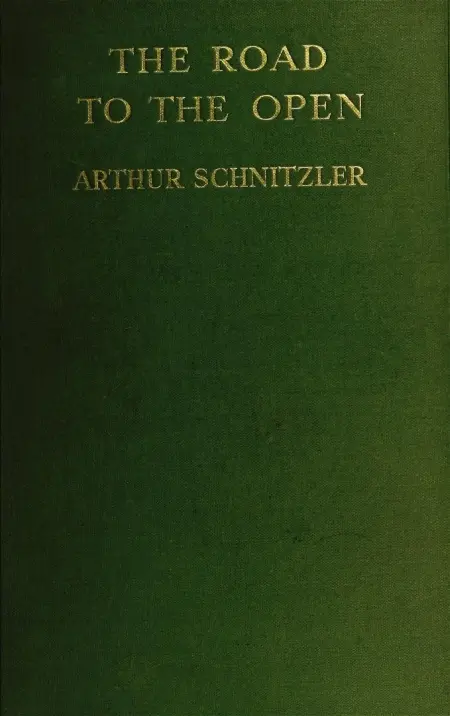
THE CLASSIC COLLECTION · 1913
"The Road to the Open" by Arthur Schnitzler is a novel written in the early 20th century. The story revolves around George von Wergenthin, a young man grappling with the recent death of his father and his direction in life. The narrative explores themes of grief, nostalgia, and the complexities of human relationships in a society marked by social status and personal aspirations. The opening of the novel establishes George's emotional state as he reflects on his father's passing while dining alone. He wanders through memories of their last conversations and the impact of his familial past on his present. As he sorts through old family documents, he is struck by a sense of both loss and possibility; George contemplates his music and relationships, particularly with Anna Rosner. His chance encounters with friends and prospective romantic interests paint a picture of a complex social milieu filled with intrigue and expectation, setting the stage for George’s personal journey towards self-discovery and openness.
Introduction adapted from the source catalogue; source summaries may be automatically generated.
Free to read · English · 133,641 words · No account needed
MAKE TIME FOR A GOOD BOOK
On by default. Untick to stop anonymous reading totals. Each page counts after 10 seconds in view. How this works.
Anonymous counting is on unless you have switched it off.
"I don't believe in platonic love," said Sissy, and beamed through the
room.
Frau Wyner gave a slight shriek.
"Fräulein Sissy is probably right," said Nürnberger; "at any rate I am convinced that most women take platonic love either as an insult or an excuse."
"There are young girls here," Frau Ehrenberg reminded him gently.
"One sees that already," said Nürnberger, "from the fact of their
joining in the conversation."
"All the same, I would like to take the liberty of adding a little anecdote to the chapter of platonic love," said Heinrich.
"But not a Jewish one," put in Else.
"Of course not. A blonde little girl...."
"That proves nothing," interrupted Else.
"Please let him finish his story," remonstrated Frau Ehrenberg.
"Well then, a blonde little girl," began Heinrich again, "once expressed her conviction to me, quite different, you see, from Fräulein Sissy, that platonic love did, as a matter of fact, exist, and do you know what she suggested as a proof of it? giving ... an experience out of her own life. She had, you know, once spent a whole hour in a room with a lieutenant and...."
"That is enough!" cried Frau Ehrenberg nervously.
"And," finished Heinrich, quite unperturbed and in a reassuring voice, "nothing at all happened in that hour."
"So the blonde girl says," added Else.
The door opened. George saw a strange lady enter in a clear blue square-cut dress, pale, simple and dignified. It was only when she smiled that he realised that the lady was Anna Rosner, and he felt something like pride in her.
When he shook hands with his love he felt Else's look turn towards him.
They went into the next room, where the table was laid with a moderate show of festivity. The son of the house was not there. He was at Neuhaus at his father's factory. But Herr Ehrenberg suddenly turned up at the table when the supper was served. He had just come back from his travels, which as a matter of fact had taken him to Palestine. When he was asked by Hofrat Wilt about his experiences he was at first reluctant to let himself go; finally it turned out that he had been disappointed in the scenery, annoyed by the fatigue of the journey, and had practically seen nothing of the Jewish settlements which, according to reliable information, were in process of springing up.
"So we have some ground to hope," remarked Nürnberger, "that we may keep you here even in the event of a Jewish state being founded in the imminent future?"
Your reading position is saved on this browser. Take it to another device with a library code. Reading pages adapt to text, rather than matching a printed edition.
BEHIND THE BOOK
This eBook is for the use of anyone anywhere in the United States and most other parts of the world at no cost and with almost no restrictions whatsoever. You may copy it, give it away or re-use it under the terms of the Project Gutenberg License included with this eBook or online at www.gutenberg.org. If you are not located in the United States, you will have to check the laws of the country where you are located before using this eBook. Read the source licence.
The original source file, including credits and licence, is retained by this library. Request an original-format copy at no charge. Please include the book title and Project Gutenberg identifier #45895.
KEEP YOUR CURIOSITY GOING
Coulson Kernahan

Maurice Baring
Frances Wright
Cécile Tormay

Frederic Jesup Stimson

W. H. P. (William Henry Pope) Jarvis