THE CLASSIC COLLECTION✦The Lonely Way—Intermezzo—Countess Mizzie Three PlaysCLASSIC FREE BOOKS
The Lonely Way—Intermezzo—Countess Mizzie Three Plays
Arthur Schnitzler
THE CLASSIC COLLECTION · 1913
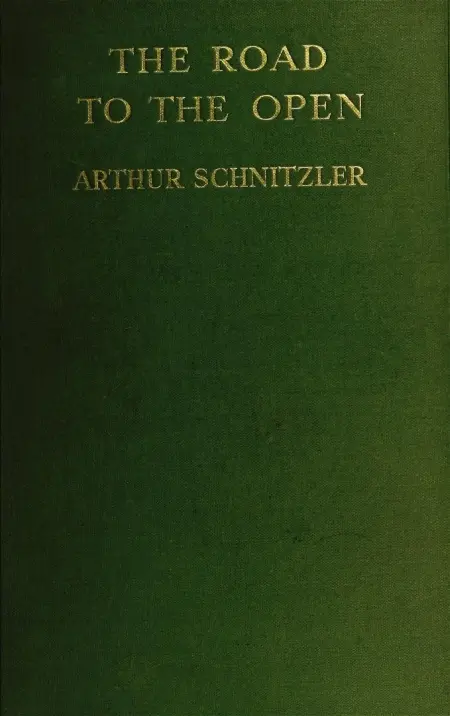
"The Road to the Open" by Arthur Schnitzler is a novel written in the early 20th century. The story revolves around George von Wergenthin, a young man grappling with the recent death of his father and his direction in life. The narrative explores themes of grief, nostalgia, and the complexities of human relationships in a society marked by social status and personal aspirations. The opening of the novel establishes George's emotional state as he reflects on his father's passing while dining alone. He wanders through memories of their last conversations and the impact of his familial past on his present. As he sorts through old family documents, he is struck by a sense of both loss and possibility; George contemplates his music and relationships, particularly with Anna Rosner. His chance encounters with friends and prospective romantic interests paint a picture of a complex social milieu filled with intrigue and expectation, setting the stage for George’s personal journey towards self-discovery and openness.
Introduction adapted from the source catalogue; source summaries may be automatically generated.
Free to read · English · 133,641 words · No account needed
MAKE TIME FOR A GOOD BOOK
On by default. Untick to stop anonymous reading totals. Each page counts after 10 seconds in view. How this works.
Anonymous counting is on unless you have switched it off.
"Yes, and when he died seven or eight years ago she came over here with her two children, but James will never get acclimatised here.... Lord Antinous, you know, that's what Frau Oberberger calls him. He is now back at Cambridge again where strangely enough he is studying Greek scholarship. Demeter was a few days in Ventnor, too."
"Stanzides?" added George.
"Do you know Herr von Stanzides, Herr Baron?" asked Amy.
"Oh yes."
"Then he does really exist?" she exclaimed.
"Yes, but just you listen," said Oskar. "She put a lot of money on him this spring at Freudenau, and won a lot of money, and now she inquires if he really exists."
"What makes you have doubts about Stanzides' existence, Fräulein?"
asked George.
"Well, you know, whenever I don't know where he is--Oskar, I mean--it's always a case of 'I've an appointment with Stanzides' or 'I'm riding with Stanzides in the Prater.' Stanzides this and Stanzides that, why it sounds more like an excuse than a name."
"You be quiet now, will you?" said Oskar gently.
"Not only does Stanzides exist," explained George, "but he has the most beautiful black moustache and the most fiery black eyes that are to be found anywhere."
"That's quite possible, but when I saw him he looked more like a jack-in-the-box, yellow jacket, green cap, violet sleeves."
"And she won forty gulden on him," added Oskar facetiously.
"And where are the forty gulden?" sighed Fräulein Amelie.... Then she suddenly stood still and exclaimed: "But I've never yet been on it."
"Well, that can be remedied," said Oskar simply.
The Great Wheel was turning slowly and majestically in front of them with its lighted carriages. The young people passed the turnstile, climbed into an empty compartment and swept upwards.
"Do you know, George, whom I got to know this summer?" said Oskar. "The
Prince of Guastalla."
"Which one?" asked George.
"The youngest, of course, Karl Friedrich. He was there incognito. He's very thick with Stanzides, an extraordinary man. You take my word for it," he added softly, "if people like us said one hundredth part of the things the prince says, we'd never get out of prison our whole life long."
"Look, Oskar," cried Amy, "at the tables and the people down there. It looks just like a little box, doesn't it? And that mass of lights over there, far off. I'm sure that's going to Prague, don't you think so, Herr Bermann?"
"Possibly," answered Heinrich, knitting his forehead as he stared through the glass wall out into the night.
When they left the compartment and got out into the open air the Sunday
hubbub was subsiding.
Your reading position is saved on this browser. Take it to another device with a library code. Reading pages adapt to text, rather than matching a printed edition.
BEHIND THE BOOK
This eBook is for the use of anyone anywhere in the United States and most other parts of the world at no cost and with almost no restrictions whatsoever. You may copy it, give it away or re-use it under the terms of the Project Gutenberg License included with this eBook or online at www.gutenberg.org. If you are not located in the United States, you will have to check the laws of the country where you are located before using this eBook. Read the source licence.
The original source file, including credits and licence, is retained by this library. Request an original-format copy at no charge. Please include the book title and Project Gutenberg identifier #45895.
KEEP YOUR CURIOSITY GOING
Coulson Kernahan

Maurice Baring
Frances Wright
Cécile Tormay

Frederic Jesup Stimson

W. H. P. (William Henry Pope) Jarvis