THE CLASSIC COLLECTION✦The Lonely Way—Intermezzo—Countess Mizzie Three PlaysCLASSIC FREE BOOKS
The Lonely Way—Intermezzo—Countess Mizzie Three Plays
Arthur Schnitzler
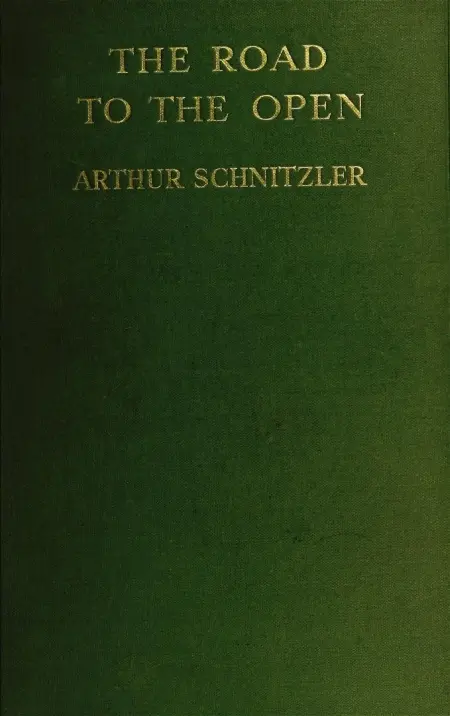
THE CLASSIC COLLECTION · 1913
"The Road to the Open" by Arthur Schnitzler is a novel written in the early 20th century. The story revolves around George von Wergenthin, a young man grappling with the recent death of his father and his direction in life. The narrative explores themes of grief, nostalgia, and the complexities of human relationships in a society marked by social status and personal aspirations. The opening of the novel establishes George's emotional state as he reflects on his father's passing while dining alone. He wanders through memories of their last conversations and the impact of his familial past on his present. As he sorts through old family documents, he is struck by a sense of both loss and possibility; George contemplates his music and relationships, particularly with Anna Rosner. His chance encounters with friends and prospective romantic interests paint a picture of a complex social milieu filled with intrigue and expectation, setting the stage for George’s personal journey towards self-discovery and openness.
Introduction adapted from the source catalogue; source summaries may be automatically generated.
Free to read · English · 133,641 words · No account needed
MAKE TIME FOR A GOOD BOOK
On by default. Untick to stop anonymous reading totals. Each page counts after 10 seconds in view. How this works.
Anonymous counting is on unless you have switched it off.
George stood there motionless. He was gazing continually at the little creature, and it seemed to him a picture of undreamt-of beauty. He touched its cheeks, shoulders, arms, hands, fingers. How mysteriously complete it all was! And there it lay, having died without having lived, destined to go from one darkness into another, through a senseless nothingness. There it lay, the sweet tiny body which was ready for life and yet was unable to move. There they shone, those big blue eyes, as though with desire to drink in the light of heaven, and completely blind before they had seen a ray. And there was the small round mouth which was open as though with thirst, but yet could never drink at a mother's breast. There it gazed, that white child-face with its perfect human features, which was never to receive or feel the kiss of a mother, the kiss of a father. How he loved this child! How he loved it, now that it was too late! A choking despair rose within his throat. He could not cry. He looked around him. No one was in the room and it was quite still next door. He had no desire to go into that other room, nor had he any fear. He only felt that it would have been rather senseless. His eye returned to the dead child, and suddenly the poignant question thrilled through him whether it was really bound to be true. Could not every one make a mistake, a physician as much as a layman? He held his open palm before the child's open lips and it was as though something cool was breathed towards him. And then he held both hands over the child's breast and again it seemed as though a light puff were playing over the tiny body. But it felt just the same as in the other place: no breath of life had blown towards him. He now bent down again and his lips touched the child's cool forehead. Something strange, something he scarcely felt tingled through his body to the very tips of his toes. He knew it now; he had lost the game up there in the clouds, his child was dead. Then he slowly lifted his head and turned away. The sight of the garden tempted him into the open. He stepped on to the verandah and saw Doctor Stauber and Frau Rosner sitting on the seat that was propped against the wall--both silent. They looked at him. He turned away as though he did not know them and went into the garden. The shadow of the house fell obliquely over the lawn, there was still sunlight higher up but it was dull and as though without the strength to illumine the air. Why did he want to think of that light which was sun and yet did not shine, that blue in the heights which was heaven and yet did not bless him? What was the point of the silence of this garden, which should console and comfort him, and yet received him to-day as though it were some strange inhospitable place? It gradually occurred to him that just such a twilight had enveloped him in a dream a short time ago with a dreariness of which he had previously had no idea, and had filled his soul with incomprehensible melancholy. What now? he said to himself aloud. He did not seek for any answer, and only knew that something unforeseen and unalterable had happened that must change the face of the world for him for all time. He thought of the day when his father had died. A wild grief had overwhelmed him then; yet he had been able to cry and the world had not suddenly become dark and void. His father had really lived, had once been young, had worked, loved, had children, experienced joys and sorrows. And the mother who had borne him had not suffered in vain. And even if he himself should have to die to-day, however early it might be, he had nevertheless a life behind him, a life full of light and music, happiness and suffering, hope and anxiety, steeped in all the fulness of the world. And even if Anna had passed away to-day, in the hour when she gave life to a new being, she would as it were have fulfilled her lot and her end would have had its terrible but none the less deep significance. But what had happened to his child was senseless, was revolting--a piece of irony from somewhere or other, whither one could send no question and no answer. What was the point of it all? What had been the significance of these past months with all their dreams, their troubles and their hopes? For he knew, all in a flash, that the expectation of the wonderful hour in which his child was to be born had always lain in the depths of his soul every single day, even those which were most matter-of-fact, those which were most vacant, or those which were most wanton. And he felt ashamed, impoverished, miserable.
Your reading position is saved on this browser. Take it to another device with a library code. Reading pages adapt to text, rather than matching a printed edition.
BEHIND THE BOOK
This eBook is for the use of anyone anywhere in the United States and most other parts of the world at no cost and with almost no restrictions whatsoever. You may copy it, give it away or re-use it under the terms of the Project Gutenberg License included with this eBook or online at www.gutenberg.org. If you are not located in the United States, you will have to check the laws of the country where you are located before using this eBook. Read the source licence.
The original source file, including credits and licence, is retained by this library. Request an original-format copy at no charge. Please include the book title and Project Gutenberg identifier #45895.
KEEP YOUR CURIOSITY GOING
Coulson Kernahan

Maurice Baring
Frances Wright
Cécile Tormay

Frederic Jesup Stimson

W. H. P. (William Henry Pope) Jarvis