THE CLASSIC COLLECTION✦The Lonely Way—Intermezzo—Countess Mizzie Three PlaysCLASSIC FREE BOOKS
The Lonely Way—Intermezzo—Countess Mizzie Three Plays
Arthur Schnitzler
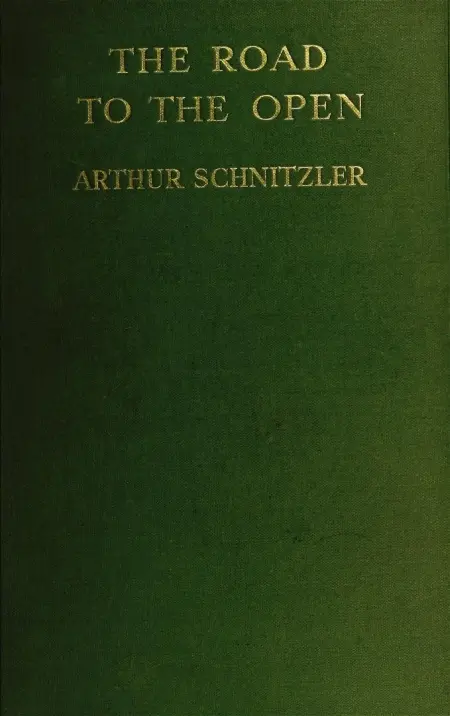
THE CLASSIC COLLECTION · 1913
"The Road to the Open" by Arthur Schnitzler is a novel written in the early 20th century. The story revolves around George von Wergenthin, a young man grappling with the recent death of his father and his direction in life. The narrative explores themes of grief, nostalgia, and the complexities of human relationships in a society marked by social status and personal aspirations. The opening of the novel establishes George's emotional state as he reflects on his father's passing while dining alone. He wanders through memories of their last conversations and the impact of his familial past on his present. As he sorts through old family documents, he is struck by a sense of both loss and possibility; George contemplates his music and relationships, particularly with Anna Rosner. His chance encounters with friends and prospective romantic interests paint a picture of a complex social milieu filled with intrigue and expectation, setting the stage for George’s personal journey towards self-discovery and openness.
Introduction adapted from the source catalogue; source summaries may be automatically generated.
Free to read · English · 133,641 words · No account needed
MAKE TIME FOR A GOOD BOOK
On by default. Untick to stop anonymous reading totals. Each page counts after 10 seconds in view. How this works.
Anonymous counting is on unless you have switched it off.
"By Jove, you are positively blushing. Ho ho!" He knew of her weakness for Demeter's melancholy cavalier beauty but did not feel the slightest trace of jealousy.
"So it is Stanzides?" she asked.
"Yes, it is Stanzides right enough. But with all the will in the world I can't find anything remarkable about that. It's not remarkable, either. But if you guess whom he is with...."
"With Sissy Wyner."
"But...."
"Well, I was thinking of marriage.... That happens too sometimes."
"No, not with Sissy, and not married, but with your friend Therese, and as unmarried as possible."
"Get along...."
"I tell you, with Therese. They've been travelling for eight days. What have you got to say to that? They have been in Venice and Milan. Had you any idea of it?"
"No."
"Really not?"
"Really not. You know of course that Therese only once wrote me a line, and you read her letter with your well-known interest."
"You're not astonished enough."
"Good gracious, I always knew that she had good taste."
"So has Demeter," exclaimed George with conviction.
"Elective affinities," remarked Anna, elevating her eyebrows, and went
on crocheting.
"And so this is the mother of my child," said George, with a merry
shake of his head.
She looked at him with a smile. "When is she coming to see me, then?"
"In the afternoon about six, I think. And ... and Stanzides is coming too ... a bit later. They are going to dine with us. You don't mind?"
"Mind? I'm very glad," replied Anna simply.
George was agreeably surprised. If Anna in her present condition had met Stanzides in Vienna!... he thought. How being away from one's usual environment frees and purifies!
"What news did they tell you?" asked Anna.
"We stood chatting together at the post-office for scarcely three minutes. He sends his regards to you, by the way."
Anna made no answer and it seemed to George as though her thoughts were travelling again on extremely conventional lines.
"Have you been up long?" he asked quickly.
"Yes, I have been sitting here on the balcony for quite a long time. I even went to sleep a bit, the air is so enervating to-day somehow. And I dreamed, too."
"What did you dream about?"
"Of the child," she said.
"Again?"
She nodded. "Just the same as the other day. I was sitting here on the balcony in my dream, and had it in my arms at the breast...."
"But what was it, a boy or a girl?"
"I don't know. Just a child. So tiny and so sweet. And the joy was so.... No I won't give it up," she said softly with closed eyes.
Your reading position is saved on this browser. Take it to another device with a library code. Reading pages adapt to text, rather than matching a printed edition.
BEHIND THE BOOK
This eBook is for the use of anyone anywhere in the United States and most other parts of the world at no cost and with almost no restrictions whatsoever. You may copy it, give it away or re-use it under the terms of the Project Gutenberg License included with this eBook or online at www.gutenberg.org. If you are not located in the United States, you will have to check the laws of the country where you are located before using this eBook. Read the source licence.
The original source file, including credits and licence, is retained by this library. Request an original-format copy at no charge. Please include the book title and Project Gutenberg identifier #45895.
KEEP YOUR CURIOSITY GOING
Coulson Kernahan

Maurice Baring
Frances Wright
Cécile Tormay

Frederic Jesup Stimson

W. H. P. (William Henry Pope) Jarvis