THE CLASSIC COLLECTION✦The Lonely Way—Intermezzo—Countess Mizzie Three PlaysCLASSIC FREE BOOKS
The Lonely Way—Intermezzo—Countess Mizzie Three Plays
Arthur Schnitzler
THE CLASSIC COLLECTION · 1913
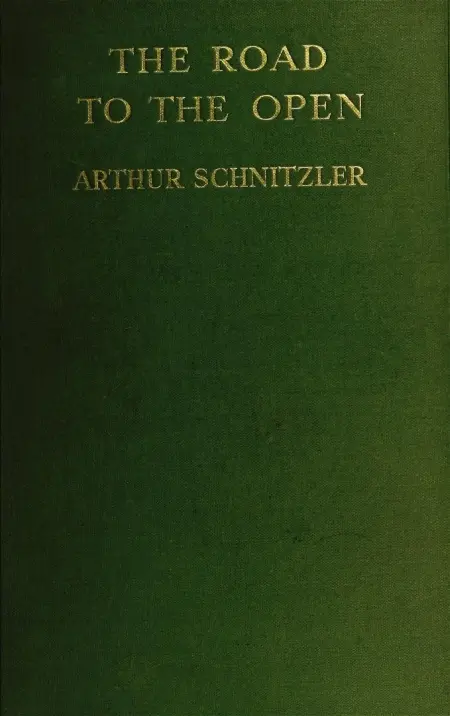
"The Road to the Open" by Arthur Schnitzler is a novel written in the early 20th century. The story revolves around George von Wergenthin, a young man grappling with the recent death of his father and his direction in life. The narrative explores themes of grief, nostalgia, and the complexities of human relationships in a society marked by social status and personal aspirations. The opening of the novel establishes George's emotional state as he reflects on his father's passing while dining alone. He wanders through memories of their last conversations and the impact of his familial past on his present. As he sorts through old family documents, he is struck by a sense of both loss and possibility; George contemplates his music and relationships, particularly with Anna Rosner. His chance encounters with friends and prospective romantic interests paint a picture of a complex social milieu filled with intrigue and expectation, setting the stage for George’s personal journey towards self-discovery and openness.
Introduction adapted from the source catalogue; source summaries may be automatically generated.
Free to read · English · 133,641 words · No account needed
MAKE TIME FOR A GOOD BOOK
On by default. Untick to stop anonymous reading totals. Each page counts after 10 seconds in view. How this works.
Anonymous counting is on unless you have switched it off.
George promised to come in August, at any rate for some days. The conversation then turned on Felician and Willy, who had started with their party a few days ago from Biskra on their hunting expedition in the desert; on Demeter Stanzides, who announced his immediate intention of resigning from the army and retiring to an estate in Hungary; and finally on Heinrich Bermann of whom no one had had any news for some weeks.
"Who knows if he will ever come back to Vienna at all?" said Else.
"Why shouldn't he? What makes you think that, Fräulein Else?"
"Upon my word, perhaps he'll marry that actress and trot about the
world with her."
George shrugged his shoulders ... he didn't know personally of any actress with whom Heinrich was mixed up, and he ventured to express a doubt whether Heinrich would ever marry any one, whether she was a Princess or a circus rider.
"It would be rather a pity if Bermann were to," said Frau Ehrenberg, without taking any notice of George's discretion. "I certainly think that young people take these matters either too lightly or too seriously."
Else followed up the idea: "Yes, it is strange, all you men are either cleverer or much sillier in these matters than in any other, although really it is just in such crucial moments of one's life, that one ought as far as possible to be one's ordinary self."
"My dear Else," said George casually, "once one's passions are set
going----"
"Yes, when they are set going," emphasised Frau Ehrenberg.
"Passions!" exclaimed Else. "I believe that like all other great things in the world, they are really something quite rare."
"What do you know, my child?" said Frau Ehrenberg.
"At any rate I've never so far seen anything of that kind in my immediate environment," explained Else.
"Who knows if you would discover it," remarked George, "even though it did come once in a way quite near you? Viewed from outside a flirtation and a life's tragedy may sometimes look quite the same."
"That is certainly not true," said Else. "Passion is something that is
bound to betray itself."
"How do you manage to know that, Else?" objected Frau Ehrenberg. "Passions can often conceal themselves deeper than any ordinary trumpery little emotion, for the very reason that there is usually more at stake."
"I think," replied George, "that it is a very personal matter. There are, of course, people who have everything written on their forehead, and others who are impenetrable; being impenetrable is quite as much a talent as anything else."
"It can be trained too, like anything else," said Else.
Your reading position is saved on this browser. Take it to another device with a library code. Reading pages adapt to text, rather than matching a printed edition.
BEHIND THE BOOK
This eBook is for the use of anyone anywhere in the United States and most other parts of the world at no cost and with almost no restrictions whatsoever. You may copy it, give it away or re-use it under the terms of the Project Gutenberg License included with this eBook or online at www.gutenberg.org. If you are not located in the United States, you will have to check the laws of the country where you are located before using this eBook. Read the source licence.
The original source file, including credits and licence, is retained by this library. Request an original-format copy at no charge. Please include the book title and Project Gutenberg identifier #45895.
KEEP YOUR CURIOSITY GOING
Coulson Kernahan

Maurice Baring
Frances Wright
Cécile Tormay

Frederic Jesup Stimson

W. H. P. (William Henry Pope) Jarvis