THE CLASSIC COLLECTION✦The Lonely Way—Intermezzo—Countess Mizzie Three PlaysCLASSIC FREE BOOKS
The Lonely Way—Intermezzo—Countess Mizzie Three Plays
Arthur Schnitzler
THE CLASSIC COLLECTION · 1913
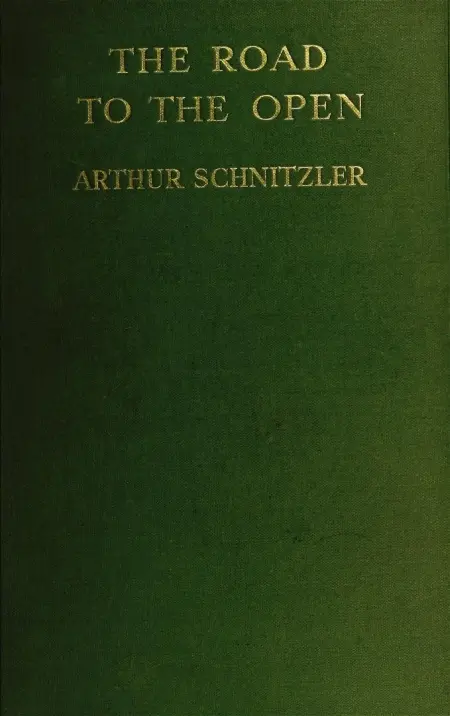
"The Road to the Open" by Arthur Schnitzler is a novel written in the early 20th century. The story revolves around George von Wergenthin, a young man grappling with the recent death of his father and his direction in life. The narrative explores themes of grief, nostalgia, and the complexities of human relationships in a society marked by social status and personal aspirations. The opening of the novel establishes George's emotional state as he reflects on his father's passing while dining alone. He wanders through memories of their last conversations and the impact of his familial past on his present. As he sorts through old family documents, he is struck by a sense of both loss and possibility; George contemplates his music and relationships, particularly with Anna Rosner. His chance encounters with friends and prospective romantic interests paint a picture of a complex social milieu filled with intrigue and expectation, setting the stage for George’s personal journey towards self-discovery and openness.
Introduction adapted from the source catalogue; source summaries may be automatically generated.
Free to read · English · 133,641 words · No account needed
MAKE TIME FOR A GOOD BOOK
On by default. Untick to stop anonymous reading totals. Each page counts after 10 seconds in view. How this works.
Anonymous counting is on unless you have switched it off.
As he rode with Nürnberger into the town on the platform of the tramway and chatted to him he felt that he had never got so close to him on all the many previous occasions when they had been together, as during this hour of clear winter sunshine in the country. When they said goodbye it was quite a matter of course that they should arrange a new excursion on a day in the immediate future. And so it came about that George was several times accompanied by Nürnberger, when he continued his househunting in the neighbourhood of Vienna. On these occasions the fiction was still kept up that George was looking for a house for a family whom he knew, that Nürnberger believed it and that George believed that Nürnberger believed it.
On these excursions Nürnberger frequently came to speak of his youth, to speak about the parents whom he had lost very early, of a sister who had died young and of his elder brother, the only one of his relatives who was still alive. But he, an ageing bachelor like Edmund himself, did not live in Vienna, but in a small town in Lower Austria, where he was a teacher in a public school, where he had been transferred fifteen years ago as an assistant. He could easily have managed afterwards to have got an appointment again in the metropolis, but after a few years of bitterness, and even defiance, he had become so completely acclimatised to the quiet petty life of the place where he was staying that he came to regard a return to Vienna as more a sacrifice than anything else, and he now lived on, passionately devoted to his profession and particularly to his studies in philology, far from the world, lonely, contented, a kind of philosopher in the little town. When Nürnberger spoke of this distant brother George often felt as though he were hearing him speak about some one who had died, so absolutely out of the question seemed every possibility of a permanent reunion in the future. It was in quite a different tone, almost as though he were speaking of a being who could return once again, that he would talk with a perpetual wistfulness of the sister who had been dead several years. It was on a misty February day, while they were at the railway station waiting for the train to Vienna, and walking up and down with each other on the platform, that Nürnberger told George the story of this sister, who when a child of sixteen had become possessed as it were by a tremendous passion for the theatre, and had run away from home without saying goodbye in a fit of childish romanticism. She had wandered from town to town, from stage to stage, for ten years, playing smaller and smaller parts, since neither her talent nor her beauty appeared to be sufficient for the career which she had chosen, but always with the same enthusiasm, always with the same confidence in her future, in spite of the disillusions which she experienced and the sorrow which she saw. In the holidays she would come to the brothers, who were still living together, sometimes for weeks, sometimes only for days, and tell them about the provincial halls in which she had acted as though they were great theatres; about her few successes as though they were triumphs which she had won, about the wretched comedians at whose side she worked as though they were great artists, tell them about the petty intrigues that took place around her as though they were powerful tragedies of passion. And instead of gradually realising the miserable world in which she was living a life which was as much to be pitied as that of any one else, she spun every year the essence of her soul into more and more golden dreams. This went on for a long time, until at last she came home, feverish and ill. She lay in bed for months on end with flushed cheeks, raving in her delirium of a fame and happiness which she had never experienced, got up once again in apparent health, and went away once more, only to come back home, this time after a few weeks, in complete collapse with death written on her forehead. Her brother now travelled with her to the South; to Arco, Meran, to the Italian Lakes, and it was only as she lay stretched out in southern gardens beneath flowering trees, far away from the whirl that had dazed and intoxicated her throughout the years that she realised at last that her life had been simply a racketing about beneath a painted sky and between paper walls--that the whole essence of her existence had been an illusion. But even the little everyday incidents, the apartments and inns of the foreign town, seemed to her memory simply scenes which she had played in as an actress by the footlights, and not scenes which she had really lived, and as she approached nearer and nearer to the grave, there awoke within her an awful yearning for that real life which she had missed, and the more surely she knew that it was lost to her for ever, the clearer became the gaze with which she realised the fullness of the world. And the strangest touch of all was the way in which, in the last weeks of her life, that talent to which she had sacrificed her whole existence without ever really possessing it manifested itself with diabolic uncanniness.
Your reading position is saved on this browser. Take it to another device with a library code. Reading pages adapt to text, rather than matching a printed edition.
BEHIND THE BOOK
This eBook is for the use of anyone anywhere in the United States and most other parts of the world at no cost and with almost no restrictions whatsoever. You may copy it, give it away or re-use it under the terms of the Project Gutenberg License included with this eBook or online at www.gutenberg.org. If you are not located in the United States, you will have to check the laws of the country where you are located before using this eBook. Read the source licence.
The original source file, including credits and licence, is retained by this library. Request an original-format copy at no charge. Please include the book title and Project Gutenberg identifier #45895.
KEEP YOUR CURIOSITY GOING
Coulson Kernahan

Maurice Baring
Frances Wright
Cécile Tormay

Frederic Jesup Stimson

W. H. P. (William Henry Pope) Jarvis