His Little World: The Story of Hunch Badeau
Samuel Merwin
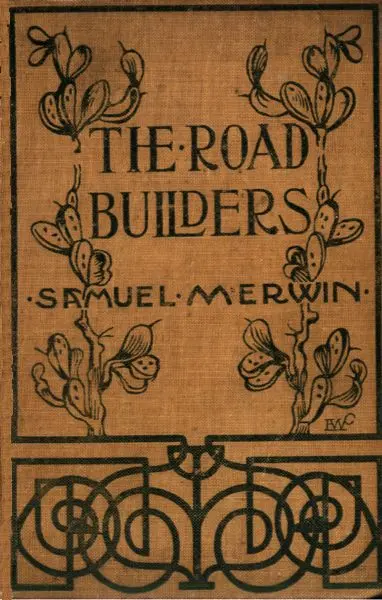
THE CLASSIC COLLECTION · 1905
"The Road Builders" by Samuel Merwin is a novel written in the early 20th century. This work presents a vivid exploration of the challenges faced by a railroad construction crew in the Southwestern United States. The narrative mainly revolves around the chief engineer, Paul Carhart, as he manages both the logistical and interpersonal dynamics of his diverse team amid adverse conditions. The opening of the narrative introduces the setting of Sherman, a burgeoning town where the construction of a new railway station is marred by delays connected to a missing cook and the assembly of laborers on a hot spring day. As tensions rise among the workers due to the heat and long waits, characters such as Young Van, the assistant engineer, are established, highlighting their struggles with responsibilities and the looming threat of labor unrest. Young Van’s quest to track down the unreliable cook, Purple Finn, sets the tone for the ensuing chaos and the camaraderie among the engineers as they face not only the physical demands of their work but also the complexities of managing a diverse and often contentious group of workers.
Introduction adapted from the source catalogue; source summaries may be automatically generated.
Free to read · English · 53,599 words · No account needed
MAKE TIME FOR A GOOD BOOK
On by default. Untick to stop anonymous reading totals. Each page counts after 10 seconds in view. How this works.
Anonymous counting is on unless you have switched it off.
“We’ll try to get the man on the next division,” said Carhart. “Ask him if the line is clear all the way.”
The operator extended his hand to send the message, but checked it in midair. “Why,” he exclaimed, “he is calling us!” He looked up prepared to see surprise equal to his own on Carhart’s face. But what he did see there mystified him. The chief was slowly nodding. He could not say that he had expected this call,--the thing was a coincidence,--and yet he was not at all surprised.
“‘Trouble on Barker Hills division--’” The operator was repeating as the instrument clicked.
“That’s a hundred miles or so back--”
“Hundred and thirty-eight. ‘Operator on middle division,’ he says, ‘wires fifty men trying to seize station--has notified Sherman--assistance promised. Big armed force Barker Hills led by large man with red mustache--’”
“That’s Bourke himself,” muttered Carhart.
The operator’s hand shook a little. His eyes were shining. “Here’s some more, Mr. Carhart,--‘Have tried to hold my station, but--’”
“Wait,” cried the chief, sharply. “Quick--say this: ‘Has supply train passed west to-day?’”
“‘Has--supply--train--’” the operator repeated after a moment--“‘passed--west-to-day?’”
“Now what does he answer?”
“Just a moment--Here he is!--‘Not--not--’ Hold on there, what’s the
matter?”
“Has he stopped?”
“Stopped short. That’s queer.”
“Do you think so?” said Carhart, looking down into the white face of the operator. The effect of the young man’s excitement was hardly lessened by the shock of rumpled hair about his forehead and by the white collar of a nightgown which appeared above his hastily buttoned coat.
“You mean--?”
“Wait a little longer.” For several minutes they were silent, the operator leaning his elbows on the table, Carhart bending over him. Then, “Try him again,” said Carhart.
The operator obeyed. There was no response. Carhart drew up an empty cracker box and sat down. Twenty minutes passed.
“Click--clickety--click--click,” said the instrument. The operator, in a husky voice, translated the message as it came in: “‘P. Carhart, chief west’n ext. S. & W.: On receipt of this you will stop all construction work until further instructions, by order of Vice-Pres. Chambers--H. L. Tiffany.’”
“That’s funny!” said the operator.
Carhart did not seem to hear the exclamation. He was frowning slightly, and his lips were moving. At length he said, “Take this:--
“To C. O’F. BOURKE,
Barker Hills Station:--
“Have another try, old chap. You haven’t quite caught Hen
Tiffany’s style yet.
The operator laughed softly and nervously as his deft fingers transmitted this personal communication.
“Got it all through?” asked the chief.
Your reading position is saved on this browser. Take it to another device with a library code. Reading pages adapt to text, rather than matching a printed edition.
Samuel Merwin
Samuel Merwin
Samuel Merwin
Samuel Merwin
BEHIND THE BOOK
This eBook is for the use of anyone anywhere in the United States and most other parts of the world at no cost and with almost no restrictions whatsoever. You may copy it, give it away or re-use it under the terms of the Project Gutenberg License included with this eBook or online at www.gutenberg.org. If you are not located in the United States, you will have to check the laws of the country where you are located before using this eBook. Read the source licence.
The original source file, including credits and licence, is retained by this library. Request an original-format copy at no charge. Please include the book title and Project Gutenberg identifier #41825.
KEEP YOUR CURIOSITY GOING
Coulson Kernahan

Maurice Baring
Frances Wright
Cécile Tormay

Frederic Jesup Stimson

W. H. P. (William Henry Pope) Jarvis