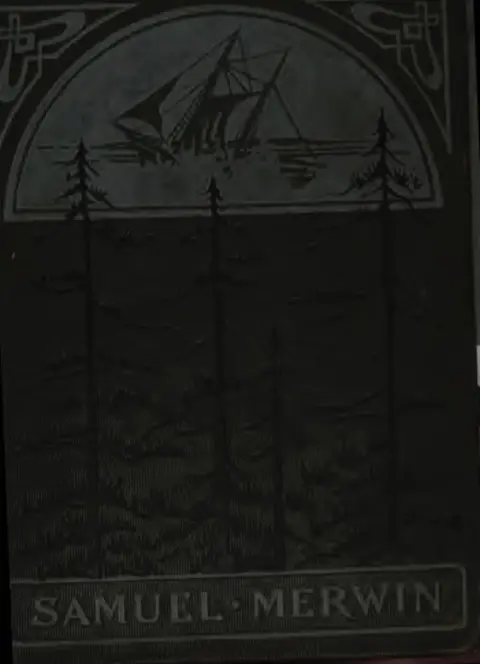
His Little World: The Story of Hunch Badeau
Samuel Merwin
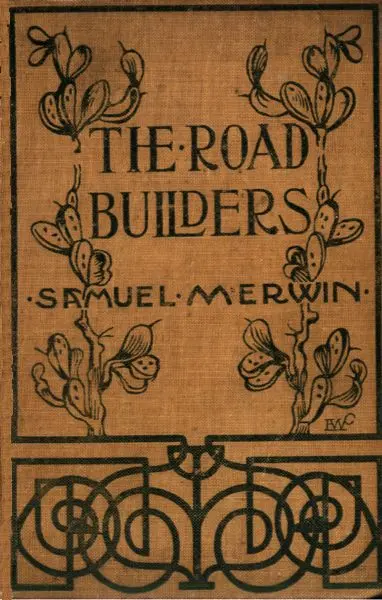
THE CLASSIC COLLECTION · 1905
"The Road Builders" by Samuel Merwin is a novel written in the early 20th century. This work presents a vivid exploration of the challenges faced by a railroad construction crew in the Southwestern United States. The narrative mainly revolves around the chief engineer, Paul Carhart, as he manages both the logistical and interpersonal dynamics of his diverse team amid adverse conditions. The opening of the narrative introduces the setting of Sherman, a burgeoning town where the construction of a new railway station is marred by delays connected to a missing cook and the assembly of laborers on a hot spring day. As tensions rise among the workers due to the heat and long waits, characters such as Young Van, the assistant engineer, are established, highlighting their struggles with responsibilities and the looming threat of labor unrest. Young Van’s quest to track down the unreliable cook, Purple Finn, sets the tone for the ensuing chaos and the camaraderie among the engineers as they face not only the physical demands of their work but also the complexities of managing a diverse and often contentious group of workers.
Introduction adapted from the source catalogue; source summaries may be automatically generated.
Free to read · English · 53,599 words · No account needed
MAKE TIME FOR A GOOD BOOK
On by default. Untick to stop anonymous reading totals. Each page counts after 10 seconds in view. How this works.
Anonymous counting is on unless you have switched it off.
“Charlie,” cried Young Van, “stay where you are!” He turned hotly on his brother. “The worst we have any reason to believe about this man is that he put up that placard.”
“Well, doesn’t that prove him one of the gang?”
“We have no proof of anything.”
“You keep out of this, Gus! Charlie, do as I tell you.”
Charlie hesitated, and looked inquiringly at the younger engineer. This drove Old Van beyond reason. He suddenly snatched the revolver from the cook, shouting angrily: “If you won’t obey orders, I’ll see to it myself!”
But Young Van, with a quick movement, gripped the weapon, bent it back out of his brother’s grasp, snapped it open, ejected the cartridges, and silently returned it. Old Van held it in his hand and looked at it, then at the five cartridges, where they had fallen on the ground. Then, with an expression his brother had never before seen on his face, he let the weapon fall on the ground among the cartridges, and walked away to the headquarters tent.
“Charlie,” said Young Van, “keep this man safe until the sheriff comes
back.”
“All right, sir,” Charlie replied.
The cook turned away with his prisoner, and Young Van’s eyes sought the ground. He had almost come to blows with his brother, and that before the men, about the worst thing that could have taken place. The incident seemed the natural culmination of these days of depression and pulling at odds.
“It looks like the sheriff coming in now, sir.”
Young Van started and looked up. Charlie, still grasping the stranger, was pointing down the track, where a troop of horsemen could be seen approaching. They drew rapidly nearer, and soon the two leaders could be distinguished. One was unmistakably Bowlegged Bill Lane. The other was a slender man, hatless, with rumpled hair, and a white handkerchief bound around his forehead. Young Van walked out to meet them, and saw, with astonishment, that the hatless rider was Paul Carhart; and never had face of man or woman been more welcome to his eyes.
The troop reined up, dismounted, and mopped their sweating faces. Their horses stood damp and trembling with exhaustion. All together, the little band bore witness of desperate riding, and to judge from certain signs, of fighting.
“Well, Gus,” said Carhart, cheerily, “how is everything?”
But Young Van was staring at the bandage. “Where have you been?” he
cried.
“Chasing Jack Flagg.”
“But they hit you!”
“Only grazed. If it hadn’t been dark, we should have got him.”
“But how in--”
Your reading position is saved on this browser. Take it to another device with a library code. Reading pages adapt to text, rather than matching a printed edition.
Samuel Merwin
Samuel Merwin
Samuel Merwin
Samuel Merwin
BEHIND THE BOOK
This eBook is for the use of anyone anywhere in the United States and most other parts of the world at no cost and with almost no restrictions whatsoever. You may copy it, give it away or re-use it under the terms of the Project Gutenberg License included with this eBook or online at www.gutenberg.org. If you are not located in the United States, you will have to check the laws of the country where you are located before using this eBook. Read the source licence.
The original source file, including credits and licence, is retained by this library. Request an original-format copy at no charge. Please include the book title and Project Gutenberg identifier #41825.
KEEP YOUR CURIOSITY GOING
Coulson Kernahan

Maurice Baring
Frances Wright
Cécile Tormay

Frederic Jesup Stimson

W. H. P. (William Henry Pope) Jarvis