
His Little World: The Story of Hunch Badeau
Samuel Merwin
THE CLASSIC COLLECTION · 1905
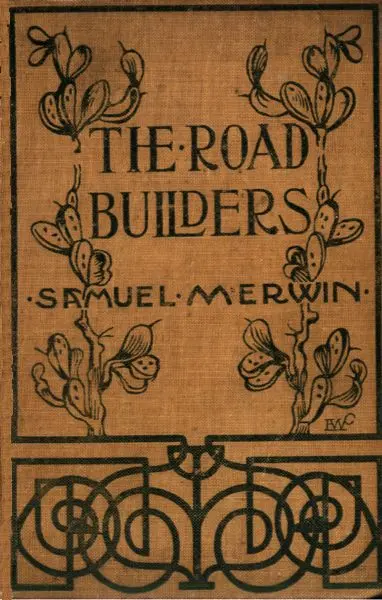
"The Road Builders" by Samuel Merwin is a novel written in the early 20th century. This work presents a vivid exploration of the challenges faced by a railroad construction crew in the Southwestern United States. The narrative mainly revolves around the chief engineer, Paul Carhart, as he manages both the logistical and interpersonal dynamics of his diverse team amid adverse conditions. The opening of the narrative introduces the setting of Sherman, a burgeoning town where the construction of a new railway station is marred by delays connected to a missing cook and the assembly of laborers on a hot spring day. As tensions rise among the workers due to the heat and long waits, characters such as Young Van, the assistant engineer, are established, highlighting their struggles with responsibilities and the looming threat of labor unrest. Young Van’s quest to track down the unreliable cook, Purple Finn, sets the tone for the ensuing chaos and the camaraderie among the engineers as they face not only the physical demands of their work but also the complexities of managing a diverse and often contentious group of workers.
Introduction adapted from the source catalogue; source summaries may be automatically generated.
Free to read · English · 53,599 words · No account needed
MAKE TIME FOR A GOOD BOOK
On by default. Untick to stop anonymous reading totals. Each page counts after 10 seconds in view. How this works.
Anonymous counting is on unless you have switched it off.
It was Carhart speaking, in the same quiet, distinct manner. The sound of his voice broke the tension. The men all looked up, even the nerveless Dimond. To Young Van they were oddly like a room full of schoolboys as they stood silently waiting for Flagg to obey. The giant cook himself was very like a schoolboy, as he glanced uneasily around, caught no sign of fight in the obedient eyes about him, sought counsel in the ground, the sky, the engines standing on the track, then finally slouched forward.
Young Van caught himself on the verge of laughing out. He saw Flagg advance a way and pause. Carhart waited. Flagg took a few more steps, then paused again, with the look of a man who feels that he has been bullied into a false position, yet cannot hit upon the way out.
“Well,” he said, glowering down on the figure of the engineer in charge--and very thin and short Carhart looked before him--“well, what do you want of me?”
For reply Carhart coolly looked him over. Then he snatched up a piece of scantling, whirled it once around his head, and caught Jack Flagg squarely on his deep, well-muscled chest. The cook staggered back, swung his arms wildly to recover his balance, failed, and fell flat, striking on the back of his head.
But he was up in an instant, and he started forward, swearing copiously and reaching for his hip pocket.
Young Van saw the motion. He knew that Paul Carhart seldom carried a weapon, and he felt that the safety of them all lay with himself. Accordingly he leaped to the ground, ran to the side of his chief, whipped out a revolver, and levelled it at Jack Flagg.
“Hands up!” he cried. “Hands up!”
“Gus,” cried Carhart, in a disgusted voice, “put that thing up!”
Young Van, crestfallen, hesitated; then dropped his arm.
“Now, Flagg,” said the chief, tossing the scantling to one side, “you clear out. You’d better do it fast, or the men’ll finish where I left off.”
The cook glanced behind him, and his eyes flitted about the semicircle from face to face. He was keen enough to take in the situation, and in a moment he had ducked under the couplers between two cars and disappeared.
“Well,” exclaimed Young Van, pocketing his revolver, “it didn’t take you long to wind that up, Mr. Carhart.”
“To wind it up?” Carhart repeated, turning with a queer expression toward his young assistant. “To begin it, you’d better say.” Then he composed his features and faced the laborers. “Get back to your work,” he said.
Your reading position is saved on this browser. Take it to another device with a library code. Reading pages adapt to text, rather than matching a printed edition.
Samuel Merwin
Samuel Merwin
Samuel Merwin
Samuel Merwin
BEHIND THE BOOK
This eBook is for the use of anyone anywhere in the United States and most other parts of the world at no cost and with almost no restrictions whatsoever. You may copy it, give it away or re-use it under the terms of the Project Gutenberg License included with this eBook or online at www.gutenberg.org. If you are not located in the United States, you will have to check the laws of the country where you are located before using this eBook. Read the source licence.
The original source file, including credits and licence, is retained by this library. Request an original-format copy at no charge. Please include the book title and Project Gutenberg identifier #41825.
KEEP YOUR CURIOSITY GOING
Coulson Kernahan

Maurice Baring
Frances Wright
Cécile Tormay

Frederic Jesup Stimson

W. H. P. (William Henry Pope) Jarvis