
Dark Hester
Anne Douglas Sedgwick
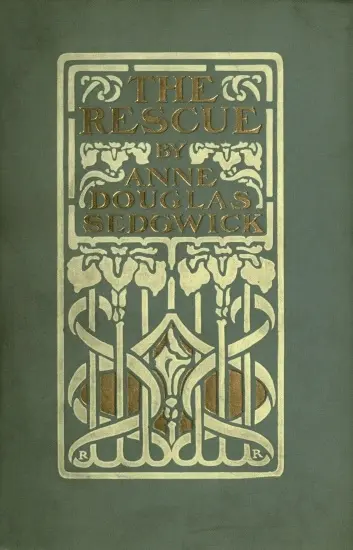
THE CLASSIC COLLECTION · 1901
"The Rescue" by Anne Douglas Sedgwick is a novel written in the early 20th century. The story focuses on Eustace Damier, who finds himself captivated by an old photograph of Clara Chanfrey, a woman from the 1860s with a poignant past. As he seeks to unravel her story, he becomes entwined with her present and her daughter, leading to explorations of love, loss, and societal expectations. The beginning of the novel introduces Damier as he revisits memories of his mother and her circle, leading to the discovery of the photograph of Clara, a beautiful woman who eloped with a French artist. His fascination with Clara's mysterious life prompts him to reach out to her through mutual acquaintances. As he learns more about her difficult past and the nature of her marriage to the artist, Damier's emotional journey unfolds, revealing his growing interest in both Clara and her daughter, Claire, against the backdrop of their struggles in a rapidly changing society. This opening sets the stage for complex relationships and emotional conflicts that define the characters' lives.
Introduction adapted from the source catalogue; source summaries may be automatically generated.
Free to read · English · 38,361 words · No account needed
MAKE TIME FOR A GOOD BOOK
On by default. Untick to stop anonymous reading totals. Each page counts after 10 seconds in view. How this works.
Anonymous counting is on unless you have switched it off.
One day in late autumn, when he had returned to London, something happened which changed the character of this unsubstantial romance. He met at his club another old friend, a contemporary of Mrs. Mostyn's. Sir Henry Quarle was a writer of pleasant reminiscences, a garrulous and companionable man about town, who had kept careful pace with the times, who, indeed, flattered himself that he usually kept a step or two ahead of them: he was prophetic as well as reminiscent; had firm opinions and facile appreciations.
He and Damier spoke of Mrs. Mostyn,--Sir Henry, too, had seen her recently,--of Paris, and of her connection with it. "And by the way," said Sir Henry, "she told me that you were tremendously interested in what she told you about Madame Vicaud--Clara Chanfrey that was. Now I know a good deal about that unhappy history, and can, indeed, carry it on to a further chapter; the first did interest you?"
"Tremendously," Damier assented, feeling, with a beating heart, that daylight was about to flood his mystic temple. "Is she alive?" he added.
"That I don't know. But I saw the second chapter at close quarters. I went to Vicaud's studio one day. They had been married only a few years; she was a mere girl even then. I never saw such wretchedness."
"In what way?" Damier's heart now beat with a strange self-reproach.
"Oh--not describable. It was the evident hiding of misery that one felt most, the controlled fear in her face. She was lovelier than ever, but white, wasted, her delicate hands worn with work. The place was already poverty-stricken, but clean--grimly clean; I have no doubt she scrubbed the floor herself. Four or five artists were there--clever, well-known men, but not of the best type: the kind of men who wrote brutally realistic feuilletons for papers of the baser order, who painted pictures pour épater le bourgeois; grossly materialistic, cynically skeptical of all that was not so. One felt that, though utterly alien to it by taste, she could have adapted herself, in a sense, to the best bohemianism. She was broadly intelligent; she would have recognized all that was fine, vital, inspiring in it, all that it implies of antagonism to the conformist, the bourgeois attitude. But the bohemianism of her husband and his comrades could only turn her to ice. It was strange to see her fear, and yet her strength, in these surroundings. They saw it, too; her chill gentleness, her inflexible face, cowed them, made them silly rather than vicious. Only, at that time, she had not cowed her husband; at all events, he seemed to take a pleasure in showing his mastery over her, his indifference to her attitude. He was a genius, with the face of a poet and the soul of a satyr. She had charmed him by her unusualness; he had determined to have her, to snatch her, the fine, delicate creature, from another world, as it were, and to make her part of his experience of life in very much the same sense as he would have tried a new kind of sin for the sake of its novelty. Then, too, he hoped, of course, for advancement, pecuniary and social; the disappointment of that hope must have roused the fiend in him. Of course he loved her--if one can turn the word to such base uses. What man would not have loved her? He loved her as he might have loved one of his mistresses; and I remember that on that day he dared--as perhaps he would not have dared had they been alone--to go to her before us all, fondle her cheek, and, putting his arm around her, kiss her. We all, I think, felt the ugly bravado of it, and I know that I never detested a man as I detested him at that moment. She sat motionless, expressionless. Only her eyes showed the terror of her helplessness, her despair."
Your reading position is saved on this browser. Take it to another device with a library code. Reading pages adapt to text, rather than matching a printed edition.
Anne Douglas Sedgwick
Anne Douglas Sedgwick

Anne Douglas Sedgwick

Anne Douglas Sedgwick
BEHIND THE BOOK
This eBook is for the use of anyone anywhere in the United States and most other parts of the world at no cost and with almost no restrictions whatsoever. You may copy it, give it away or re-use it under the terms of the Project Gutenberg License included with this eBook or online at www.gutenberg.org. If you are not located in the United States, you will have to check the laws of the country where you are located before using this eBook. Read the source licence.
The original source file, including credits and licence, is retained by this library. Request an original-format copy at no charge. Please include the book title and Project Gutenberg identifier #42194.
KEEP YOUR CURIOSITY GOING
Coulson Kernahan

Maurice Baring
Frances Wright
Cécile Tormay

Frederic Jesup Stimson

W. H. P. (William Henry Pope) Jarvis