
Dark Hester
Anne Douglas Sedgwick
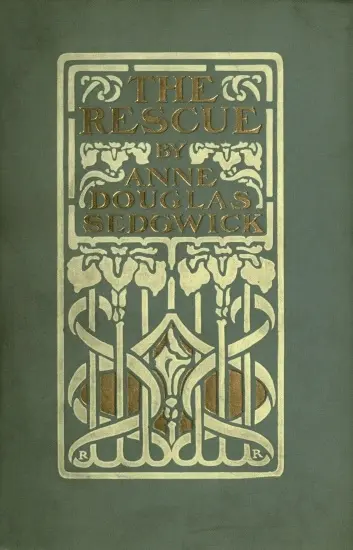
THE CLASSIC COLLECTION · 1901
"The Rescue" by Anne Douglas Sedgwick is a novel written in the early 20th century. The story focuses on Eustace Damier, who finds himself captivated by an old photograph of Clara Chanfrey, a woman from the 1860s with a poignant past. As he seeks to unravel her story, he becomes entwined with her present and her daughter, leading to explorations of love, loss, and societal expectations. The beginning of the novel introduces Damier as he revisits memories of his mother and her circle, leading to the discovery of the photograph of Clara, a beautiful woman who eloped with a French artist. His fascination with Clara's mysterious life prompts him to reach out to her through mutual acquaintances. As he learns more about her difficult past and the nature of her marriage to the artist, Damier's emotional journey unfolds, revealing his growing interest in both Clara and her daughter, Claire, against the backdrop of their struggles in a rapidly changing society. This opening sets the stage for complex relationships and emotional conflicts that define the characters' lives.
Introduction adapted from the source catalogue; source summaries may be automatically generated.
Free to read · English · 38,361 words · No account needed
MAKE TIME FOR A GOOD BOOK
On by default. Untick to stop anonymous reading totals. Each page counts after 10 seconds in view. How this works.
Anonymous counting is on unless you have switched it off.
"I should say certainly not,"--Damier waited with a cold patience until she had finished,--"but again you have misinterpreted me; I am disgusted not because you love Monsieur Daunay, but because you do not love him."
At this, after a stare, Claire gave a loud laugh.
"Ah!--c'est trop fort! You can't make me believe that you want me to
love him."
"I don't want you to love him; but I say that the circumstances would be more to your credit if you did."
Her face now showed a mingled relief and perplexity.
"Ah, it is the money, then--that I should accept it!"
"Can I make no appeal to you for your mother's sake--for the sake of
your own dignity?"
"I can take care of my own dignity, Mr. Damier." The relief was showing in her quieter voice, her fading flush. "I see how angry you are--and only because I have not pretended with you. Let me explain. I never pretend with you: I can only explain. I must begin at the beginning to do it; and the beginning and the end is our poverty. Mamma had a pittance left to her, a year or so after my father's death, by some relations, and that, since then, has been our only pied-à-terre. She would never accept the allowance, quite a generous one, too, that her family wished to make her. I don't want to blame her; I know how you feel about her; I appreciate it. But it was, I must say it, very selfish of her; she should have thought more of me--the luckless result of her mésalliance--and less of her own pride. I really hardly know how she brought me up: though, I own, she gave me a good education; I was always at school during my father's life--she avoided that soil for me, you may be sure! I give her credit for all that; she must have worked hard to do it. But she owed me all she could get for me, and, I must say, she did not pay the debt." Claire had been looking before her as she talked, but now she looked at Damier, and something implacable, coldly enduring, in his eye warned her that her present line of exculpation was not serving her. "Don't imagine, now, that I am complaining--ungrateful," she said a little petulantly. "I know--as well as you do--what a good mother she has been to me. I only want to show you that she is not altogether blameless--that she is responsible, in more ways than one, for me--for what I am. Let it pass, though. When I came home, a young girl, full of life and eager for enjoyment, what did I find? Poverty, labor, obscurity. It was an ugly, a meager existence she had prepared for me, and, absolutely, with a certain pride in it! She expected me to enjoy work, shabby clothes, grave pursuits, as much as she did, or, at all events, not to mind them. Plain living, high thinking--that was her idea of happiness for me!" Insensibly the ironic note had grown again in her voice. "I remember, too, at first, her taking me to see poor people in horrid places--expecting me to talk to them, sing to them; I soon put a stop to that. At her age, with a ruined life, it is natural that one should wish to devote one's self to bonnes-oeuvres; but for me, ah, par exemple!" Claire gave a coarse laugh. "I had not quite come to that! She gave me the best she had--all she had, you will say; I own it: but not all she might have had. And then she need not have expected me to enjoy--should not have been aggrieved, wounded, because I only endured. Again,--I am not unjust,--it was not all high thinking; she had her schemes for my amusement--d'une simplicité! Really, for such a clever woman, Mamma can be dull! And the people we knew! We had a right--you know it--to le vrai grand monde. You know it, and you are trying, now, to help me to it. But Mamma did not try. With a little management she might have regained her place in it; but no--her pride again! She seemed to think that she was le grand monde, and that I ought to be satisfied with that! And now, with all this, you think it strange--disgusting--that when I saw that Daunay--le pauvre!--was in love with me I should ask him to continue to the daughter the aid that he had extended to the father! There again, for a clever woman, Mamma is dull--though her dullness has been to my advantage. She can make money, she can avoid spending it, but she has little conception of its value; she does the housekeeping, and, after that, she leaves the management of our resources to me. She is funnily gullible about the price of my clothes; the lessons I give would hardly keep me in shoes and stockings--as I understand shoes and stockings!" Claire laughed. "This dress that I have on--Mamma imagines it is made by a little dressmaker whom I am clever enough to guide with my taste. I take out the name on the waist-band and she is none the wiser. This dress is a Doucet." There was now quite a blithe complacency in Claire's voice. "And I have always considered myself amply excusable," she went on, "in accepting the small pleasures that life offered me. Of course it has really not been much that I have been able to accept--though he would willingly--and he is not rich--give more. Jewels, for instance, I have never dared attempt--nor even many dresses; that would have been incautious. For Mamma, of course, must never know; she would be inexpressibly shocked. I can see her face!"
Your reading position is saved on this browser. Take it to another device with a library code. Reading pages adapt to text, rather than matching a printed edition.
Anne Douglas Sedgwick
Anne Douglas Sedgwick

Anne Douglas Sedgwick

Anne Douglas Sedgwick
BEHIND THE BOOK
This eBook is for the use of anyone anywhere in the United States and most other parts of the world at no cost and with almost no restrictions whatsoever. You may copy it, give it away or re-use it under the terms of the Project Gutenberg License included with this eBook or online at www.gutenberg.org. If you are not located in the United States, you will have to check the laws of the country where you are located before using this eBook. Read the source licence.
The original source file, including credits and licence, is retained by this library. Request an original-format copy at no charge. Please include the book title and Project Gutenberg identifier #42194.
KEEP YOUR CURIOSITY GOING
Coulson Kernahan

Maurice Baring
Frances Wright
Cécile Tormay

Frederic Jesup Stimson

W. H. P. (William Henry Pope) Jarvis