The diary of a superfluous man, and other stories
Ivan Sergeevich Turgenev
THE CLASSIC COLLECTION · 1907
"The Rendezvous" by Ivan Sergeevich Turgenev is a short story that captures the emotional complexities of love and longing, written in the late 19th century. As a poignant tale centered on the fleeting nature of relationships, it delves into the themes of desire, hope, and the heartache of untimely separation. Turgenev’s narrative invites readers to explore the intimate yet tumultuous moments between characters, set against the backdrop of a beautifully rendered natural landscape. The story unfolds in an autumn birch grove where the narrator observes a young peasant girl named Akulina, who waits for Victor Alexandrich, a man of indifferent demeanor and a spoiled personality. Their encounter reveals a significant imbalance in their feelings; Akulina's deep affection for Victor contrasts sharply with his nonchalant attitude as he prepares to leave her behind. Despite her earnest pleas for a meaningful farewell, Victor's shallow and dismissive responses highlight the disparity in their emotional investments. Ultimately, Akulina's profound sadness, underscored by her tears and longing, leaves a lasting impression on the narrator, capturing the essence of heartbreak and the bittersweet nature of love in life's transient moments.
Introduction adapted from the source catalogue; source summaries may be automatically generated.
Free to read · English · 3,372 words · No account needed
MAKE TIME FOR A GOOD BOOK
On by default. Untick to stop anonymous reading totals. Each page counts after 10 seconds in view. How this works.
Anonymous counting is on unless you have switched it off.
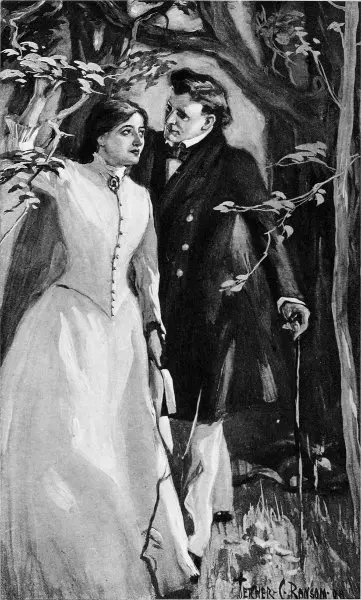
“To-morrow--Come, come, come, please,” he replied quickly, vexed, noticing that she quivered, and bowed her head in silence. “Please, Akulina, don’t cry. You know I can’t bear it” (and he twitched his flat nose). “If you don’t stop, I’ll leave you right away. What nonsense--to whimper!”
“Well, I shan’t, I shan’t,” said Akulina hastily, swallowing the tears with an effort. “So you’re going away to-morrow?” she added, after a brief silence. “When will it please God to have me meet you again, Victor Alexandrich?”
“We’ll meet, we’ll meet again. If it isn’t next year, it’ll be later. My master, it seems, wants to enter the service in St. Petersburg,” he went on, pronouncing the words carelessly and somewhat indistinctly. “And it may be that we’ll go abroad.”
“You will forget me, Victor Alexandrich,” said Akulina sadly.
“No--why should I? I’ll not forget you, only you had rallier be sensible; don’t make a fool of yourself; obey your father--And I’ll not forget you--Oh, no; oh, no.” And he stretched himself calmly and yawned again.
“Do not forget me, Victor Alexandrich,” she resumed in a beseeching voice. “I have loved you so much, it seems--all, it seems, for you--You tell me to obey father, Victor Alexandrich--How am I to obey my father--?”
“How’s that?” He pronounced these words as if from the stomach, lying on his back and holding his hands under his head.
“Why, Victor Alexandrich--you know it yourself--”
She fell silent. Victor fingered his steel watch-chain.
“Akulina, you are not a foolish girl,” he said at last, “therefore don’t talk nonsense. It’s for your own good, do you understand me? Of course, you are not foolish, you’re not altogether a peasant, so to say, and your mother wasn’t always a peasant either. Still, you are without education--therefore you must obey when you are told to.”
“But it’s terrible, Victor Alexandrich.”
“Oh, what nonsense, my dear--what is she afraid of! What is that you have there,” he added, moving close to her, “flowers?”
“Flowers,” replied Akulina sadly. “I have picked some field tansies,” she went on, with some animation. “They’re good for the calves, And here I have some marigolds--for scrofula. Here, look, what a pretty flower! I haven’t seen such a pretty flower in all my life. Here are forget-me-nots, and--and these I have picked for you,” she added, taking from under the tansies a small bunch of cornflowers, tied around with a thin blade of grass; “do you want them?”
Your reading position is saved on this browser. Take it to another device with a library code. Reading pages adapt to text, rather than matching a printed edition.
Ivan Sergeevich Turgenev
Ivan Sergeevich Turgenev
Ivan Sergeevich Turgenev
Ivan Sergeevich Turgenev
BEHIND THE BOOK
This eBook is for the use of anyone anywhere in the United States and most other parts of the world at no cost and with almost no restrictions whatsoever. You may copy it, give it away or re-use it under the terms of the Project Gutenberg License included with this eBook or online at www.gutenberg.org. If you are not located in the United States, you will have to check the laws of the country where you are located before using this eBook. Read the source licence.
The original source file, including credits and licence, is retained by this library. Request an original-format copy at no charge. Please include the book title and Project Gutenberg identifier #23056.
KEEP YOUR CURIOSITY GOING
Coulson Kernahan

Maurice Baring
Frances Wright
Cécile Tormay

Frederic Jesup Stimson

W. H. P. (William Henry Pope) Jarvis