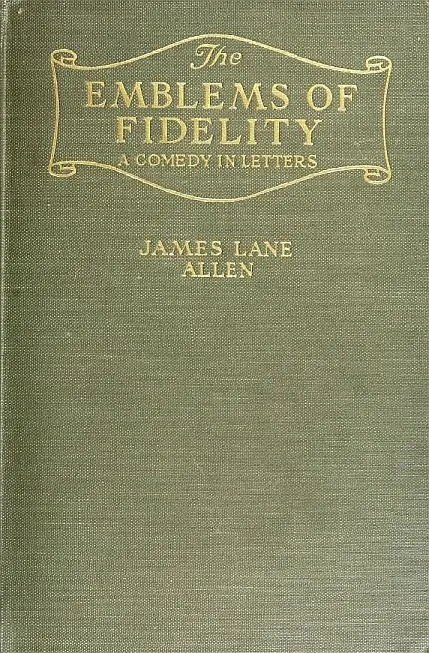
The Emblems of Fidelity: A Comedy in Letters
James Lane Allen
THE CLASSIC COLLECTION · 1900
"The Reign of Law; a tale of the Kentucky hemp fields" by James Lane Allen is a novel written during the late 19th century. It explores the life of Kentucky farmers in the context of hemp cultivation, intertwining agricultural practices with themes of personal and societal struggle. The story begins by highlighting the historical significance of hemp in Kentucky and delves into the lives of its people, with a focus on the impact of this crop on their livelihoods and relationships. The opening of the novel paints a vivid picture of the rich landscape of Kentucky, detailing the cultivation of hemp and the labor involved in its production. It introduces a pioneer community defined by their hard work and the changes brought about by the cultivation of hemp, as it shifts from being a necessity for basic needs to a lucrative cash crop. During this backdrop of agricultural life, the narrative sets the stage for the struggles and aspirations of its characters, including a deacon expelled from a church for his open-mindedness, and a young man, David, who dreams of attending a new university. This opening portion establishes a complex interplay between the characters' personal desires and the cultural and economic forces shaping their lives amidst the natural world.
Introduction adapted from the source catalogue; source summaries may be automatically generated.
Free to read · English · 64,433 words · No account needed
MAKE TIME FOR A GOOD BOOK
On by default. Untick to stop anonymous reading totals. Each page counts after 10 seconds in view. How this works.
Anonymous counting is on unless you have switched it off.
"Ah," said Gabriella, suddenly leaning forward in her chair, "that is the book that has done all the harm."
"One moment! All these books," continued David, for he was aroused now and did not pause to consider her passionate protest, "have this in common: that they try to discover and to trace Law. The universe--it is the expression of Law. Our solar system--it has been formed by Law, The sun--the driving force of Law has made it. Our earth--Law has shaped that; brought Life out of it; evolved Life on it from the lowest to the highest; lifted primeval Man to modern Man; out of barbarism developed civilization; out of prehistoric religions, historic religions. And this one order--method--purpose--ever running and unfolding through the universe, is all that we know of Him whom we call Creator, God, our Father. So that His reign is the Reign of Law. He, Himself, is the author of the Law that we should seek Him. We obey, and our seekings are our religions."
"If you ask me whether I believe in the God of the Hebrews, I say 'Yes'; just as I believe in the God of the Babylonians, of the Egyptians, of the Greeks, of the Romans, of all men. But if you ask whether I believe what the Hebrews wrote of God, or what any other age or people thought of God, I say 'No.' I believe what the best thought of my own age thinks of Him in the light of man's whole past and of our greater present knowledge of the Laws of His universe," said David, stoutly, speaking for his masters.
"As for the theologies," he resumed hastily, as if not wishing to be interrupted, "I know of no book that has undertaken to number them. They, too, are part of Man's nature and civilization, of his never ceasing search. But they are merely what he thinks of God--never anything more. They often contain the highest thought of which he is capable in his time and place; but the awful mistake and cruelty of them is that they have regularly been put forth as the voice of God Himself, authoritative, inviolable, and unchanging. An assemblage of men have a perfect right to turn a man out of their church on theological grounds; but they have no right to do it in the name of God. With as much propriety a man might be expelled from a political party in the name of God. In the long life of any one of the great religions of the globe, how many brief theologies have grown up under it like annual plants under a tree! How many has the Christian religion itself sprouted, nourished, and trampled down as dead weeds! What do we think now of the Christian theology of the tenth century? of the twelfth? of the fifteenth? In the nineteenth century alone, how many systems of theology have there been? In the Protestantism of the United States, how many are there to-day? Think of the names they bear--older and newer! According to founders, and places, and sources, and contents, and methods: Arminian--Augustinian--Calvinistic--Lutheran-- Gallican--Genevan--Mercersburg--New England--Oxford--national-- revealed--Catholic--evangelical--fundamental--historical-- homiletical--moral--mystical--pastoral--practical--dogmatic-- exegetical--polemic--rational--systematic. That sounds a little like Polonius," said David, stopping suddenly, "but there is no humor in it! One great lesson in the history of them all is not to be neglected: that through them also runs the great Law of Evolution, of the widening thoughts of men; so that now, in civilized countries at least, the churches persecute to the death no longer. You know what the Egyptian Priesthood would have done with me at my trial. What the Mediaeval hierarchy would have done. What the Protestant or the Catholic theology of two centuries ago might have done. Now mankind is developing better ideas of these little arrangements of human psychology on the subject of God, though the churches still try to enforce them in His name. But the time is coming when the churches will be deserted by all thinking men, unless they cease trying to uphold, as the teachings of God, mere creeds of their ecclesiastical founders. Very few men reject all belief in God; and it is no man's right to inquire in what any man's belief consists; men do reject and have a right to reject what some man writes out as the eternal truth of the matter."
Your reading position is saved on this browser. Take it to another device with a library code. Reading pages adapt to text, rather than matching a printed edition.
James Lane Allen
James Lane Allen
James Lane Allen
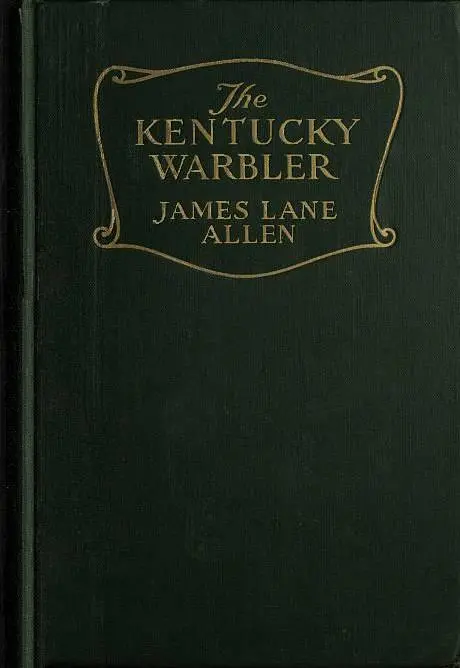
James Lane Allen
BEHIND THE BOOK
This eBook is for the use of anyone anywhere in the United States and most other parts of the world at no cost and with almost no restrictions whatsoever. You may copy it, give it away or re-use it under the terms of the Project Gutenberg License included with this eBook or online at www.gutenberg.org. If you are not located in the United States, you will have to check the laws of the country where you are located before using this eBook. Read the source licence.
The original source file, including credits and licence, is retained by this library. Request an original-format copy at no charge. Please include the book title and Project Gutenberg identifier #3791.
KEEP YOUR CURIOSITY GOING
Coulson Kernahan

Maurice Baring
Frances Wright
Cécile Tormay

Frederic Jesup Stimson

W. H. P. (William Henry Pope) Jarvis