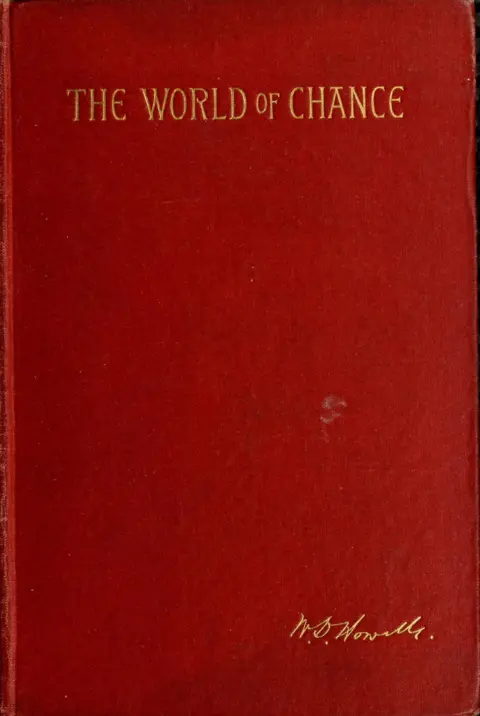
The World of Chance
William Dean Howells
THE CLASSIC COLLECTION · 1883
"The Register" by William Dean Howells is a farce that captures the complexities of romantic misunderstandings amidst social dynamics. Written in the early 20th century, the story is a comedic exploration of relationships, as it delves into themes of love, pride, and social class through the interactions of its characters. Set in a boarding house in Boston, it portrays the lives and conversations of young women and men navigating their feelings and the expectations placed upon them by society. The plot centers around Ethel Reed and Henrietta Spaulding, two women who navigate their surroundings and relationships with a mix of humor and tragedy. Ethel, who believes her romantic prospects are bleak after a misunderstanding with Mr. Oliver Ransom, contemplates her own actions while Henrietta provides a contrasting perspective on love and social expectations. As their conversations unfold, misunderstandings are laid bare—especially as Ransom reconciles his feelings for Ethel and his awkward past interactions with her. The narrative cleverly intertwines moments of comic relief with serious reflections, culminating in a humorous yet insightful resolution about love and self-awareness.
Introduction adapted from the source catalogue; source summaries may be automatically generated.
Free to read · English · 10,279 words · No account needed
MAKE TIME FOR A GOOD BOOK
On by default. Untick to stop anonymous reading totals. Each page counts after 10 seconds in view. How this works.
Anonymous counting is on unless you have switched it off.
Miss Spaulding, who continues her work of arranging the room: “Often.”
Miss Reed: “Did you ever believe it?”
Miss Spaulding: “Never.”
Miss Reed: “Why?”
Miss Spaulding, thoughtfully regarding a vase which she holds in her hand, after several times shifting it from a bracket to the corner of her piano and back: “I wish I could tell where you do look best!”
Miss Reed, leaning forward wistfully, with her hands clasped and resting on her knees: “I wish you would tell me why you don’t believe you’re the best friend I have in the world.”
Miss Spaulding, finally placing the vase on the bracket: “Because you’ve said so too often.”
Miss Reed: “Oh, that’s no reason! I can prove to you that you are. Who else but you would have taken in a homeless and friendless creature like me, and let her stay bothering round in demoralizing idleness, while you were seriously teaching the young idea how to drub the piano?”
Miss Spaulding: “Anybody who wanted a room-mate as much as I did, and could have found one willing to pay more than her share of the lodging.”
Miss Reed, thoughtfully: “Do you think so, Henrietta?”
Miss Spaulding: “I know so.”
Miss Reed: “And you’re not afraid that you wrong yourself?”
Miss Spaulding: “Not the least.”
Miss Reed: “Well, be it so—as they say in novels. I will not contradict you; I will not say you are my best friend; I will merely say that you are my only friend. Come here, Henrietta. Draw up your chair, and put your little hand in mine.”
Miss Spaulding, with severe distrust: “What do you want, Ethel Reed?”
Miss Reed: “I want—I want—to talk it over with you.”
Miss Spaulding, recoiling: “I knew it! Well, now, we’ve talked it over enough; we’ve talked it over till there’s nothing left of it.”
Miss Reed: “Oh, there’s everything left! It remains in all its original enormity. Perhaps we shall get some new light upon it.” She extends a pleading hand towards Miss Spaulding. “Come, Henrietta, my only friend, shake!—as the ‘good Indians’ say. Let your Ethel pour her hackneyed sorrows into your bosom. Such an uncomfortable image, it always seems, doesn’t it, pouring sorrows into bosoms! Come!”
Miss Spaulding, decidedly: “No, I won’t! And you needn’t try wheedling any longer. I won’t sympathize with you on that basis at all.”
Miss Reed: “What shall I try, then, if you won’t let me try wheedling?”
Miss Spaulding, going to the piano and opening it: “Try courage; try
self-respect.”
Your reading position is saved on this browser. Take it to another device with a library code. Reading pages adapt to text, rather than matching a printed edition.
William Dean Howells
William Dean Howells
William Dean Howells
William Dean Howells
BEHIND THE BOOK
This eBook is for the use of anyone anywhere in the United States and most other parts of the world at no cost and with almost no restrictions whatsoever. You may copy it, give it away or re-use it under the terms of the Project Gutenberg License included with this eBook or online at www.gutenberg.org. If you are not located in the United States, you will have to check the laws of the country where you are located before using this eBook. Read the source licence.
The original source file, including credits and licence, is retained by this library. Request an original-format copy at no charge. Please include the book title and Project Gutenberg identifier #3403.
KEEP YOUR CURIOSITY GOING

Frederic Jesup Stimson
Laurence Sterne
Maurice Baring
Isabel Anderson
Eric Mackay
King of England Henry VIII