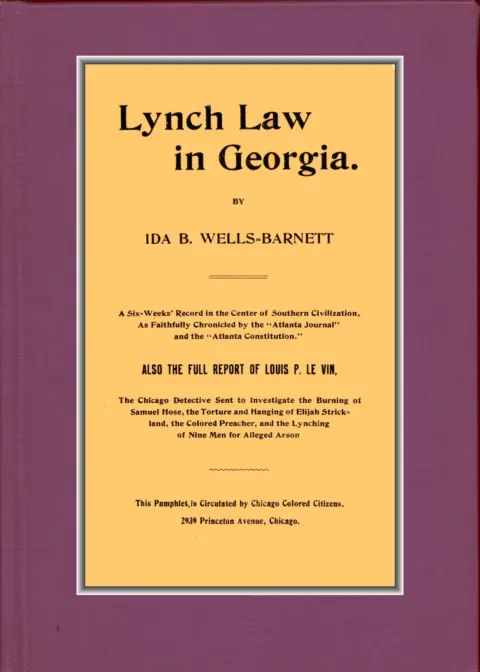
Lynch Law in Georgia
Ida B. Wells-Barnett
THE CLASSIC COLLECTION · 1895
“The Red Record” by Ida B. Wells-Barnett is a historical account written in the late 19th century. This work serves as a powerful and harrowing examination of lynching in the United States, particularly focusing on its impact on African Americans in the South. The text collects and analyzes statistics regarding lynching incidents, scrutinizing the justification of such acts and providing commentary on the societal implications and underlying racial biases of that era. The opening of the pamphlet establishes the context for Wells-Barnett's investigation, addressing the severe moral indifference of American society towards lynchings that had become alarmingly commonplace by 1894. In her preface, letters from notable figures, such as Frederick Douglass, emphasize the need for her work to expose the grave injustices faced by Black individuals, given the overwhelming statistics of murders without judicial process. The beginning chapters outline various excuses historically employed by white southerners to justify such brutal acts, probing into the concepts of racial violence, societal complicity, and the deeply entrenched systems of oppression that not only allowed for but effectively encouraged such lawlessness.
Introduction adapted from the source catalogue; source summaries may be automatically generated.
Free to read · English · 33,699 words · No account needed
MAKE TIME FOR A GOOD BOOK
On by default. Untick to stop anonymous reading totals. Each page counts after 10 seconds in view. How this works.
Anonymous counting is on unless you have switched it off.
Jan. 19, James Williams, Pickens Co., Ala.; Feb. 11, unknown negro, Forest Hill, Tenn.; Feb. 26, Joseph Hayne, or Paine, Jellico, Tenn.; Nov. 1, Abner Anthony, Hot Springs, Va.; Nov. 1, Thomas Hill, Spring Place, Ga.; April 24, John Peterson, Denmark, S.C.; May 6, Samuel Gaillard, ----, S.C.; May 10, Haywood Banks, or Marksdale, Columbia, S.C.; May 12, Israel Halliway, Napoleonville, La.; May 12, unknown negro, Wytheville, Va.; May 31, John Wallace, Jefferson Springs, Ark.; June 3, Samuel Bush, Decatur, Ill.; June 8, L.C. Dumas, Gleason, Tenn.; June 13, William Shorter, Winchester, Va.; June 14, George Williams, near Waco, Tex.; June 24, Daniel Edwards, Selina or Selma, Ala.; June 27, Ernest Murphy, Daleville, Ala.; July 6, unknown negro, Poplar Head, La.; July 6, unknown negro, Poplar Head, La.; July 12, Robert Larkin, Oscola, Tex.; July 17, Warren Dean, Stone Creek, Ga.; July 21, unknown negro, Brantford, Fla.; July 17, John Cotton, Connersville, Ark.; July 22, Lee Walker, New Albany, Miss.; July 26, ---- Handy, Suansea, S.C.; July 30, William Thompson, Columbia, S.C.; July 28, Isaac Harper, Calera, Ala.; July 30, Thomas Preston, Columbia, S.C.; July 30, Handy Kaigler, Columbia, S.C.; Aug. 13, Monroe Smith, Springfield, Ala.; Aug. 19, negro tramp, near Paducah, Ky.; Aug. 21, John Nilson, near Leavenworth, Kan.; Aug. 23, Jacob Davis, Green Wood, S.C.; Sept. 2, William Arkinson, McKenney, Ky.; Sept. 16, unknown negro, Centerville, Ala.; Sept. 16, Jessie Mitchell, Amelia C.H., Va.; Sept. 25, Perry Bratcher, New Boston, Tex.; Oct. 9, William Lacey, Jasper, Ala.; Oct. 22, John Gamble, Pikesville, Tenn.
Rape, 39; attempted rape, 8; alleged rape, 4; suspicion of rape, 1; murder, 44; alleged murder, 6; alleged complicity in murder, 4; murderous assault, 1; attempted murder, 1; attempted robbery, 4; arson, 4; incendiarism, 3; alleged stock poisoning, 1; poisoning wells, 2; alleged poisoning wells, 5; burglary, 1; wife beating, 1; self-defense, 1; suspected robbery, 1; assault and battery, 1; insulting whites, 2; malpractice, 1; alleged barn burning, 4; stealing, 2; unknown offense, 4; no offense, 1; race prejudice, 4; total, 159.
Alabama, 25; Arkansas, 7; Florida, 7; Georgia, 24; Indian Territory, 1; Illinois, 3; Kansas, 2; Kentucky, 8; Louisiana, 18; Mississippi, 17; Missouri, 3; New York, 1; South Carolina, 15; Tennessee, 10; Texas, 8; Virginia, 10.
While it is intended that the record here presented shall include specially the lynchings of 1893, it will not be amiss to give the record for the year preceding. The facts contended for will always appear manifest--that not one-third of the victims lynched were charged with rape, and further that the charges made embraced a range of offenses from murders to misdemeanors.
In 1892 there were 241 persons lynched. The entire number is divided among
the following states:
Alabama, 22; Arkansas, 25; California, 3; Florida, 11; Georgia, 17; Idaho, 8; Illinois, 1; Kansas, 3; Kentucky, 9; Louisiana, 29; Maryland, 1; Mississippi, 16; Missouri, 6; Montana, 4; New York, 1; North Carolina, 5; North Dakota, 1; Ohio, 3; South Carolina, 5; Tennessee, 28; Texas, 15; Virginia, 7; West Virginia, 5; Wyoming, 9; Arizona Territory, 3; Oklahoma, 2.
Your reading position is saved on this browser. Take it to another device with a library code. Reading pages adapt to text, rather than matching a printed edition.
Ida B. Wells-Barnett
Ida B. Wells-Barnett
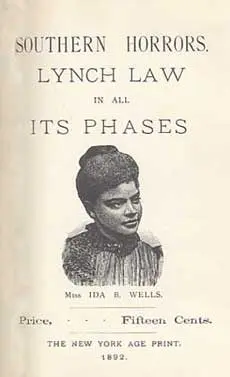
Ida B. Wells-Barnett
BEHIND THE BOOK
This eBook is for the use of anyone anywhere in the United States and most other parts of the world at no cost and with almost no restrictions whatsoever. You may copy it, give it away or re-use it under the terms of the Project Gutenberg License included with this eBook or online at www.gutenberg.org. If you are not located in the United States, you will have to check the laws of the country where you are located before using this eBook. Read the source licence.
The original source file, including credits and licence, is retained by this library. Request an original-format copy at no charge. Please include the book title and Project Gutenberg identifier #14977.
KEEP YOUR CURIOSITY GOING
Cécile Tormay

Moritz Busch
Coulson Kernahan
John L. Ransom

Maurice Baring
Frances Wright