THE CLASSIC COLLECTION✦Moving Pictures: How They Are Made and WorkedCLASSIC FREE BOOKS
Moving Pictures: How They Are Made and Worked
Frederick Arthur Ambrose Talbot
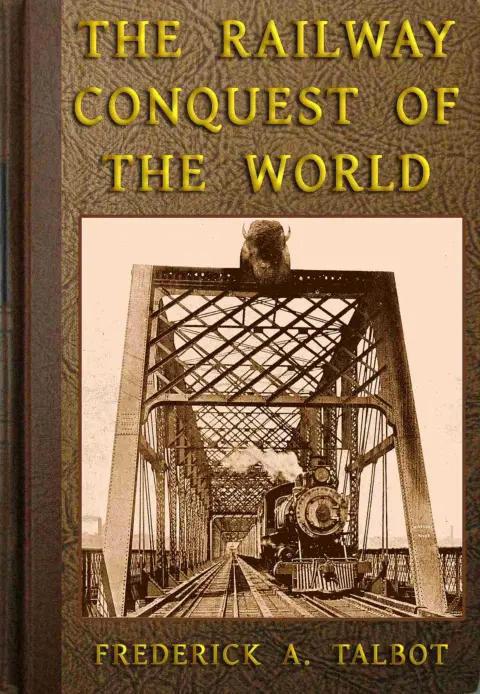
THE CLASSIC COLLECTION · 1911
"The Railway Conquest of the World" by Frederick Arthur Ambrose Talbot is a historical account written in the early 20th century. This work explores the development and impact of railways across the globe, weaving together both the romantic tales of railway construction and the numerous challenges faced by engineers and laborers. It particularly underscores the transformative effects of rail travel on societies, economies, and cultures. The opening of the book introduces the adventurous and perilous life of a railway surveyor, providing insight into the trials and tribulations faced during the initial mapping of railway routes. Talbot shares anecdotes that illustrate the harsh conditions and dangers of railway building, including encounters with hostile locals and treacherous natural landscapes. The narrative highlights the unsung bravery of surveyors and railway engineers who, despite facing near-insurmountable obstacles, worked tirelessly to lay down the bedrock for the vast networks of rail that would change the face of transportation forever.
Introduction adapted from the source catalogue; source summaries may be automatically generated.
Free to read · English · 114,444 words · No account needed
MAKE TIME FOR A GOOD BOOK
On by default. Untick to stop anonymous reading totals. Each page counts after 10 seconds in view. How this works.
Anonymous counting is on unless you have switched it off.
A powerful pumping-plant was set up, hundreds of feet of hose were laid down, and fitted with huge, powerful nozzles. Gigantic and powerful streams of water were thrown against the mountain face, and the debris thus dislodged was diverted into flumes, or wooden troughs, which emptied themselves into the valley. Before a yard of debris was tossed into that abyss, £12,000, or $60,000, had been spent. When the full blast of water was brought to bear on the face of the hill the gravel rushed down into the depression like lava pouring from a volcano in eruption. The water jets literally moved a hill into the ravine. In the course of a few weeks a neck of solid earth stretched across the abyss, affording a path for the railway.
The crossing of the Columbia River was another heavy undertaking, exceeding in character the bridge across the Missouri. At this point the river is wide, with the navigable channel in the centre, but there is a heavy rise and fall of the water according to the season, the feet of the mountains on either side being lapped when the river is in flood. The peculiar conditions necessitated a high structure, with massive stone piers supporting the steel-work. Sixteen wide spans were required. The task was carried out by the railway companies’ own bridge-engineering staff, in which class of work they are specialists and peculiarly fitted to such huge enterprises.
Such is the story of the Railway Rush across the United States to the Pacific. Yet the public clamours for further lines. The facilities extended already to travel from the Atlantic to the Pacific seaboards in less than four days have served only to cause the public to emulate “Oliver Twist” and to ask for more.
ABT system of grading, 255, 307
Abu Hamed, 154
Aconcagua Peak, 128, 274
---- River, 277
Acre, Bay of, 122
Adelaide, 184, 190
Adelsköld, Mme. Gustafva, 260
--- Major C., 260–62
Adhesion traction, 217
Africa, railways of, 79, 139–61
---- Cape to Cairo railway, 139–61
---- Central, railways of, 281–8
---- French West, 145
---- German East, 150
---- ---- South-West, 79
---- Portuguese East, 281, 282
----- South, the war, 155
---- ---- gold-fields, 301
Air-brakes, 313
Airolo, 33, 35, 41, 42, 44
Akasha, 153
Alaska, 162
---- reclamation of, 102–16
Albany, 187
Albert Nyanza, Lake, 151, 161
Alexandria, 154, 158, 159
Allahabad, 252
---- -Fyzerbad railway, 252
Allan, Sir Hugh, 225
Alps, the, 162–3, 170
---- the Southern, 194
Amarillo Gorge, 274
Amazon River, 129, 270
America, South--
First trans-continental railway, 270
Laissez-faire attitude, 14
Survey work, 9–11
World’s highest line, 128–38
American Civil War, the, 309
American railway interests, 155, 183, 293, 300
Amur railway, the, 201, 211, 212
---- Valley, 209
Andermatt, village of, 42
Anderson, Messrs. J. & A., 195
Andes, the, 9, 128–9, 134, 135, 137, 177, 270, 271, 272, 274, 277, 278
---- Trans-andine railway, 270, 274
Animas Canyon, 170
Antofagasta railway, 136, 279
Arab raiders, 119, 126–7
Arabia, deserts of, 117
Argentina-Chile peace, 275
Arica, 279
Arkansas River, 164
Arlberg Tunnel, the, 88–9, 94, 95
Armstrong, Sir W. G., 200, 206
Arnold, Bion, 56
Asia Minor, 122
Assling, 97
Assuan, 158
Atbara, 154, 159
---- Bridge, 154, 156, 157
---- River, 154
Atlin, 111
Auckland, 194
Auspoint, 94
Australasia, railways of, 175–97
Your reading position is saved on this browser. Take it to another device with a library code. Reading pages adapt to text, rather than matching a printed edition.
Frederick Arthur Ambrose Talbot
Frederick Arthur Ambrose Talbot
Frederick Arthur Ambrose Talbot
Frederick Arthur Ambrose Talbot
BEHIND THE BOOK
This eBook is for the use of anyone anywhere in the United States and most other parts of the world at no cost and with almost no restrictions whatsoever. You may copy it, give it away or re-use it under the terms of the Project Gutenberg License included with this eBook or online at www.gutenberg.org. If you are not located in the United States, you will have to check the laws of the country where you are located before using this eBook. Read the source licence.
The original source file, including credits and licence, is retained by this library. Request an original-format copy at no charge. Please include the book title and Project Gutenberg identifier #66868.
KEEP YOUR CURIOSITY GOING
Cécile Tormay

Moritz Busch
John L. Ransom
Frances Wright
Cécile Tormay

Mabel Potter Daggett