THE CLASSIC COLLECTION✦The boys’ book of buccaneersCLASSIC FREE BOOKS
The boys’ book of buccaneers
A. Hyatt (Alpheus Hyatt) Verrill
THE CLASSIC COLLECTION · 1922
"The Radio Detectives" by A. Hyatt Verrill is a novel written in the early 20th century. The story revolves around Tom Pauling, a young boy fascinated with radio technology, who, along with his friends, embarks on a thrilling adventure. As they dive into the world of radio communication, they discover mysterious messages that pique their curiosity and lead them on a quest that intertwines scientific exploration with the excitement of potential danger. The opening portion introduces Tom as he enthusiastically tells his father about his homemade crystal radio set. This excitement is shared within the family as Tom’s parents encourage his interest in radio technology, which soon escalates into Tom's ambition to build more complex devices. Tom, along with his friend Frank, eagerly pursues his passion, setting the stage for an adventure intertwined with the thrill of invention. They soon find themselves intrigued by mysterious messages exchanged via radio, hinting at deeper, potentially nefarious dealings that they are determined to uncover.
Introduction adapted from the source catalogue; source summaries may be automatically generated.
Free to read · English · 48,425 words · No account needed
MAKE TIME FOR A GOOD BOOK
On by default. Untick to stop anonymous reading totals. Each page counts after 10 seconds in view. How this works.
Anonymous counting is on unless you have switched it off.
“That is very plausible as a theory,” remarked another man, “but it does not get us anywhere. If this is so, where does this master mind stay? Where are his headquarters? Surely he must have underlings,—lieutenants and trusted emissaries and some place, some headquarters, from which his nefarious schemes are sent forth. Nothing comes in by mail or by passengers we know. Every alien who enters is known. Not a word that tends to bear out your theories had been wrung from the men captured even though they were on the verge of death or were about to go to the electric chair. No, I do not agree with you. It’s merely the aftermath of the war. Men were taught to handle firearms and to kill their fellow men. They were fed up, encouraged and lived with excitement and constant peril. The war ended; they were out of work, they pined for the thrill of danger and their viewpoint of life, of property and of right and wrong was distorted. Banditry offered an easy way of securing funds; it filled their desire for excitement; it satisfied their grudge against society and their country and, like all crimes which succeed, it became contagious and got a grip on more and more men. It’s all the logical outcome of the war and in my opinion the red propaganda has nothing whatever to do with it.”
Mr. Henderson smiled. “Perhaps I may be able to change your views, Selwin,” he remarked. “I wanted to know your ideas before I came out with it. As you all know, I was on special work during the war—detailed to decode all suspicious messages that came in by radio or cable and to use my vivid imagination to try to find hidden meanings in apparently innocent messages. You all know the result, and there is no need of recalling specific cases, such as the famous sugar shipment to Garcia and the announcement of a baby’s birth but which, thanks to my ‘hunch’ or imagination or whatever you wish to call it, led to the apprehension of the most dangerous female spy of the time and the confiscation of those incriminating documents which saved the Leviathan from destruction, prevented several thousand of our boys from going to the bottom of the sea, kept Brooklyn bridge from being blown to bits, thus blocking the Navy Yard, and prevented countless women and children from being widows and orphans. But perhaps you do not all know that, back of that stupendous plot, that greatest attempted coup of the enemy to terrorize and cripple the United States, that supreme effort of a dying, beaten nation to turn the tide of war and transform her from the vanquished to the victor, was the work of one man. To him was entrusted this almost superhuman task. The reward, if he succeeded, was to be honors and riches beyond conception. Had he won he would to-day be seated upon the throne of England—the despotic, iron-handed governor of a German colony with his feet upon the neck of the British people and with the colossal indemnity, which it had been planned to exact from our country, as his monetary reward. If he failed, his life was to pay the forfeit. Not only his life was to be sacrificed, but his lands and property were to be confiscated, his family imprisoned, degraded and exiled. It was, I think, the greatest, the most stupendous gamble ever known. And the gambler lost! By the merest chance, by pure accident, by a coincidence which no human being could have foreseen, his messages—the vital message—came into my hands and, through a tiny mistake, an error which might have passed a thousand eyes unnoticed, the conspirator—this gambler in nations and life—was betrayed and all his efforts, his widespread plots, his carefully organized plans came to nothing. But yet he escaped. Evidently he considered a gambling debt one that could be disregarded. His country, or rather his emperor, had overlooked a most important matter. He had failed to provide for getting hold of the gambler to collect his debt. No doubt, had Germany been victorious, some emissary of the Kaiser would eventually have found this man and would have exacted payment in full. But with Germany’s downfall he was safe—at least as long as he remained out of Germany—and so completely did he efface himself that we came to the conclusion that he had committed suicide. But, gentlemen, I am willing to wager my reputation that he still lives. I have evidence which to my mind is absolutely conclusive that he is at the bottom of this Bolshevist propaganda, this influx of liquor, this wave of crime.”
Your reading position is saved on this browser. Take it to another device with a library code. Reading pages adapt to text, rather than matching a printed edition.
A. Hyatt (Alpheus Hyatt) Verrill
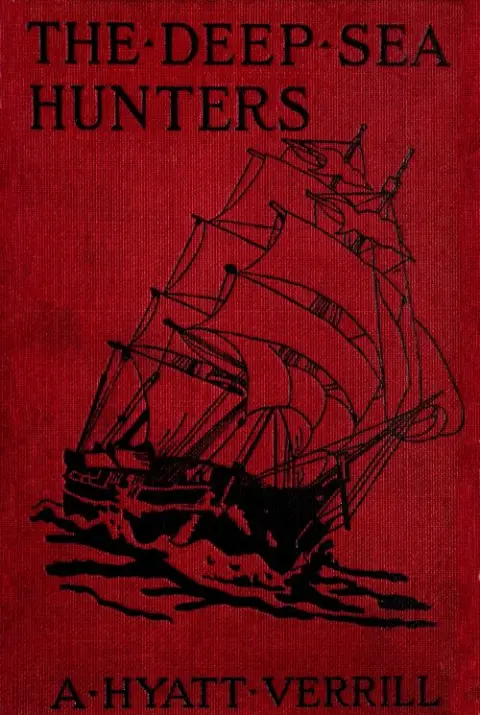
A. Hyatt (Alpheus Hyatt) Verrill
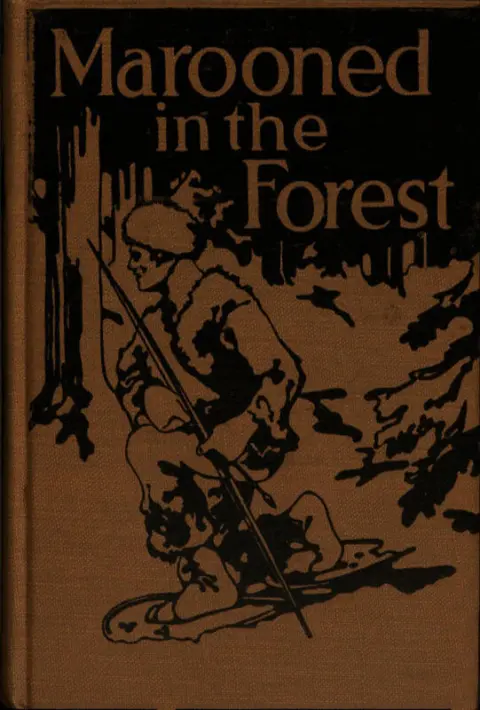
A. Hyatt (Alpheus Hyatt) Verrill
A. Hyatt (Alpheus Hyatt) Verrill
BEHIND THE BOOK
This eBook is for the use of anyone anywhere in the United States and most other parts of the world at no cost and with almost no restrictions whatsoever. You may copy it, give it away or re-use it under the terms of the Project Gutenberg License included with this eBook or online at www.gutenberg.org. If you are not located in the United States, you will have to check the laws of the country where you are located before using this eBook. Read the source licence.
The original source file, including credits and licence, is retained by this library. Request an original-format copy at no charge. Please include the book title and Project Gutenberg identifier #39576.
KEEP YOUR CURIOSITY GOING
Coulson Kernahan

Maurice Baring
Frances Wright
Cécile Tormay

Frederic Jesup Stimson

W. H. P. (William Henry Pope) Jarvis