THE CLASSIC COLLECTION✦A lovers’ taleCLASSIC FREE BOOKS
A lovers’ tale
Maurice Hewlett
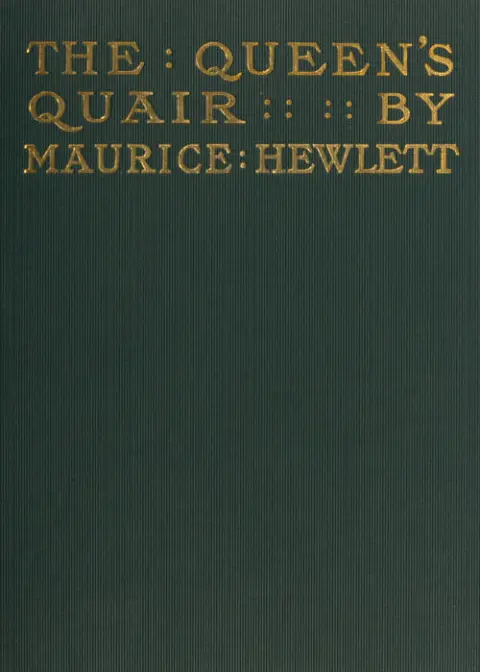
THE CLASSIC COLLECTION · 1903
"The Queen's Quair; or, The Six Years' Tragedy" by Maurice Hewlett is a historical novel written in the early 20th century. The book centers on the life and struggles of Mary Stuart, Queen of Scots, as she navigates the complex political landscape of her time, marked by love, betrayal, and the quest for power. The narrative aims to explore her emotional tumult and the circumstances that shaped her tragic fate. At the start of the novel, readers are introduced to Queen Mary, who is currently mourning the death of her husband, King Francis. The opening scenes depict the tension between her and the influential figures surrounding her, particularly the Cardinal of Lorraine, who wishes to control her political destiny. As she grapples with her desires and her precarious position, the allegiances and rivalries among her maids of honor and relatives become apparent. Mary then resolves to take charge of her future, leading her to contemplate marriage to various suitors who can help reclaim her standing. The opening sets the stage for a tale steeped in intrigue and the heavy burdens of royal expectations.
Introduction adapted from the source catalogue; source summaries may be automatically generated.
Free to read · English · 183,379 words · No account needed
MAKE TIME FOR A GOOD BOOK
On by default. Untick to stop anonymous reading totals. Each page counts after 10 seconds in view. How this works.
Anonymous counting is on unless you have switched it off.
‘She has been unhappily rash,’ says Moray; ‘I cannot think more. Maidenly lengths would have become her, a queenly regard, but surely no more.’ He turned to Argyll. ‘Frankly, brother-in-law, Mr. Knox should not hear of these late doings—of these bedside ministrations, these transports, these fits of self-communing, this paltering with the tempter, this doffing of regalities. I pray, I pray for Scotland!’
‘The gowk’s a papist,’ says Argyll, a plain man.
‘He is young, brother-in-law; that we remember always.’
‘He stinks of pride,’ says Argyll,—‘sinful, lusty pride of blood. If this marriage be made we shall all rue it.’
The Earl of Moray clapped a hand to each of his shoulders.
‘Brother-in-law, pray for Scotland!’
‘Oh, ay,’ says Argyll, ‘and put an edge to my Andrew Ferrara.’
How she lingered over him, prayed over him, watched every petulant twitching of his limbs, no one could know altogether save Mary Sempill, and she had affairs of her own to consider—a wife who knew she was going to be a mother. But for this proud preoccupation, she might have seen how touchingly the Queen made the most of her treasure, and how all the ardour which had hurried her into wedlock was now whipped up again to prove it bliss. Was he fretful—and was he not? It was the fever in his dear bones. Was he gross-mannered? Nay, but one must be tender of young blood. Did he choose to have his Englishmen about him, his Archie Douglas to tell him salt tales, while she sat with her maids and waited? Well, well, a man must have men with him now and again, and is never the better husband for cosseting. When they urged her to be a queen, she lowered her eyes and said she was a wife. This raised an outcry.
‘He is, he can only be, your consort, madam.’
‘I am his, you mean,’ said she. ‘The man chooses the woman. There are no crowns in the bridal bed, and none in heaven. Naked go we to both.’
Mary Sempill wrung her hands over talk of the sort. ‘Out, alas! My foolish, fond, sweet lass!’
But Mary Fleming considered, nursing her cheek in the way she had. ‘The strength of a man overrides all your politics, my dear,’ she said gently. ‘The Salic Law is the law of nature, I have heard men say.’
‘God smite this youth if he try it!’ said Sempill fiercely. ‘He’ll set the heather afire and burn us all in our beds. And you, Fleming, will have need of mercy in your turn, if you hearken to your grey-faced Lethington.’
Your reading position is saved on this browser. Take it to another device with a library code. Reading pages adapt to text, rather than matching a printed edition.
Maurice Hewlett
Maurice Hewlett
Maurice Hewlett
Maurice Hewlett
BEHIND THE BOOK
This eBook is for the use of anyone anywhere in the United States and most other parts of the world at no cost and with almost no restrictions whatsoever. You may copy it, give it away or re-use it under the terms of the Project Gutenberg License included with this eBook or online at www.gutenberg.org. If you are not located in the United States, you will have to check the laws of the country where you are located before using this eBook. Read the source licence.
The original source file, including credits and licence, is retained by this library. Request an original-format copy at no charge. Please include the book title and Project Gutenberg identifier #61466.
KEEP YOUR CURIOSITY GOING
Cécile Tormay

Moritz Busch
Coulson Kernahan
John L. Ransom

Maurice Baring
Frances Wright