THE CLASSIC COLLECTION✦Wild Justice: Stories of the South SeasCLASSIC FREE BOOKS
Wild Justice: Stories of the South Seas
Lloyd Osbourne
THE CLASSIC COLLECTION · 1900
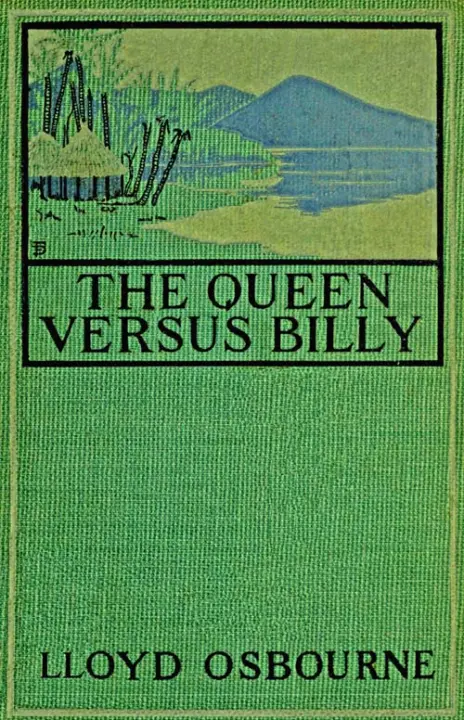
"The Queen Versus Billy, and Other Stories" by Lloyd Osbourne is a collection of short stories likely written in the late 19th century. The narratives explore themes of colonialism, justice, and the moral dilemmas faced by characters in perilous situations, with "The Queen Versus Billy" focusing on the trial of a young black man named Billy accused of murder in the Solomon Islands. This story delves into the complexities of cultural encounters and the effects of colonial rule on both the indigenous peoples and the colonizers. The opening of "The Queen Versus Billy" introduces Captain Casement, tasked with investigating the murder of a British trader in the Solomon Islands. As he arrives at the desolate Sunflower Bay, he learns of the brutal history of violence against traders and the tensions between the colonizers and the local population. The narrative captures the captain's apprehension about administering justice and the moral complications involved in punishing a young boy, Billy, who claims culpability for the trader's murder. The story sets the stage for a courtroom drama that examines the nature of guilt and innocence in a fractured community, hinting at the deeper societal issues at play.
Introduction adapted from the source catalogue; source summaries may be automatically generated.
Free to read · English · 79,773 words · No account needed
MAKE TIME FOR A GOOD BOOK
On by default. Untick to stop anonymous reading totals. Each page counts after 10 seconds in view. How this works.
Anonymous counting is on unless you have switched it off.
One by one, she gathered them together; the picture of her father and mother, the photographs of her relations and girl friends, old Christmas cards, bits of ribbon, little odds and ends that had played each a part in those bygone days. There were letters, too, precious bundles of letters tied with ribbon, which she kissed and cried over before consigning to destruction; and from one such packet dropped the likeness of a man in uniform, which she pressed to her breast before tearing it into a hundred pieces. When at last the room was stripped of everything, she bore the heap of tender rubbish to the fire, and, with a stony face, fed it to the flames.
The Rev. Wesley Cook and his wife were not the only whites in their corner of Savai’i, as indeed they had first imagined themselves to be. There was still another in Fangaloa, an old, white-haired Irish priest called Father Zosimus. No one could remember how many years had passed since Father Zosimus came to Fangaloa and built the tiny house and chapel in the mango-grove; for he was an old, old man, and had come to that sleepy hollow when his hair was as black and his feet were as light as those of the nimblest warrior of the bay. He had no followers to speak of, for Fangaloa was Protestant to the core, and his congregation numbered no more than one family of eight, three transient young men who had run away with as many girls from Upolu, and Filipo, the aged catechist, who acted as his servant. But Father Zosimus never faltered in the path he had set himself to follow. For seven and forty years he had daily broken the stillness of the grove with the tinkle of his little bell, and never failed to carry on the service of his church. He scarcely heeded the new arrivals, and more than once he had had to chide old Filipo for gossiping about the papalangi on the hill. He never gave them a second thought, in fact, until one day he happened to see Tutumanaia passing on his way to church. The sight of that fresh, clear-eyed youngster greatly moved the old priest. He was troubled and uneasy as he walked home, and his heart ached a little. The new missionary belonged to his own race; he had the air of a scholar, and the frank, open face and quick eyes of a man full of enthusiasms and generous impulses; yet, so mused Zosimus on his homeward way, this charity, this noble purpose, were all for the aborigines alone. There would be none to spare for an old man to whom no music was so sweet as his mother-tongue, and whose loneliness was intensified by the burden of advancing years. For nearly half a century Father Zosimus had lived in exile, and his soul continually thirsted for the companionship which had been denied him all his life. The few whites who had come his way before had been scrubby traders, a priest or two a year, or some nondescript beach-comber, rough and foul-mouthed, begging brandy and food. True, he had spent eighteen years within a furlong of the Rev. Josiah Fison, Cook’s predecessor in Fangaloa; but that gentleman’s Christian charity stopped short at what he called a “rank Jesuit,” and they had never exchanged even so much as a word. In Father Zosimus there was a strain of Irish gaiety; he loved talk, and laughter, and argument; and the humblest white man who could speak English was welcomed to his table and treated to the best that Fangaloa afforded. Indeed, among the “squires of Savai’i” he was honoured and respected, from Falealupo to the strait. But these men were, most of them, gross and common. In Wesley Cook he saw a being of another world, a young man of refinement and spirituality, a fellow-missionary, a fellow-countryman, with whom all intercourse was inexorably barred, with whom he should live out the balance of his days and know no more than if an ocean rolled between them. No longer did he stem the tide of old Filipo’s gossip; on the contrary, he could now never learn enough of the new arrivals, and little passed in the mission-house that was not reported to him at once. He learned, with a singular feeling of delight, of the young minister’s kindness and ability; how he had mastered the language in less time than a foreigner had been ever before known to take; how he had raised the dying, nay, the breathless dead themselves, back to life with the costly medicines he never stinted to the poorest. “Oh, he is a minister wise and good,” said Filipo, “and his heart is not stony against us Catholics like the last pig-face; only yesterday he said that thou, Zosimus, wert honourable, and deserving of respect as a man who had trod the narrow road his whole life long.”
Your reading position is saved on this browser. Take it to another device with a library code. Reading pages adapt to text, rather than matching a printed edition.
Lloyd Osbourne
Lloyd Osbourne
Lloyd Osbourne
Robert Louis Stevenson & Lloyd Osbourne
BEHIND THE BOOK
This eBook is for the use of anyone anywhere in the United States and most other parts of the world at no cost and with almost no restrictions whatsoever. You may copy it, give it away or re-use it under the terms of the Project Gutenberg License included with this eBook or online at www.gutenberg.org. If you are not located in the United States, you will have to check the laws of the country where you are located before using this eBook. Read the source licence.
The original source file, including credits and licence, is retained by this library. Request an original-format copy at no charge. Please include the book title and Project Gutenberg identifier #62875.
KEEP YOUR CURIOSITY GOING
Cécile Tormay

Moritz Busch
Coulson Kernahan
John L. Ransom

Maurice Baring
Frances Wright