THE CLASSIC COLLECTION✦Wild Justice: Stories of the South SeasCLASSIC FREE BOOKS
Wild Justice: Stories of the South Seas
Lloyd Osbourne
THE CLASSIC COLLECTION · 1900
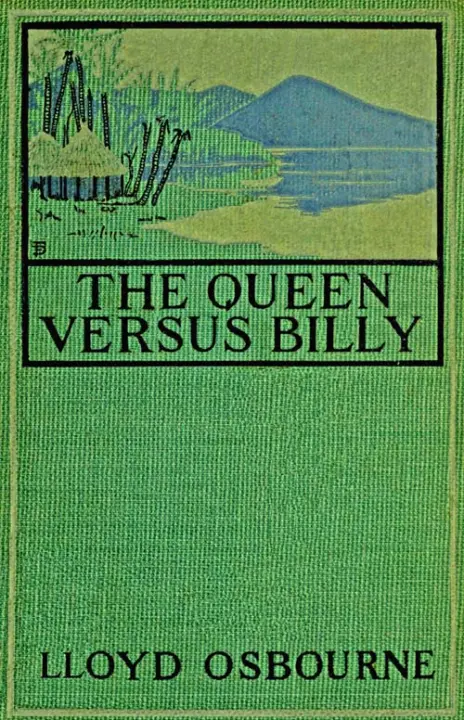
"The Queen Versus Billy, and Other Stories" by Lloyd Osbourne is a collection of short stories likely written in the late 19th century. The narratives explore themes of colonialism, justice, and the moral dilemmas faced by characters in perilous situations, with "The Queen Versus Billy" focusing on the trial of a young black man named Billy accused of murder in the Solomon Islands. This story delves into the complexities of cultural encounters and the effects of colonial rule on both the indigenous peoples and the colonizers. The opening of "The Queen Versus Billy" introduces Captain Casement, tasked with investigating the murder of a British trader in the Solomon Islands. As he arrives at the desolate Sunflower Bay, he learns of the brutal history of violence against traders and the tensions between the colonizers and the local population. The narrative captures the captain's apprehension about administering justice and the moral complications involved in punishing a young boy, Billy, who claims culpability for the trader's murder. The story sets the stage for a courtroom drama that examines the nature of guilt and innocence in a fractured community, hinting at the deeper societal issues at play.
Introduction adapted from the source catalogue; source summaries may be automatically generated.
Free to read · English · 79,773 words · No account needed
MAKE TIME FOR A GOOD BOOK
On by default. Untick to stop anonymous reading totals. Each page counts after 10 seconds in view. How this works.
Anonymous counting is on unless you have switched it off.
“Thy dog, the one I shot near my house,” said Kinross, firing up with the memory of its misdeeds, “the dog that chased my chickens, and ate my eggs, and plagued me all night like a forest devil--I want to take counsel with your Highness about it.”
“But it is dead,” said Tangaloa.
“But thy high-chief anger is not dead,” said Kinross. “Behold, I used to be like your son, and the day was no longer than thy love for me. I am overcome with sorrow to remember the years that are gone, and now to live together as we do in enmity. What is the value of thy dog, that I may pay thee for it, and what present can I make besides that will turn thy heart towards me again?”
“Cease,” said the chief; “there was no worth to the dog, and I have no anger against thee, Kinilosi.”
“You mock at me, Tangaloa,” said Kinross. “There is anger in thine eyes even as thou speakest to me.”
“Great was my love for that dog,” said the chief. “It licked my face when I lay wounded on the battle-ground. If I whistled it came to me, so wise was it and loving; and if I were sick it would not eat.”
“Weighty is my shame and pain,” said the trader. “Would that I had never lifted my gun against it! But I will pay thee its worth and make thee a present besides.”
“Impossible,” said Tangaloa. “When the cocoanut is split, who can make
it whole?”
“One can always get a new cocoanut,” said Kinross. “I will buy thee the best dog in Apia, a high chief of a dog, clever like a consul, and with a bark melodious as a musical box.”
At this Tangaloa laughed for the first time. “And what about thy chickens?” he demanded, “and thy things to eat hung out at night?”
“It can eat all the chickens it likes,” returned Kinross, “and I will feed it daily, also, with salt beef and sardines, if that will make us friends again, your Highness.”
“Cease, Kinilosi; I am thy friend already,” said Tangaloa, extending his hand. “It is forgotten about the dog, and lo, the anger is buried.”
“And the price?” inquired Kinross.
“One cannot buy friendship or barter loving-kindness,” said Tangaloa. “Again I tell thee there is no price. But if thou wouldst care to give me a bottle of kerosene, for the lack of which I am sore distressed these nights--well, I should be very glad.”
“I shall be pleased indeed,” said the trader, who of a sudden assumed an intent, listening attitude.
“What is the matter?” demanded Tangaloa.
Your reading position is saved on this browser. Take it to another device with a library code. Reading pages adapt to text, rather than matching a printed edition.
Lloyd Osbourne
Lloyd Osbourne
Lloyd Osbourne
Robert Louis Stevenson & Lloyd Osbourne
BEHIND THE BOOK
This eBook is for the use of anyone anywhere in the United States and most other parts of the world at no cost and with almost no restrictions whatsoever. You may copy it, give it away or re-use it under the terms of the Project Gutenberg License included with this eBook or online at www.gutenberg.org. If you are not located in the United States, you will have to check the laws of the country where you are located before using this eBook. Read the source licence.
The original source file, including credits and licence, is retained by this library. Request an original-format copy at no charge. Please include the book title and Project Gutenberg identifier #62875.
KEEP YOUR CURIOSITY GOING
Cécile Tormay

Moritz Busch
Coulson Kernahan
John L. Ransom

Maurice Baring
Frances Wright