THE CLASSIC COLLECTION✦Wild Justice: Stories of the South SeasCLASSIC FREE BOOKS
Wild Justice: Stories of the South Seas
Lloyd Osbourne
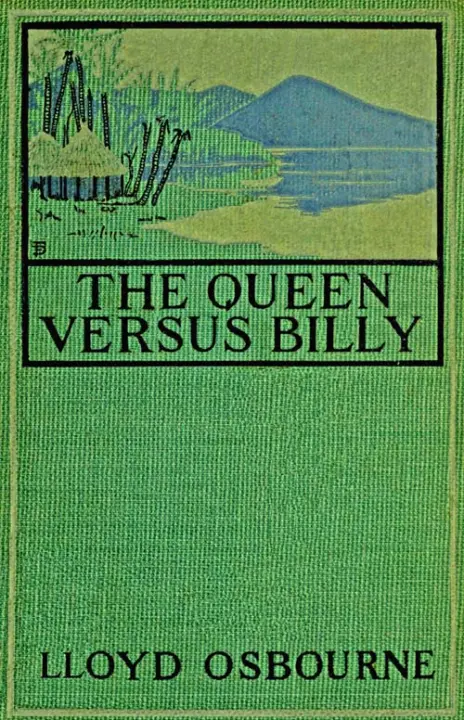
THE CLASSIC COLLECTION · 1900
"The Queen Versus Billy, and Other Stories" by Lloyd Osbourne is a collection of short stories likely written in the late 19th century. The narratives explore themes of colonialism, justice, and the moral dilemmas faced by characters in perilous situations, with "The Queen Versus Billy" focusing on the trial of a young black man named Billy accused of murder in the Solomon Islands. This story delves into the complexities of cultural encounters and the effects of colonial rule on both the indigenous peoples and the colonizers. The opening of "The Queen Versus Billy" introduces Captain Casement, tasked with investigating the murder of a British trader in the Solomon Islands. As he arrives at the desolate Sunflower Bay, he learns of the brutal history of violence against traders and the tensions between the colonizers and the local population. The narrative captures the captain's apprehension about administering justice and the moral complications involved in punishing a young boy, Billy, who claims culpability for the trader's murder. The story sets the stage for a courtroom drama that examines the nature of guilt and innocence in a fractured community, hinting at the deeper societal issues at play.
Introduction adapted from the source catalogue; source summaries may be automatically generated.
Free to read · English · 79,773 words · No account needed
MAKE TIME FOR A GOOD BOOK
On by default. Untick to stop anonymous reading totals. Each page counts after 10 seconds in view. How this works.
Anonymous counting is on unless you have switched it off.
“I used to be welcome here,” said Kinross. “There was a time when you were a precious good friend of mine, Paul Engelbert.”
“Dat wass long ago,” said the trader.
“I’ve been thinking,” said Kinross, “that I’ve acted like a damned fool about those trees.”
“Dat wass what I wass dinking, too, dese two dree years,” responded the
other.
“Take them; they are yours,” said Kinross. “You can build your fence
there to-morrow.”
“So!” said Engelbert, with dawning intelligence. “The Yerman gonsul has at last to my gomplaint listened.”
“Hang the German consul! No!” cried Kinross. “I do it myself, because I was wrong--because you were good to me that time I was sick, and lent me the hundred dollars and the trade.”
“And you want noding?” asked Engelbert, still incredulous.
“I want to shake your hand and be friends again, old man,” said Kinross, “same as we used to be when we played dominoes every night, and you’d tell me about the Austrian War, and how the Prince divided his cigars with you when you were wounded.”
The German looked away. “Oh, Kinross,” he said, with a shining look in his eyes, “you make me much ashamed.” He turned suddenly round and wrung the Englishman’s hand in an iron grasp. “I, too, was dam fool.”
“A friend is worth more than seven breadfruits,” said Kinross.
“It wass not breadfruid: it wass brincible,” said the German. “Poof! de drees dey are noding; here it wass I wass hurted,” and he laid a heavy paw against his breast. “Ho, Malia, de beer!”
His strapping native wife appeared with bottles and mugs; at the sight of their guest she could scarcely conceal her surprise.
“Prosit!” said Engelbert, touching glasses.
“You know dem six agers of de Pasgoe estate,” he said, looking very hard at his companion. “Very nice leetle place, very sheap, yoost behind your store?”
Kinross nodded, but his face fell in spite of himself.
“I from the American gonsul bought him,” went on the German, “very sheap: two hundred dollars Chile money.”
Kinross looked black. Engelbert patted his hand and smiled ambiguously.
“Dey are yours,” he said. “Pay me back when you have de money. I buy dem only to spite you. My friend, take dem.”
“Paul, Paul,” cried Kinross, “I don’t know what to say--how to thank you. Only this morning I got money from home, and the first thing I meant to do was to buy them.”
Your reading position is saved on this browser. Take it to another device with a library code. Reading pages adapt to text, rather than matching a printed edition.
Lloyd Osbourne
Lloyd Osbourne
Lloyd Osbourne
Robert Louis Stevenson & Lloyd Osbourne
BEHIND THE BOOK
This eBook is for the use of anyone anywhere in the United States and most other parts of the world at no cost and with almost no restrictions whatsoever. You may copy it, give it away or re-use it under the terms of the Project Gutenberg License included with this eBook or online at www.gutenberg.org. If you are not located in the United States, you will have to check the laws of the country where you are located before using this eBook. Read the source licence.
The original source file, including credits and licence, is retained by this library. Request an original-format copy at no charge. Please include the book title and Project Gutenberg identifier #62875.
KEEP YOUR CURIOSITY GOING
Cécile Tormay

Moritz Busch
Coulson Kernahan
John L. Ransom

Maurice Baring
Frances Wright