THE CLASSIC COLLECTION✦Wild Justice: Stories of the South SeasCLASSIC FREE BOOKS
Wild Justice: Stories of the South Seas
Lloyd Osbourne
THE CLASSIC COLLECTION · 1900
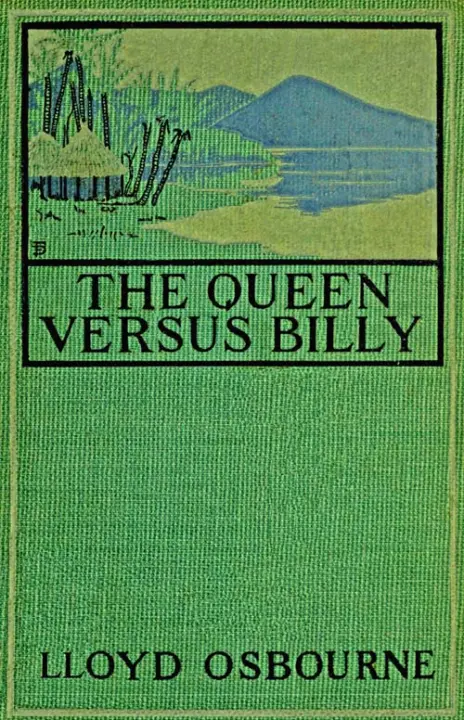
"The Queen Versus Billy, and Other Stories" by Lloyd Osbourne is a collection of short stories likely written in the late 19th century. The narratives explore themes of colonialism, justice, and the moral dilemmas faced by characters in perilous situations, with "The Queen Versus Billy" focusing on the trial of a young black man named Billy accused of murder in the Solomon Islands. This story delves into the complexities of cultural encounters and the effects of colonial rule on both the indigenous peoples and the colonizers. The opening of "The Queen Versus Billy" introduces Captain Casement, tasked with investigating the murder of a British trader in the Solomon Islands. As he arrives at the desolate Sunflower Bay, he learns of the brutal history of violence against traders and the tensions between the colonizers and the local population. The narrative captures the captain's apprehension about administering justice and the moral complications involved in punishing a young boy, Billy, who claims culpability for the trader's murder. The story sets the stage for a courtroom drama that examines the nature of guilt and innocence in a fractured community, hinting at the deeper societal issues at play.
Introduction adapted from the source catalogue; source summaries may be automatically generated.
Free to read · English · 79,773 words · No account needed
MAKE TIME FOR A GOOD BOOK
On by default. Untick to stop anonymous reading totals. Each page counts after 10 seconds in view. How this works.
Anonymous counting is on unless you have switched it off.
There was a long waiting after the command had gone forth. All the womanliness and latent coquetry of the nuns came out in this business of making ready their charges for the ordeal; and when it was whispered that the wooer was the Comte de Charruel himself, a personage with whose romantic history there was not a soul unfamiliar, great indeed was the excitement and preparation. At last, with a modest knock, the door opened and let in a young girl clothed in conventual grey. She had a very pretty face, a touch hardened by past misfortunes, a figure short, well knit, and not ungraceful, and wild black eyes that shrank to the ground at the sight of the count.
The Mother Superior motioned her to take a seat.
“This is Suzanne,” she said.
De Charruel rose to his feet and bowed.
There was a dead silence.
“Can you not say something?” said the old lady, turning to the count
with some asperity.
“Mademoiselle,” he said, with a sensation of extreme embarrassment, “I have the honour to ask you to marry me.”
“You need not commit yourself,” interrupted the Mother Superior. “You can have the choice of two more.”
“If I saw a hundred, madame,” he replied, “I could find no one I preferred to this young lady.”
There was another prolonged silence.
“You must answer, Suzanne,” said the old lady. “Yes or no?”
The girl burst into tears.
“Yes or no?” reiterated the Mother.
“I weep at monsieur’s extraordinary goodness,” said the girl. “Yes,
madame, yes.”
Ten days later de Charruel was resting in the taro-field where he had been at work, when he felt Suzanne’s arm around his neck and her warm lips against his forehead. He leaned back with a smile.
“Paul,” she said, with a little tremor in her voice, “you have hidden nothing from me? You have done nothing wrong, Paul?”
“Wrong!” he exclaimed. “Have I not told thee repeatedly that I am the model convict, the hero of a hundred official commendations, the shining star of the penal administration? Wrong! What dost thou mean?”
“The authorities--” she answered. “There has been a messenger from the mine with a blue official letter. Oh, Paul, it frightens me.”
“Thou needst not fear,” he said. “It is only some matter of routine. I could paper my house (if it would not be misunderstood) with blue official letters about nothing.”
“I am so happy, Paul,” she said,--“so happy that I tremble for my
happiness!”
Your reading position is saved on this browser. Take it to another device with a library code. Reading pages adapt to text, rather than matching a printed edition.
Lloyd Osbourne
Lloyd Osbourne
Lloyd Osbourne
Robert Louis Stevenson & Lloyd Osbourne
BEHIND THE BOOK
This eBook is for the use of anyone anywhere in the United States and most other parts of the world at no cost and with almost no restrictions whatsoever. You may copy it, give it away or re-use it under the terms of the Project Gutenberg License included with this eBook or online at www.gutenberg.org. If you are not located in the United States, you will have to check the laws of the country where you are located before using this eBook. Read the source licence.
The original source file, including credits and licence, is retained by this library. Request an original-format copy at no charge. Please include the book title and Project Gutenberg identifier #62875.
KEEP YOUR CURIOSITY GOING
Cécile Tormay

Moritz Busch
Coulson Kernahan
John L. Ransom

Maurice Baring
Frances Wright