THE CLASSIC COLLECTION✦Wild Justice: Stories of the South SeasCLASSIC FREE BOOKS
Wild Justice: Stories of the South Seas
Lloyd Osbourne
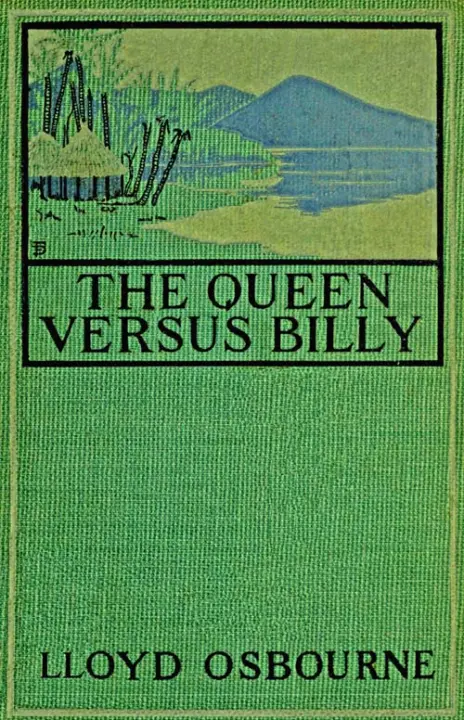
THE CLASSIC COLLECTION · 1900
"The Queen Versus Billy, and Other Stories" by Lloyd Osbourne is a collection of short stories likely written in the late 19th century. The narratives explore themes of colonialism, justice, and the moral dilemmas faced by characters in perilous situations, with "The Queen Versus Billy" focusing on the trial of a young black man named Billy accused of murder in the Solomon Islands. This story delves into the complexities of cultural encounters and the effects of colonial rule on both the indigenous peoples and the colonizers. The opening of "The Queen Versus Billy" introduces Captain Casement, tasked with investigating the murder of a British trader in the Solomon Islands. As he arrives at the desolate Sunflower Bay, he learns of the brutal history of violence against traders and the tensions between the colonizers and the local population. The narrative captures the captain's apprehension about administering justice and the moral complications involved in punishing a young boy, Billy, who claims culpability for the trader's murder. The story sets the stage for a courtroom drama that examines the nature of guilt and innocence in a fractured community, hinting at the deeper societal issues at play.
Introduction adapted from the source catalogue; source summaries may be automatically generated.
Free to read · English · 79,773 words · No account needed
MAKE TIME FOR A GOOD BOOK
On by default. Untick to stop anonymous reading totals. Each page counts after 10 seconds in view. How this works.
Anonymous counting is on unless you have switched it off.
Billy was clanking his chains in a canvas hutch alongside the sick-bay, where a man lay dying. He looked up as Facey approached, and his face brightened as he recognised his captor. He was a good-looking young negro, and the symmetry of his limbs, and his air of intelligence and capacity, stood out in pleasant contrast with the rest of his comrades in Sunflower Bay.
“Billy,” said Facey, “they are going to make judge and jury for you by and by; and I am to talky-talky for you.”
“All same Queensland,” returned Billy. “May the Lord have mercy on your
sinful soul!”
Facey was stupefied. “Where in thunder did you learn that?” he demanded.
“Oh, me savvy too much,” said Billy.
“Now, see here,” said the lieutenant. “You didn’t kill that trader?”
“Yes, I kill him,” said Billy, cheerfully.
“You did?” cried the other.
“White fellow no good; I kill him,” said the prisoner.
“If you tell that to the captain he’ll shoot you,” said Facey. If the prisoner was to be defended he was going to give him all the help he could.
The black boy looked distressed and nodded a forlorn assent.
“You’ll be a big fool to say that,” said Facey.
“White fellow no good; I kill him,” repeated Billy.
“You unmitigated idiot, you’ll do for yourself,” cried the lieutenant, angrily. “What’s the good of my talking for you if you can’t stand up for yourself?”
Billy began to whimper; the other’s loud voice and threatening demeanour seemed to overwhelm him.
Facey was struck with contrition. “Now shut up that snivelling,” he said, more kindly. “Tell me the truth, Bill. Isn’t this some humbuggery of old Jib’s--a regular plant, to shield somebody else at the cost of your hide?”
Billy rolled his eyes, and wiped away the tears with a grimy paw.
“White fellow no good; I kill--”
“You be damned!” cried his legal adviser.
At ten o’clock the court martial was assembled on the quarter-deck. The captain, with his brawny shoulders thrown forward, and his hands deep in his trouser pockets, had all the air of a man in the throes of indigestion. On either side of him were Sennett and Roche; and in front, beside a table covered with a flag, was Pickthorn, with a clerkly outfit and a Bible. Billy stood in chains beside a couple of marines, looking extremely depressed. The old gorillas, their filthy kilts bulging with what they had begged or pilfered, were in charge of the sergeant, who had all he could do to prevent their spitting on the deck.
Your reading position is saved on this browser. Take it to another device with a library code. Reading pages adapt to text, rather than matching a printed edition.
Lloyd Osbourne
Lloyd Osbourne
Lloyd Osbourne
Robert Louis Stevenson & Lloyd Osbourne
BEHIND THE BOOK
This eBook is for the use of anyone anywhere in the United States and most other parts of the world at no cost and with almost no restrictions whatsoever. You may copy it, give it away or re-use it under the terms of the Project Gutenberg License included with this eBook or online at www.gutenberg.org. If you are not located in the United States, you will have to check the laws of the country where you are located before using this eBook. Read the source licence.
The original source file, including credits and licence, is retained by this library. Request an original-format copy at no charge. Please include the book title and Project Gutenberg identifier #62875.
KEEP YOUR CURIOSITY GOING
Cécile Tormay

Moritz Busch
Coulson Kernahan
John L. Ransom

Maurice Baring
Frances Wright