THE CLASSIC COLLECTION✦Wild Justice: Stories of the South SeasCLASSIC FREE BOOKS
Wild Justice: Stories of the South Seas
Lloyd Osbourne
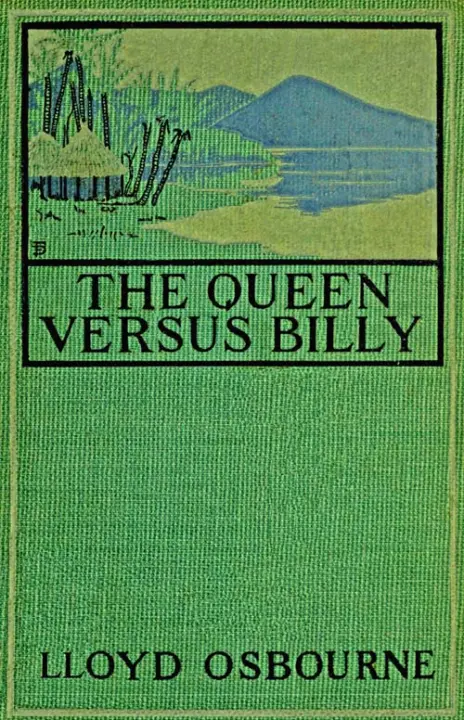
THE CLASSIC COLLECTION · 1900
"The Queen Versus Billy, and Other Stories" by Lloyd Osbourne is a collection of short stories likely written in the late 19th century. The narratives explore themes of colonialism, justice, and the moral dilemmas faced by characters in perilous situations, with "The Queen Versus Billy" focusing on the trial of a young black man named Billy accused of murder in the Solomon Islands. This story delves into the complexities of cultural encounters and the effects of colonial rule on both the indigenous peoples and the colonizers. The opening of "The Queen Versus Billy" introduces Captain Casement, tasked with investigating the murder of a British trader in the Solomon Islands. As he arrives at the desolate Sunflower Bay, he learns of the brutal history of violence against traders and the tensions between the colonizers and the local population. The narrative captures the captain's apprehension about administering justice and the moral complications involved in punishing a young boy, Billy, who claims culpability for the trader's murder. The story sets the stage for a courtroom drama that examines the nature of guilt and innocence in a fractured community, hinting at the deeper societal issues at play.
Introduction adapted from the source catalogue; source summaries may be automatically generated.
Free to read · English · 79,773 words · No account needed
MAKE TIME FOR A GOOD BOOK
On by default. Untick to stop anonymous reading totals. Each page counts after 10 seconds in view. How this works.
Anonymous counting is on unless you have switched it off.
“The chief has done well to-day,” he said to Ngalo, his servant.
The boy laughed.
“Excellency,” he said, “the Helper does not shoot these pigeons. He buys them for sixpences from our people.”
“Impossible!” cried the old man. “Thou talkest like a delirious person.”
“Excellency,” said the boy, “saving thy presence, the Helper lies. Behold in this pigeon the truth of what I say. Does the chief use gravel in his gun, like a Samoan, to whom there is no lead?”
“Perhaps he does,” said the priest. “Such a thing had not occurred to
me.”
“Perhaps he does not,” exclaimed Ngalo, meaningly. “On Tuesday he bought eight birds of my mother’s brother’s son; one was scented and had to be thrown away.”
“Ngalo,” cried the priest, with a sudden change of tone, “is there a woman in this hidden business? Is there gossip in the village?”
Ngalo shook his head.
“He is blameless of such an evil,” he said. “But the village talks continually, and the people ask, ‘What does the Helper in the bush?’”
Father Studby breathed a great sigh of relief.
“He walks about,” he explained, “this way and that, according to the command of the wise doctor in Nukualofa. The peace refreshes him and makes him well. I, too, in my youth, used to wander in the mountains and find consolation.”
Ngalo’s face showed that he had more to tell.
“The Helper does strange things,” he said. “He goes along, even as you say, through the village and the outlying plantations like an uncaring child, with no purpose in what it does. But when he reaches a certain ifi-tree on the land we call Lefoa, behold, all is changed. He stops, he looks about, he listens assiduously like a warrior on the outpost. Then he puts his gun in a hidden place, and with it his shot-bottle and his powder-bottle; then he girds up his dress to the knee, and runs into the bush with the swiftness of a dog. When he returns, late in the afternoon, it is with the same quickness until the tree is reached. There he takes breath, composes himself, and with slow steps returns seaward buying what pigeons he can on the road.”
“Well, and what else, Mr. Make-the-News?” demanded the father, as Ngalo
hesitated.
“There are those in the village who know nothing,” he went on, “mere worthless heathen of no family, without consideration or land of their own, living meanly like slaves on the bounty of others, who say strenuously, with the persistency of barking dogs, that the Helper is under the spell of Saumaiafe!”
Your reading position is saved on this browser. Take it to another device with a library code. Reading pages adapt to text, rather than matching a printed edition.
Lloyd Osbourne
Lloyd Osbourne
Lloyd Osbourne
Robert Louis Stevenson & Lloyd Osbourne
BEHIND THE BOOK
This eBook is for the use of anyone anywhere in the United States and most other parts of the world at no cost and with almost no restrictions whatsoever. You may copy it, give it away or re-use it under the terms of the Project Gutenberg License included with this eBook or online at www.gutenberg.org. If you are not located in the United States, you will have to check the laws of the country where you are located before using this eBook. Read the source licence.
The original source file, including credits and licence, is retained by this library. Request an original-format copy at no charge. Please include the book title and Project Gutenberg identifier #62875.
KEEP YOUR CURIOSITY GOING
Cécile Tormay

Moritz Busch
Coulson Kernahan
John L. Ransom

Maurice Baring
Frances Wright