THE CLASSIC COLLECTION✦Rocky ForkCLASSIC FREE BOOKS
Rocky Fork
Mary Hartwell Catherwood
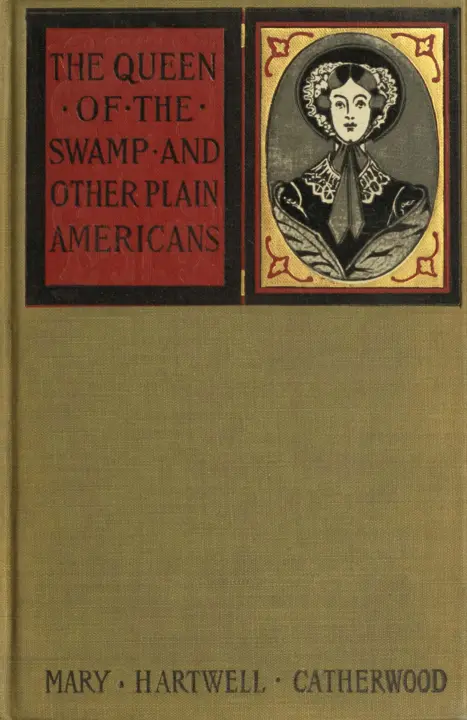
THE CLASSIC COLLECTION · 1899
"The Queen of the Swamp, and Other Plain Americans" by Mary Hartwell Catherwood is a collection of short stories written in the late 19th century. The works reflect the experiences and nuances of life in Middle America, specifically highlighting women and communities in rural Ohio, Kentucky, Indiana, and Illinois. The stories seem to encapsulate the social dynamics of the era, aiming to preserve honest portrayals of regional characters and their struggles. The opening of "The Queen of the Swamp" sets the stage for a Christmas gathering at George's Chapel in Ohio during the year 1846. As the congregation disperses after a successful meeting filled with warmth and camaraderie, several characters emerge, including Priscilla Thompson, dubbed the “Queen of the Swamp” by her admirers, and her love interest, Martin Macauley. The narrative reveals the complexity of their social interactions, laden with expectations and rivalries, and the tension brought about by the disapproval of family and community. The initial Christmas festivities quickly take a dramatic turn when Priscilla unexpectedly falls into a frozen creek, prompting a rescue that intensifies the emotions surrounding the relationships within the group.
Introduction adapted from the source catalogue; source summaries may be automatically generated.
Free to read · English · 51,704 words · No account needed
MAKE TIME FOR A GOOD BOOK
On by default. Untick to stop anonymous reading totals. Each page counts after 10 seconds in view. How this works.
Anonymous counting is on unless you have switched it off.
“Horses are dear now,” observed Julian with severity, “and you can’t expect to get a thoroughbred for forty dollars. The liveryman said he shipped a car-load to Louisville last week, some of them so weak they had to lean against the sides of the car. This one is sound, and only needs a little good care to bring him out.”
“Yes, his bones all look nice,” I assented. My heart began to warm
toward Leander.
“It’s a fine thing to own a noble animal like a horse, isn’t it, Julian?--and to see him grazing around one’s homestead.”
Julian said he believed he would take Leander into the yard and let him clip off some of the grass, before stabling him.
Fritz put the red cart under a shed, and helped Lena milk, while we walked enamored after our purchase from one part of the lawn to another.
“What makes his hams look so sad, Julian?” I inquired with concern.
“Flanks, you mean,” said Julian.
“Yes. But aren’t horses usually cushiony there?”
“Pigs and prize cattle are,” said Julian contemptuously.
“But his hind legs run up so tall that when he lifts one he seems to be coming in two, like Baron Munchausen’s horse when it got caught in the city gates.”
“Sorry you don’t like him,” observed Julian, scratching a match on his heel and lighting a cigar.
“I do like him, Julian. It would be strange if I didn’t like our own horse! The way he is standing now doesn’t show his ribs so. Couldn’t we induce him to keep that position generally?”
But Leander now drew all his feet nearer to a focus, and frightened me
by a convulsion.
“He’s just going to lie down,” explained Julian. “He wants to roll in the grass. They say a horse that rolls clear over is worth fifty dollars, anyhow. Watch him, now.”
We watched him in breathless suspense, Julian holding the lighted cigar away from his lips. Leander, after several half revolutions, brandished his heels triumphantly in the air and rolled clear over.
Julian and I shook hands.
“Gained ten dollars in value since I brought him home,” said Julian.
Whatever doubts I had harbored about an artist’s knowledge of horses certainly vanished. And Leander, after standing up to shake himself, lay down to try it again. But this time he brandished ineffectual heels and contented himself with only a half turn.
“Do you suppose he has gone off any in his value, Julian?” I inquired
anxiously.
Your reading position is saved on this browser. Take it to another device with a library code. Reading pages adapt to text, rather than matching a printed edition.
Mary Hartwell Catherwood
Mary Hartwell Catherwood

Mary Hartwell Catherwood
Mary Hartwell Catherwood
BEHIND THE BOOK
This eBook is for the use of anyone anywhere in the United States and most other parts of the world at no cost and with almost no restrictions whatsoever. You may copy it, give it away or re-use it under the terms of the Project Gutenberg License included with this eBook or online at www.gutenberg.org. If you are not located in the United States, you will have to check the laws of the country where you are located before using this eBook. Read the source licence.
The original source file, including credits and licence, is retained by this library. Request an original-format copy at no charge. Please include the book title and Project Gutenberg identifier #74271.
KEEP YOUR CURIOSITY GOING
Coulson Kernahan

Maurice Baring
Frances Wright
Cécile Tormay

Frederic Jesup Stimson

W. H. P. (William Henry Pope) Jarvis