THE CLASSIC COLLECTION✦Rocky ForkCLASSIC FREE BOOKS
Rocky Fork
Mary Hartwell Catherwood
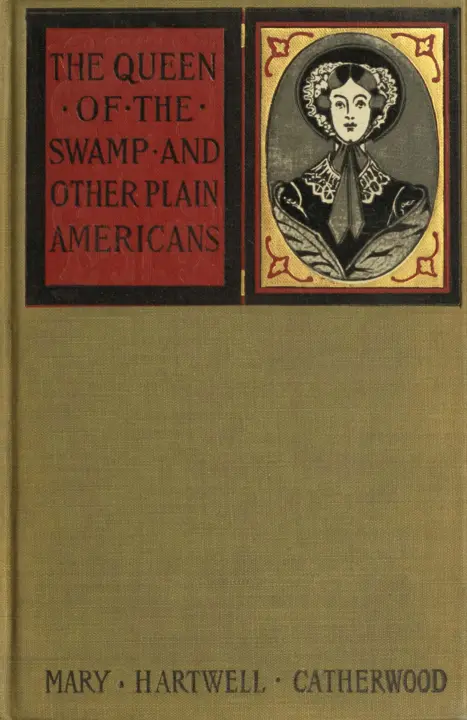
THE CLASSIC COLLECTION · 1899
"The Queen of the Swamp, and Other Plain Americans" by Mary Hartwell Catherwood is a collection of short stories written in the late 19th century. The works reflect the experiences and nuances of life in Middle America, specifically highlighting women and communities in rural Ohio, Kentucky, Indiana, and Illinois. The stories seem to encapsulate the social dynamics of the era, aiming to preserve honest portrayals of regional characters and their struggles. The opening of "The Queen of the Swamp" sets the stage for a Christmas gathering at George's Chapel in Ohio during the year 1846. As the congregation disperses after a successful meeting filled with warmth and camaraderie, several characters emerge, including Priscilla Thompson, dubbed the “Queen of the Swamp” by her admirers, and her love interest, Martin Macauley. The narrative reveals the complexity of their social interactions, laden with expectations and rivalries, and the tension brought about by the disapproval of family and community. The initial Christmas festivities quickly take a dramatic turn when Priscilla unexpectedly falls into a frozen creek, prompting a rescue that intensifies the emotions surrounding the relationships within the group.
Introduction adapted from the source catalogue; source summaries may be automatically generated.
Free to read · English · 51,704 words · No account needed
MAKE TIME FOR A GOOD BOOK
On by default. Untick to stop anonymous reading totals. Each page counts after 10 seconds in view. How this works.
Anonymous counting is on unless you have switched it off.
“I suppose he’ll let her come back and live at home now.”
“I wish you had seen Nancy Ellen.”
“I’m going to see her after the milking is done.”
“Seen her by the preacher,” insisted Willie’s passes. “She looked like a captive coming in chains to Rome.”
“Yes, I’ll be bound she did. Every jolt of that twenty miles is stamped
in her mind.”
“I wish,” flashed Willie, “I knew what the preacher sung to himself all
along the road.”
“What a notion! You’ll have to fix it up in poetry now, won’t you?”
Willie shook his head many times and reddened.
“You said the preacher used to sing home from meeting in the dark.”
“Yes, he did,” affirmed Mrs. Harbison. “And Nancy Ellen used to listen for him to go by their place.”
Their talk paused, and Willie looked up at the birds in the mulberry. Having afterward caught his mother’s eye, he wove out slowly:--
“When in the tree above his head
The sap goes tingling through the bark,
She will remember it was dead,
And hear him singing in the dark.”
“Oh, Willie, is that the first verse or the last? Have you written it
down?”
Willie smiled shyly, putting his head down toward one shoulder, without making any reply. His mother urged, with eager fingers:--
“Print it in some place when you get it done. Nancy Ellen would be
pleased.”
“I’m not an obituary poet,” wove Willie.
“But that’s so good.” Mrs. Harbison moved her lips, repeating it to herself. “And ain’t you ever going to publish anything you write? I’ve heard of people getting money for it.”
Willie uttered a gentle sneer. He laughed at his mother in a way that always made her laugh with him.
“But if you would let your father fix up your writings,” she continued, repeating an old plea, “and send them to some publishing house, I know they would put them in a book for you.”
The gate, weighted by a stone, slammed to behind his father coming to the evening meal. But before his mother rose, Willie found time to make dance before her eyes the characters indicating this promise:--
“Some day I’ll get on my bicycle and ride and ride until I come to a publisher. If you miss me, you’ll know where I’ve gone. You can just say to yourself, ‘He’s off having his poems published.’ Wait till then, mother; that will be soon enough.”
“You’ll never do it,” said his mother, having no idea how near the time
was.
Your reading position is saved on this browser. Take it to another device with a library code. Reading pages adapt to text, rather than matching a printed edition.
Mary Hartwell Catherwood
Mary Hartwell Catherwood

Mary Hartwell Catherwood
Mary Hartwell Catherwood
BEHIND THE BOOK
This eBook is for the use of anyone anywhere in the United States and most other parts of the world at no cost and with almost no restrictions whatsoever. You may copy it, give it away or re-use it under the terms of the Project Gutenberg License included with this eBook or online at www.gutenberg.org. If you are not located in the United States, you will have to check the laws of the country where you are located before using this eBook. Read the source licence.
The original source file, including credits and licence, is retained by this library. Request an original-format copy at no charge. Please include the book title and Project Gutenberg identifier #74271.
KEEP YOUR CURIOSITY GOING
Coulson Kernahan

Maurice Baring
Frances Wright
Cécile Tormay

Frederic Jesup Stimson

W. H. P. (William Henry Pope) Jarvis