THE CLASSIC COLLECTION✦Rocky ForkCLASSIC FREE BOOKS
Rocky Fork
Mary Hartwell Catherwood
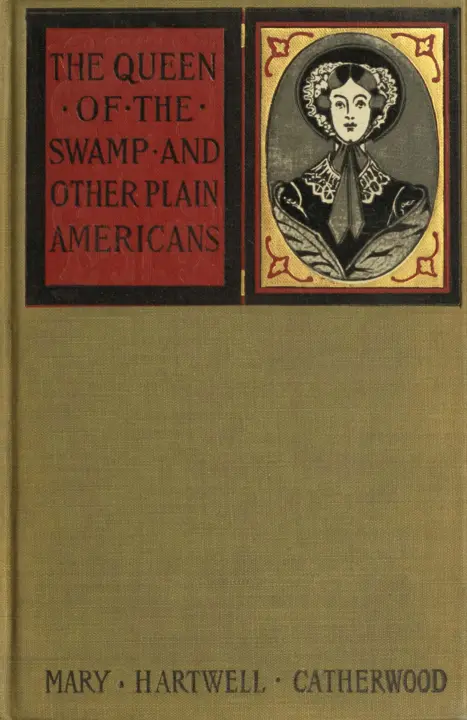
THE CLASSIC COLLECTION · 1899
"The Queen of the Swamp, and Other Plain Americans" by Mary Hartwell Catherwood is a collection of short stories written in the late 19th century. The works reflect the experiences and nuances of life in Middle America, specifically highlighting women and communities in rural Ohio, Kentucky, Indiana, and Illinois. The stories seem to encapsulate the social dynamics of the era, aiming to preserve honest portrayals of regional characters and their struggles. The opening of "The Queen of the Swamp" sets the stage for a Christmas gathering at George's Chapel in Ohio during the year 1846. As the congregation disperses after a successful meeting filled with warmth and camaraderie, several characters emerge, including Priscilla Thompson, dubbed the “Queen of the Swamp” by her admirers, and her love interest, Martin Macauley. The narrative reveals the complexity of their social interactions, laden with expectations and rivalries, and the tension brought about by the disapproval of family and community. The initial Christmas festivities quickly take a dramatic turn when Priscilla unexpectedly falls into a frozen creek, prompting a rescue that intensifies the emotions surrounding the relationships within the group.
Introduction adapted from the source catalogue; source summaries may be automatically generated.
Free to read · English · 51,704 words · No account needed
MAKE TIME FOR A GOOD BOOK
On by default. Untick to stop anonymous reading totals. Each page counts after 10 seconds in view. How this works.
Anonymous counting is on unless you have switched it off.
He hung a teakettle on the crane, and thrust a fork through some bacon to toast on the polished hearthstone. Then he drew his table toward the fireplace, and Jeanne could see his appreciative touch on the yellow ware she had washed.
“What do you want, Billy? Did you come in to take a bite with me?”
“No.” Aarons stirred from his doze. “I’m buyin’ cattle, Theodore.”
“No cattle to sell here.”
“I know it, Theodore. You’re a poor man by the side of me.”
Indifferent to this fact, De Zhirley turned his bacon and proceeded to
make coffee.
“You’re a poor man, Theodore,” repeated the heavy guest, “and I’ve got all my father had.”
“And all his second wife had,” added young De Zhirley, with a one-eyed glance of contempt, at which Aarons made a fist. “You go upstairs and sleep off what’s the matter with you, after I give you some coffee.”
“That’s not what I come for. You’re a poor man, Theodore.”
“Well, don’t let that keep you awake; it don’t me.”
“You hain’t got no cattle, nor much land, nor even two eyes.”
“And what do you want on my blind side, Billy?”
“But you’ve got a fiddle. Yes; you’ve got a fiddle.”
De Zhirley moved back and took his violin off the wall with a jealous motion. It was his custom to play while his supper cooked; but as he felt the bow with his thumb, and fitted the instrument to his neck, he looked distrustfully at Aarons.
The first sweet long cry filled the cabin. The fiddler gradually approached the hearth, playing as he came, and Aarons’s head, hands, and feet responded to the magic.
De Zhirley’s back was toward Jeanne, but she saw joy in his whole bearing, and herself felt the piercing rapture of sound.
“Let me see that fiddle,” demanded Aarons, when the young man finished and put down his bow, and brought the coffee-pot to set on the coals.
De Zhirley turned a distrustful eye, but no precious violin toward his
guest.
“Let me see that fiddle, I say,” repeated Aarons, rising up.
“Behave yourself,” said the young man, standing a head above him, and humoring him as a child might be humored by half granting his request.
The fellow handled its ancient body, and looked at Stradivari’s
inscription.
“What’s that there, Theodore?”
“That’s the maker’s name.”
“Seventeen hunderd and--what’s them figgers?”
“That’s the year it was made.”
“Then it’s a mighty poor old thing, ain’t it?”
Your reading position is saved on this browser. Take it to another device with a library code. Reading pages adapt to text, rather than matching a printed edition.
Mary Hartwell Catherwood
Mary Hartwell Catherwood
Mary Hartwell Catherwood
Mary Hartwell Catherwood
BEHIND THE BOOK
This eBook is for the use of anyone anywhere in the United States and most other parts of the world at no cost and with almost no restrictions whatsoever. You may copy it, give it away or re-use it under the terms of the Project Gutenberg License included with this eBook or online at www.gutenberg.org. If you are not located in the United States, you will have to check the laws of the country where you are located before using this eBook. Read the source licence.
The original source file, including credits and licence, is retained by this library. Request an original-format copy at no charge. Please include the book title and Project Gutenberg identifier #74271.
KEEP YOUR CURIOSITY GOING
Coulson Kernahan

Maurice Baring
Frances Wright
Cécile Tormay

Frederic Jesup Stimson

W. H. P. (William Henry Pope) Jarvis