THE CLASSIC COLLECTION✦Rocky ForkCLASSIC FREE BOOKS
Rocky Fork
Mary Hartwell Catherwood
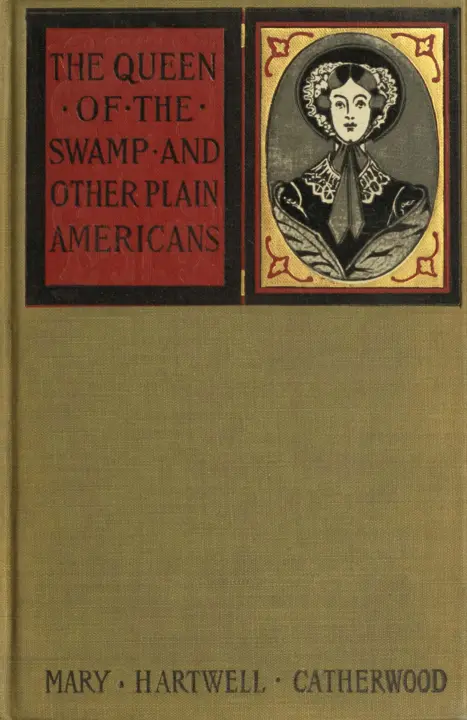
THE CLASSIC COLLECTION · 1899
"The Queen of the Swamp, and Other Plain Americans" by Mary Hartwell Catherwood is a collection of short stories written in the late 19th century. The works reflect the experiences and nuances of life in Middle America, specifically highlighting women and communities in rural Ohio, Kentucky, Indiana, and Illinois. The stories seem to encapsulate the social dynamics of the era, aiming to preserve honest portrayals of regional characters and their struggles. The opening of "The Queen of the Swamp" sets the stage for a Christmas gathering at George's Chapel in Ohio during the year 1846. As the congregation disperses after a successful meeting filled with warmth and camaraderie, several characters emerge, including Priscilla Thompson, dubbed the “Queen of the Swamp” by her admirers, and her love interest, Martin Macauley. The narrative reveals the complexity of their social interactions, laden with expectations and rivalries, and the tension brought about by the disapproval of family and community. The initial Christmas festivities quickly take a dramatic turn when Priscilla unexpectedly falls into a frozen creek, prompting a rescue that intensifies the emotions surrounding the relationships within the group.
Introduction adapted from the source catalogue; source summaries may be automatically generated.
Free to read · English · 51,704 words · No account needed
MAKE TIME FOR A GOOD BOOK
On by default. Untick to stop anonymous reading totals. Each page counts after 10 seconds in view. How this works.
Anonymous counting is on unless you have switched it off.
Jerome appeared at the other side of the campfire, looking through thin smoke at her. He had his violin bag on his shoulder.
“Hello!” the civil engineer hailed him. “Pull up a chunk, and sit down,
Jerome.”
Lilian ran to her own tent for another camp-chair. But Jerome stood still, outside the wilderness hearth, and looked at the stranger whose every imposing line was illuminated by the fire, and who acknowledged his presence with a nod.
“One of our neighbors from the Illinois side,” explained the captain.
“Isn’t the river rough to-night?” inquired Miss Brooks.
Jerome heard the tremor in her voice. He answered “Yes.”
“It was so good of you to come. I wanted to hear you play once more. We may go home to-morrow.”
“Sit down, boy,” urged the captain; while Jack smoked peacefully.
“No,” said Jerome. “I’ll play out there.”
“Out where?”
“Out there; on the moving water.”
“But I want to talk to you!” exclaimed Lilian, following him a step, relaxing under the eye of the man she was to marry. “I want to send messages to your father and aunt--I may not see them again.”
“Singular chap,” observed Jack as Jerome walked on into darkness.
“Half witted,” explained Eric.
“He’s not half witted!” vehemently denied Lilian.
“Quarter witted, then,” amended her brother.
“He’s an unfortunate child, lost out of paradise, at the mercy of careless, cruel wretches like us below. I never saw a woman with a nature so spotless.”
“It occurs to me you’re partial to your Wabash angel,” observed Jack.
Jerome began to play. He was evidently in his boat plunging with the current. One could imagine him pressing against his neck the instrument which holds the saddest possibilities of sound. It wailed down river, and ceased. After an interval it began again up river. Jerome had rowed back against the current, and he went floating past the camp once more, pouring through the violin the vagaries of a mind in double darkness.
“If the trot-line wasn’t already broken, he’d break it,” remarked Captain Eric, “raking back and forth.”
“Fine cheerful banshee for a night like this,” said Jack.
Lilian huddled by the end of a log, where she could hear the oozing sap complain. Again the music died on the river, and again it began farther up, with an orchestral support of lashing water and gathering weather.
“I can’t stand it!” she cried out, rising from her place. “I’m going to
my tent.”
“Why did you set Jerome on?” inquired her brother in surprise. “He never knows when to quit. I’ll put a stop to it.”
Your reading position is saved on this browser. Take it to another device with a library code. Reading pages adapt to text, rather than matching a printed edition.
Mary Hartwell Catherwood
Mary Hartwell Catherwood

Mary Hartwell Catherwood
Mary Hartwell Catherwood
BEHIND THE BOOK
This eBook is for the use of anyone anywhere in the United States and most other parts of the world at no cost and with almost no restrictions whatsoever. You may copy it, give it away or re-use it under the terms of the Project Gutenberg License included with this eBook or online at www.gutenberg.org. If you are not located in the United States, you will have to check the laws of the country where you are located before using this eBook. Read the source licence.
The original source file, including credits and licence, is retained by this library. Request an original-format copy at no charge. Please include the book title and Project Gutenberg identifier #74271.
KEEP YOUR CURIOSITY GOING
Coulson Kernahan

Maurice Baring
Frances Wright
Cécile Tormay

Frederic Jesup Stimson

W. H. P. (William Henry Pope) Jarvis