THE CLASSIC COLLECTION✦Peeps at People Being Certain Papers from the Writings of Anne Warrington WitherupCLASSIC FREE BOOKS
Peeps at People Being Certain Papers from the Writings of Anne Warrington Witherup
John Kendrick Bangs
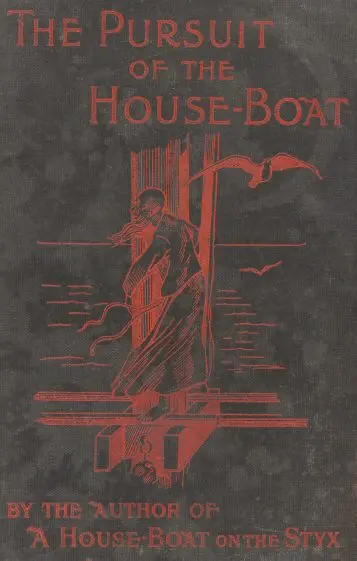
THE CLASSIC COLLECTION · 1897
"The Pursuit of the House-Boat" by John Kendrick Bangs is a humorous literary work written in the early 20th century. This book serves as a satirical sequel to Bangs' earlier story, "A House-Boat on the Styx," and features the comedic adventures of a club of literary and historical figures who are now shades in the afterlife. The central crisis revolves around the theft of their beloved house-boat by the infamous pirate Captain Kidd, leading to a quest to rescue both their floating clubhouse and the women who have also been taken. The opening of the narrative introduces the members of the Associated Shades—such figures as Sir Walter Raleigh, Socrates, and Cleopatra—gathered to discuss the alarming abduction of their house-boat and its inhabitants. As panic sets in, the characters exhibit their distinct personalities and engage in witty banter while deciding on actions to retrieve what is rightfully theirs. The arrival of a mysterious stranger, later revealed to be Sherlock Holmes, adds intrigue to their deliberations as he proposes a well-reasoned approach to track down Kidd and recover their property. The tone is lighthearted, filled with clever dialogue and comedic misunderstandings, setting the stage for an entertaining tale of pursuit and adventure.
Introduction adapted from the source catalogue; source summaries may be automatically generated.
Free to read · English · 33,680 words · No account needed
MAKE TIME FOR A GOOD BOOK
On by default. Untick to stop anonymous reading totals. Each page counts after 10 seconds in view. How this works.
Anonymous counting is on unless you have switched it off.
“But my beloved Tuileries?” cried Marie Antoinette.
“Has been swallowed up by a play-ground for the people, my dear,” said Cassandra, gently. “Paris is no place for us, and it is the intention of these men, in whose hands we are, to take us there and then desert us. Can you imagine anything worse than ourselves, the phantoms of a glorious romantic past, basely deserted in the streets of a wholly strange, superficial, material city of to-day? What do you think, Elizabeth, would be your fate if, faint and famished, you begged for sustenance at an English door to-day, and when asked your name and profession were to reply, ‘Elizabeth, Queen of England’?”
“Insane asylum,” said Elizabeth, shortly.
“Precisely. So in Paris with the rest of us,” said Cassandra.
“How do you know all this?” asked Trilby, still unconvinced.
“I know it just as you knew how to become a prima donna,” said Cassandra. “I am, however, my own Svengali, which is rather preferable to the patent detachable hypnotizer you had. I hypnotize myself, and direct my mind into the future. I was a professional forecaster in the days of ancient Troy, and if my revelations had been heeded the Priam family would, I doubt not, still be doing business at the old stand, and Mr. Æneas would not have grown round-shouldered giving his poor father a picky-back ride on the opening night of the horse-show, so graphically depicted by Virgil.”
“I never heard about that,” said Trilby. “It sounds like a very funny
story, though.”
“Well, it wasn’t so humorous for some as it was for others,” said Cassandra, with a sly glance at Helen. “The fact is, until you mentioned it yourself, it never occurred to me that there was much fun in any portion of the Trojan incident, excepting perhaps the delirium tremens of old Laocoon, who got no more than he deserved for stealing my thunder. I had warned Troy against the Greeks, and they all laughed at me, and said my eye to the future was strabismatic; that the Greeks couldn’t get into Troy at all, even if they wanted to. And then the Greeks made a great wooden horse as a gift for the Trojans, and when I turned my X-ray gaze upon it I saw that it contained about six brigades of infantry, three artillery regiments, and sharp-shooters by the score. It was a sort of military Noah’s Ark; but I knew that the prejudice against me was so strong that nobody would believe what I told them. So I said nothing. My prophecies never came true, they said, failing to observe that my warning as to what would be was in itself the cause of their non-fulfilment. But desiring to save Troy, I sent for Laocoon and told him all about it, and he went out and announced it as his own private prophecy; and then, having tried to drown his conscience in strong waters, he fell a victim to the usual serpentine hallucination, and everybody said he wasn’t sober, and therefore unworthy of belief. The horse was accepted, hauled into the city, and that night orders came from hindquarters to the regiments concealed inside to march. They marched, and next morning Troy had been removed from the map; ninety per cent of the Trojans died suddenly, and Æneas, grabbing up his family in one hand and his gods in the other, went yachting for several seasons, ultimately settling down in Italy. All of this could have been avoided if the Trojans would have taken the hint from my prophecies. They preferred, however, not to do it, with the result that to-day no one but Helen and myself knows even where Troy was, and we’ll never tell.”
Your reading position is saved on this browser. Take it to another device with a library code. Reading pages adapt to text, rather than matching a printed edition.
John Kendrick Bangs
John Kendrick Bangs
John Kendrick Bangs
John Kendrick Bangs
BEHIND THE BOOK
This eBook is for the use of anyone anywhere in the United States and most other parts of the world at no cost and with almost no restrictions whatsoever. You may copy it, give it away or re-use it under the terms of the Project Gutenberg License included with this eBook or online at www.gutenberg.org. If you are not located in the United States, you will have to check the laws of the country where you are located before using this eBook. Read the source licence.
The original source file, including credits and licence, is retained by this library. Request an original-format copy at no charge. Please include the book title and Project Gutenberg identifier #3169.
KEEP YOUR CURIOSITY GOING
Coulson Kernahan

Maurice Baring
Frances Wright
Cécile Tormay
Francis Greenleaf Allinson & Anne C. E. (Anne Crosby Emery) Allinson

Frederic Jesup Stimson